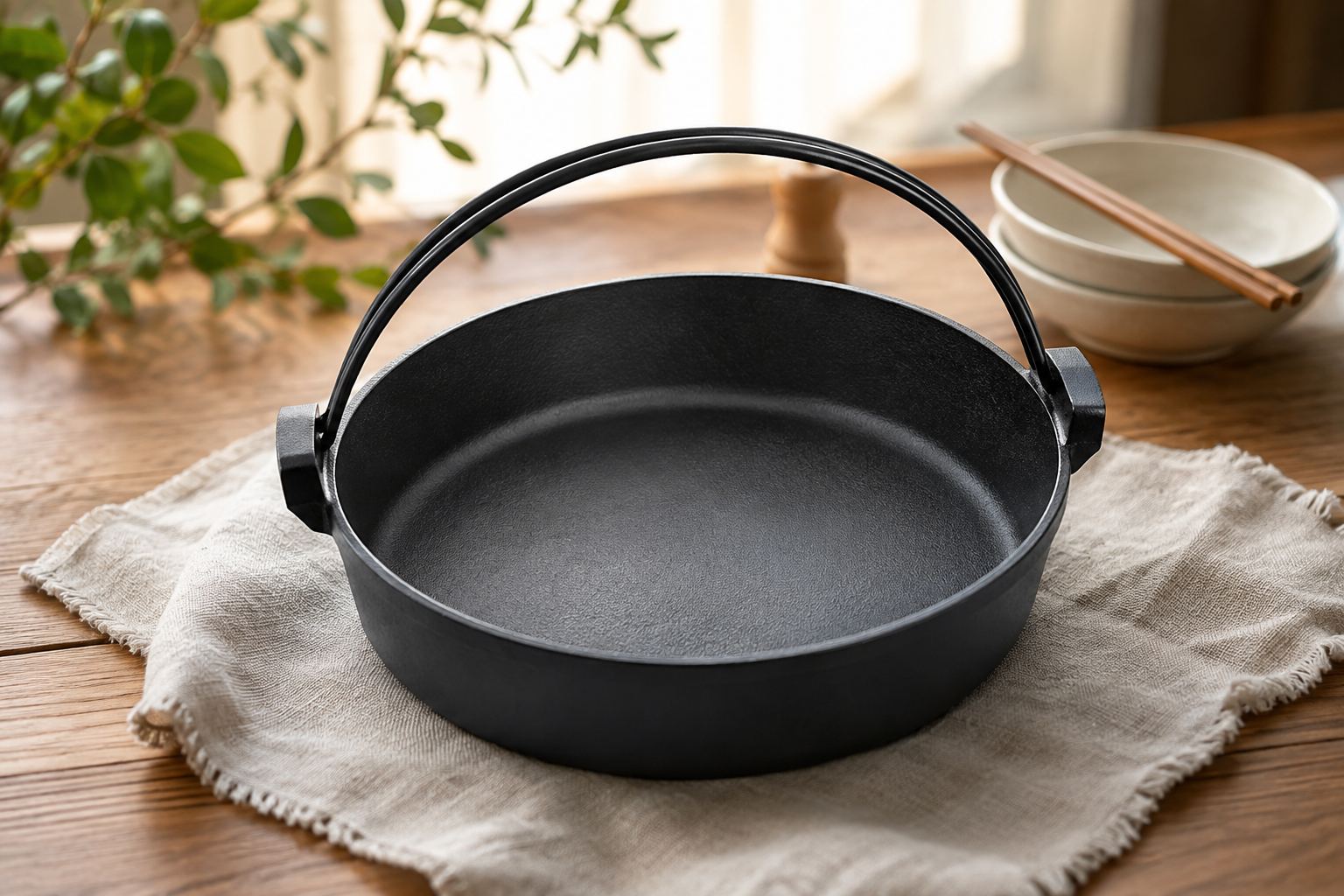
If you only want one pot for both sukiyaki and shabu-shabu, the Iwachu Nambu Ironware Sukiyaki Pot (24cm) is the one to buy — genuinely made in Japan, works on gas and induction, and it has the deepest owner review history of anything in this guide at around $79.65.
This comparison is based on manufacturer specifications, product listings, and patterns in verified owner reviews rather than hands-on testing.
- What Is a Sukiyaki Pot, and Why Not Just Use a Regular Pan?
- Comparison at a Glance
- What to Look for When Buying
- Product Reviews in Detail
- Which One Should You Buy?
- Sizing at a Glance
- Why Cast Iron, and What Does “Nambu Ironware” Actually Mean?
- Care and Maintenance
- How to Make Sukiyaki at Home
- Sukiyaki vs. Shabu-Shabu: What’s the Difference?
- Common Mistakes to Avoid
- What You’ll Also Need
- FAQ
- Can I use a sukiyaki pot on an induction cooktop?
- Do I need a special burner to use one of these pots?
- Is it true that cooking with cast iron adds iron to your food?
- What’s the actual difference between sukiyaki and shabu-shabu?
- Why is my cast iron sukiyaki pot rusting?
- Can I use these pots for anything besides hot pot?
- Why do the Iwachu listings have so few US reviews if the rating count is so high?
- Final Thoughts
What Is a Sukiyaki Pot, and Why Not Just Use a Regular Pan?
Sukiyaki and shabu-shabu are both tabletop hot pot dishes — thin-sliced beef, vegetables, tofu, and noodles cooked right at the table in a shallow, wide pan set over a portable burner, rather than in a deep pot on the stove. Sukiyaki simmers everything in a sweet soy-based sauce called warishita; shabu-shabu is the lighter version, where diners briefly swish (“shabu-shabu” is the sound it makes) thin beef slices through plain dashi or water and dip them in ponzu or sesame sauce.
The pan matters more than it might seem. A shallow, wide shape gives everyone at the table easy chopstick access and lets ingredients cook quickly and evenly in a single layer, rather than steaming in a deep, crowded pot. Traditional Japanese sukiyaki pots are cast iron for a reason: iron heats slowly but holds that heat steadily once it’s hot, so the pot keeps simmering evenly at the table even as people add cold ingredients throughout the meal — something a thin pan struggles with.
Comparison at a Glance
| Product | Price | Size | Best For |
| Iwachu Nambu Ironware Sukiyaki Pot, 24cm | $79.65 | 24cm, 3–4 people | Best Overall |
| Iwachu Sukiyaki Pot with Southern Vine, 28cm | $144.22 | 28cm, 5–6 people | Best for Groups |
| TIKUSAN Cast Iron Hot Pot Sukiyaki Nabe Pan, 26cm | $84.99 | 26cm, ~2–4 people | Best Budget-Friendly Alternative |
| TIKUSAN Cast Iron Hot Pot Sukiyaki Nabe Pan, 20cm | $65.99 | 20cm, ~2 people | Best for Two |
What to Look for When Buying
- Genuine Made in Japan confirmation. Search results for “sukiyaki pot” and “shabu shabu pot” on Amazon are full of generic aluminum pans from import brands with no country-of-origin claim at all — some even market themselves as “authentic Japanese” while never actually stating where they’re made. Check the listing’s own bullets or product description for an explicit “Made in Japan” statement rather than trusting a Japanese-sounding name or dish name.
- Induction compatibility, if that’s your cooktop. This is the single biggest gotcha in this category. Iwachu’s Nambu ironware pots are explicitly rated for both gas and induction (100V and 200V, per the listings). TIKUSAN’s cast iron pots, by contrast, are explicitly listed as gas- and oven-safe but not induction-compatible — check this before buying if your only cooktop is an induction range or portable IH burner.
- Size relative to your table and guest count. These pots run from about 20cm (good for two) up to 28cm (five to six people). Bigger isn’t automatically better — a too-large pot on a small portable burner heats less evenly at the edges, and it needs a bigger table footprint to sit safely next to plates and a burner.
- A portable heat source. A sukiyaki or shabu-shabu pot is meant to simmer at the table, not on your kitchen stove — you’ll need a portable butane burner or a tabletop induction plate (matched to your pot’s compatibility) to actually use it as intended.
- Weight and care tolerance. Cast iron sukiyaki pots are heavy — expect roughly 5–7 lbs depending on size — and need hand-washing plus light oiling to prevent rust, the same as any other bare cast iron cookware. If that’s a dealbreaker, this whole category may not be the right fit.
Product Reviews in Detail
Disclosure: As an Amazon Associate I earn from qualifying purchases.
Iwachu Nambu Ironware Sukiyaki Pot, 24cm — Best Overall
This is Iwachu’s standard sukiyaki pot in their “Southern Crane” pattern — genuine Nambu ironware (nanbu tekki) from Iwate Prefecture, the same craft tradition behind the cast-iron kettles Japan is famous for. The listing explicitly confirms Made in Japan, and the manufacturer’s own sizing guideline lists this 24cm size as good for 3–4 people. It’s rated for gas as well as both 100V and 200V induction, and at 4.4 stars across 377 ratings it has by far the deepest review history in this guide — though nearly all of those reviews are from Japanese buyers rather than the US market, since Amazon’s US listing currently shows zero domestic reviews.
Those Japanese owner reviews are consistent and useful: several describe it as noticeably heavier than a regular frying pan or an electric hot plate, but say food — sukiyaki in particular — comes out tasting better than in a thin pan, and that the weight comes with a feeling of solid, long-term quality (“南部鉄器は一生物,” one reviewer wrote — Nambu ironware is a lifetime object). More than one reviewer also mentioned rust-prevention care is necessary, consistent with any bare cast iron pan.
Pros: Confirmed Made in Japan; works on both gas and induction (100V/200V); by far the largest review base of anything in this guide; genuine Nambu ironware from an established maker.
Cons: Heavy (about 2.5kg/5.5lbs); needs hand-washing and rust-prevention oiling like any bare cast iron; most reviews are from Japanese buyers, so the review base doesn’t reflect US usage patterns directly.
Bottom line: The safest default pick if you’re buying just one sukiyaki pot and want it to work on whatever cooktop you have.
Iwachu Sukiyaki Pot with Southern Vine, 28cm — Best for Groups
Same Nambu ironware construction and the same confirmed Made in Japan status as the 24cm pot above, just in Iwachu’s largest size and a different decorative pattern (Southern Vine rather than Southern Crane). The manufacturer’s own sizing guideline lists this 28cm size as good for 5–6 people, making it the clear choice if you’re regularly hosting a full table rather than a couple of people. It shares the 24cm pot’s 4.4-star, 377-rating review pool and the same gas-plus-induction (100V/200V) compatibility.
The tradeoff for the larger capacity is price and weight — at $144.22 it’s nearly double the 24cm pot, and a bigger cast iron pot is meaningfully heavier to carry to and from the table, especially once it’s full of hot broth and ingredients.
Pros: Largest capacity in this guide, sized for 5–6 people per the manufacturer; same confirmed Made in Japan, gas-and-induction Nambu ironware construction as the 24cm pick.
Cons: Nearly double the price of the 24cm size; heaviest and most unwieldy pot here, especially once filled; overkill if you’re usually cooking for two.
Bottom line: Worth the extra size and cost if sukiyaki or shabu-shabu nights regularly mean a full table.
TIKUSAN Cast Iron Hot Pot Sukiyaki Nabe Pan, 26cm — Best Budget-Friendly Alternative
TIKUSAN’s cast iron sukiyaki pan is also genuine Nambu ironware — the product description confirms Country of Origin: Japan, and it comes in three sizes (20cm, 24cm, 26cm). At the same 26cm diameter, Iwachu’s equivalent pot (the 20039 “Southern Crane 26”) runs $110.00, so this TIKUSAN pick undercuts it by about $25 at an identical size. At 4.8 stars it has the highest rating of anything in this guide, though with only 11 ratings so far that’s a much smaller sample than Iwachu’s review base, so treat it with a bit more caution.
One thing worth flagging honestly: the listing’s marketing bullets describe a “non-stick surface,” but the product description on the same listing also markets the pot for the dietary iron content released during cooking, and a verified owner review recommends oiling it to prevent rust during storage — both of which are typical of bare, uncoated cast iron rather than an actual non-stick coating. We couldn’t fully reconcile that contradiction from the listing alone, so it’s safest to plan on the same hand-wash-and-oil care routine as any other bare cast iron pot rather than assuming it needs less maintenance. Also worth noting: unlike the Iwachu pots above, TIKUSAN’s listing explicitly states this pot is for gas stoves and ovens, not induction cooktops.
Pros: Confirmed Made in Japan; highest star rating in this guide (4.8); generally cheaper than the equivalent-size Iwachu pot; available in three sizes from the same line.
Cons: Not induction-compatible, gas/oven only; small review sample (11 ratings) compared to Iwachu; the listing’s “non-stick” claim is inconsistent with other details on the same page, so we’d treat it as standard bare cast iron until proven otherwise.
Bottom line: A reasonable lower-cost alternative to Iwachu if you cook on gas and don’t need induction compatibility.
TIKUSAN Cast Iron Hot Pot Sukiyaki Nabe Pan, 20cm — Best for Two
The smallest and least expensive pot in this guide, and the same TIKUSAN Nambu ironware line as the 26cm pick above, with the same confirmed Made in Japan status, the same 4.8-star/11-rating profile, and the same gas-only (not induction) limitation. At 20cm across, this is sized for close to solo or two-person use rather than a full dinner party.
If you mostly cook sukiyaki or shabu-shabu for one or two people and don’t want to pay for capacity you won’t use, this is the most affordable genuinely Made in Japan option in the entire guide.
Pros: Lowest price in this guide; confirmed Made in Japan; right-sized for one or two people rather than oversized for small households.
Cons: Not induction-compatible; too small for a group; same small review sample and “non-stick” labeling ambiguity as the 26cm TIKUSAN pot above.
Bottom line: The easiest, cheapest way into a genuine Japanese cast iron sukiyaki pot if you’re usually cooking for one or two.
Which One Should You Buy?
- Want one pot that works on any cooktop: Iwachu Nambu Ironware Sukiyaki Pot, 24cm — confirmed induction and gas compatible, deepest review history.
- Regularly hosting a full table: Iwachu Sukiyaki Pot with Southern Vine, 28cm — sized for 5–6 people by the manufacturer.
- On a budget and cooking on gas: TIKUSAN 26cm — cheaper than the comparable Iwachu size, highest star rating, but gas/oven only.
- Cooking for one or two: TIKUSAN 20cm — the smallest, least expensive genuinely Made in Japan option here.
Sizing at a Glance
| Pan | Diameter | Manufacturer/Reviewer Guideline | Induction? |
| TIKUSAN 20cm | 20cm (7.9″) | ~2 people (per owner reviews) | No — gas/oven only |
| Iwachu 24cm | 24cm (9.4″) | 3–4 people (per manufacturer) | Yes — gas + 100V/200V IH |
| TIKUSAN 26cm | 26cm (10.2″) | ~2–4 people (per owner reviews) | No — gas/oven only |
| Iwachu 28cm | 28cm (11.0″) | 5–6 people (per manufacturer) | Yes — gas + 100V/200V IH |
These are general guidelines from the manufacturer (Iwachu) or from owner reviews (TIKUSAN) — actual capacity depends on how full you fill the pot and how many rounds you’re cooking.
Why Cast Iron, and What Does “Nambu Ironware” Actually Mean?
Nambu ironware (nanbu tekki) is a centuries-old cast iron craft tradition centered in and around Morioka in Iwate Prefecture, most widely known outside Japan for tetsubin cast iron kettles. The same casting and finishing techniques carry over into flatter cookware like these sukiyaki pots.
One notable part of that tradition is a finishing technique called kama-yaki: after casting, the raw iron is fired at very high temperatures, which forms a dark oxide layer on the surface (sometimes called “kuro-sabi,” or black rust, even though it isn’t actual damaging rust). That oxide layer is what gives traditional Nambu ironware some natural rust resistance straight out of the box — though it still needs the same basic care as any bare cast iron pan (dry thoroughly, light oil) to stay in good shape long-term.
Some manufacturers, including Iwachu on this specific product’s own listing, also market cast iron cooking as a way to pick up small amounts of dietary iron from food, particularly with acidic ingredients. That’s a real, documented property of cooking in bare iron cookware generally — but treat it as a minor side benefit rather than a primary reason to buy.
Care and Maintenance
All four pots in this guide are bare (uncoated) cast iron, and despite one listing’s “non-stick” language, we’d treat all of them the same way for care purposes:
- Hand wash only, no dishwasher. Use hot water and a soft sponge or brush; avoid dish soap when possible, since it can strip the light seasoning layer that builds up over time.
- Dry immediately and completely after every use. Any moisture left on bare cast iron is the most common cause of rust — several owner reviews specifically call this out as something to stay on top of.
- Wipe with a thin layer of cooking oil before storing. This helps maintain the pot’s natural rust resistance between uses, especially if you don’t cook with it often.
- Avoid metal scouring pads, which can scratch the surface and strip the seasoning built up from cooking.
How to Make Sukiyaki at Home
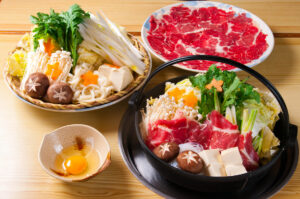
The warishita (sweet soy sauce base) is what defines sukiyaki, and it’s simple to make from scratch. A classic ratio is roughly equal parts soy sauce, mirin, and sake, with sugar added to taste:
For the warishita (serves 3–4):
- ½ cup (120ml) soy sauce
- ½ cup (120ml) mirin
- ½ cup (120ml) sake
- 2–3 tbsp sugar, to taste
For the pot:
- Thin-sliced beef (ribeye or sirloin), as much as you like
- Napa cabbage, sliced
- Shungiku (chrysanthemum greens) or spinach
- Enoki and shiitake mushrooms
- Grilled tofu (yaki-dofu) or firm tofu, cubed
- Shirataki or ito konnyaku noodles
- Negi (Japanese leek) or scallion, sliced diagonally
- Beaten raw egg, for dipping (optional, and use pasteurized eggs if you’re at all concerned about raw egg safety)
- Combine the warishita ingredients in a small saucepan, bring to a simmer, and stir until the sugar dissolves. Set aside.
- Heat the sukiyaki pot over medium heat and add a small amount of beef fat or oil.
- Sear a few slices of beef directly in the pot, then push them to one side.
- Pour in a few tablespoons of warishita and add the firmer vegetables (napa cabbage stems, mushrooms) first, arranging them in sections rather than mixing everything together.
- As ingredients cook, add more warishita a little at a time to keep the level shallow rather than flooding the pot all at once — sukiyaki is simmered, not boiled in a deep broth.
- Add the tofu, noodles, and softer greens as space opens up, and keep adding more beef and vegetables in batches as you eat.
- Traditionally, each piece is dipped in beaten raw egg before eating, which cools it slightly and adds a rich, custardy coating.
Amounts vary by household and appetite — this is a common starting ratio rather than the only “correct” one, and many households adjust the sugar up or down to taste as they go.
Sukiyaki vs. Shabu-Shabu: What’s the Difference?
Both are tabletop hot pot dishes cooked in the same style of pan, but the cooking liquid and method are different. Sukiyaki simmers ingredients directly in the sweet, savory warishita described above, and each bite is traditionally dipped in raw beaten egg. Shabu-shabu instead uses a light dashi or plain water broth — diners swish thin slices of beef through the hot liquid for just a few seconds, then dip the cooked meat in ponzu (citrus soy sauce) or a sesame-based dipping sauce. Shabu-shabu is generally considered the lighter, cleaner-tasting of the two, while sukiyaki is richer and sweeter.
Any of the four pots in this guide work for either style — the pot itself doesn’t care which liquid you put in it.
Common Mistakes to Avoid
- Filling the pot too deep. Sukiyaki in particular is meant to be simmered shallow, not boiled in a deep pool of liquid — add warishita gradually rather than all at once.
- Skipping the dry-and-oil step after washing. This is the single most common way a cast iron sukiyaki pot ends up rusting, according to repeated owner-review feedback.
- Assuming a pot is induction-compatible without checking. As covered above, Iwachu’s pots in this guide are, TIKUSAN’s are not — don’t assume either way without checking the specific listing.
- Overcrowding the pot at once. Cooking in batches, the way it’s traditionally done tableside, gives more even results than dumping everything in together.
What You’ll Also Need
A sukiyaki or shabu-shabu pot is meant to be used at the table, not on your kitchen stove — a few things worth adding to your order:
- Iwatani Cassette Stove, Tough Maru Jr. ($84.90) — A genuinely Made in Japan portable butane burner, and an extremely well-reviewed one at 4.6 stars across over 5,400 ratings. This is the standard way Japanese households actually power a tableside hot pot — note it only works with the pots in this guide that aren’t relying on induction, so pair it with any of the four picks above, all of which work on gas.
- Ebara Sukiyaki no Tare ($9.98, 300ml) — A ready-made warishita sauce from an established Japanese food brand if you’d rather skip mixing your own soy sauce, mirin, sake, and sugar. An Amazon Overall Pick at 4.5 stars across 44 ratings.
- Ponzu sauce, for shabu-shabu dipping — Kikkoman’s Ponzu Citrus Seasoned Dressing and Sauce is the most widely available option on Amazon and one of the most reviewed condiments in the category, at 4.7 stars across roughly 930 ratings.
FAQ
Can I use a sukiyaki pot on an induction cooktop?
It depends on the specific pot. The Iwachu pots in this guide are explicitly rated for both gas and induction (100V/200V). The TIKUSAN pots are explicitly listed for gas stoves and ovens only, not induction. Always check the specific listing rather than assuming — this varies even within genuinely Made in Japan cast iron cookware.
Do I need a special burner to use one of these pots?
Yes, practically speaking. These pots are designed to simmer at the table, not sit on a kitchen range — you’ll want a portable butane burner (if your pot is gas-only) or a compatible tabletop induction plate (if your pot supports induction).
Is it true that cooking with cast iron adds iron to your food?
Some cast iron cookware makers, including Iwachu on one of these specific listings, market this as a benefit, and it’s a real, documented property of cooking acidic foods in bare iron cookware generally. Treat it as a minor side benefit rather than a primary reason to buy — we haven’t independently tested or verified the effect for these specific pots.
What’s the actual difference between sukiyaki and shabu-shabu?
Sukiyaki simmers ingredients in a sweet soy-based sauce (warishita) and is traditionally eaten with a raw egg dip. Shabu-shabu briefly cooks thin beef slices in plain dashi or water, then dips the cooked meat in ponzu or sesame sauce. Same style of pot, different liquid and method.
Why is my cast iron sukiyaki pot rusting?
Almost always moisture left on the surface after washing. Dry it thoroughly and immediately after every use, and wipe on a thin layer of cooking oil before storing, especially if you won’t use it again soon.
Can I use these pots for anything besides hot pot?
Yes — several listings mention they also work well for stews, seared steaks, and roasted vegetables. The shallow, wide shape and even heat retention that make them good for sukiyaki also suit other one-pan dishes cooked at moderate, steady heat.
Why do the Iwachu listings have so few US reviews if the rating count is so high?
Amazon’s US listings for these Iwachu pots currently show most of their review volume coming from Japan rather than the United States. That doesn’t make the reviews less useful — the pots themselves are identical regardless of which storefront a reviewer bought from — but it does mean the review base reflects long-term Japanese household use more than US buying patterns specifically.
Final Thoughts
All four pots in this guide come from listings that explicitly confirm Made in Japan manufacturing and genuine Nambu ironware construction. For most people, the Iwachu 24cm pot is the easiest recommendation — it’s confirmed compatible with both gas and induction cooktops, and it has by far the deepest review history of anything here. If you’re regularly cooking for a full table, size up to the Iwachu 28cm; if you’re on a tighter budget and know you’re cooking on gas, either TIKUSAN size is a genuinely Made in Japan way to spend less, with the smaller 20cm being the most affordable entry point in the whole guide for one or two people.
コメント