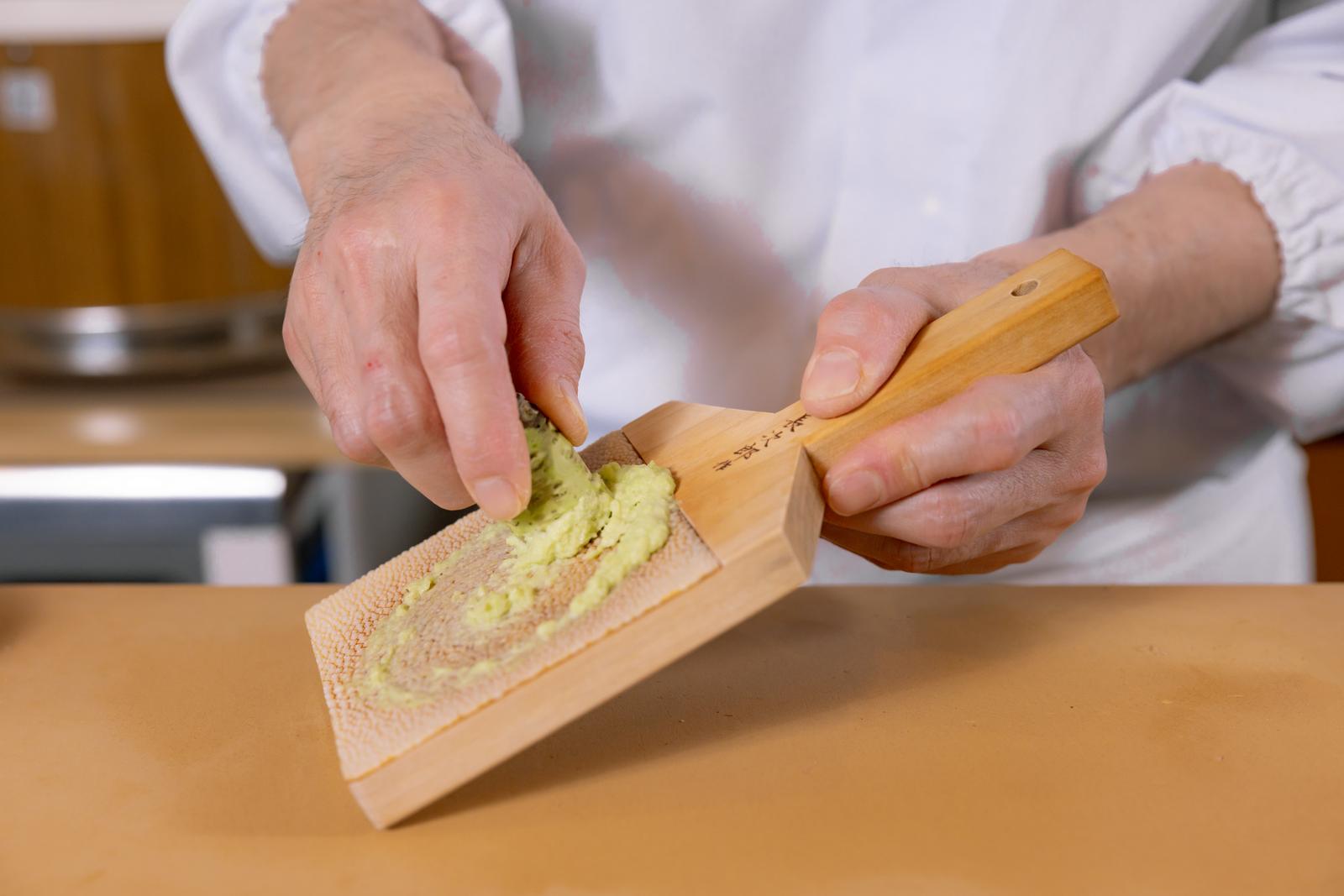
If you want the safest starting point: the Kinjirushi Hagane-Zame Wasabi Grater ($62.00) is made in Japan, has 112 ratings at 4.7 stars, and swaps fragile shark or ray skin for a stainless-steel surface designed to do the same job without the upkeep. Below we compare it against a genuine traditional skin-style grater, a wood-and-bamboo option, and a compact titanium plate — all with a specific “Made in Japan” claim on their own listing.
- What Is a Wasabi Grater, and Why Not Just Use a Regular Grater?
- Comparison Table
- What to Look for When Buying a Wasabi Grater
- The Graters, Reviewed
- Which One Should You Buy?
- Do You Actually Need Fresh Wasabi to Use One of These?
- How to Use a Wasabi Grater
- Caring for Your Grater
- Common Mistakes
- FAQ
- Can I use a microplane or box grater instead?
- Do these graters only work for wasabi?
- Is a metal or titanium grater as good as a traditional skin-surface one?
- Why does my grated wasabi taste different from what I get at restaurants?
- How long does grated wasabi keep?
- Can I put these graters in the dishwasher?
- What You’ll Also Need
- Final Thoughts
What Is a Wasabi Grater, and Why Not Just Use a Regular Grater?
A wasabi grater — called oroshigane (おろし金) generally, or samegawa oroshi when made from shark or ray skin — is built to do something a box grater or microplane isn’t: turn fresh wasabi rhizome into a fine, creamy paste without shredding it into dry, stringy bits. The traditional surface, made from dried shark or ray skin, is covered in thousands of tiny, hard nodules that are said to crush the wasabi’s cells rather than slice them, which is part of why traditional sushi chefs have used it for generations — cutting releases less of the plant’s aroma than crushing does.
The traditional grating motion is also different from what you’d do with ginger or garlic on a flat grater: rather than pushing back and forth, you work in small, gentle circles, which is said to produce a smoother, creamier result. That’s part of the reason genuine sharkskin and rayskin graters have stayed popular even as cheaper alternatives have shown up — and also why newer materials like stainless steel and titanium have entered the category as more durable, easier-to-clean alternatives to a delicate animal-skin surface.
🏆 Best Choice: Kinjirushi Hagane-Zame Wasabi Grater →
Comparison Table
| Product | Price | Material / Size | Best For |
|---|---|---|---|
| Kinjirushi Hagane-Zame Regular | $62.00 | Stainless steel, 6.8″ x 3.3″ | Best Overall |
| MOKKOSU Japanese Classic Grater | $26.99 | Traditional ray-skin surface, small | Best Traditional / Authentic Feel |
| TIKUSAN Wooden Wasabi Grater | $27.99 | Wood grater board + bamboo brush | Best Value / Traditional Wood |
| Wablade Titanium Grater Plate | $26.90 | Titanium surface, 3.4″ | Best Compact / Modern Minimalist |
What to Look for When Buying a Wasabi Grater
- An explicit country-of-manufacture claim. As with most Japanese kitchen tools sold on Amazon, plenty of listings lean on “Japanese-style” or “traditional” language without stating where the item is actually made — check the listing itself, not just the title’s vibe.
- Surface material. Genuine shark or ray skin is the traditional choice and has real fans among sushi chefs; stainless steel and titanium are newer, more durable, and easier to clean, at some cost to tradition.
- Size. A larger grating surface covers more ground per pass, which matters more if you’re prepping in volume (e.g., for a dinner party) than for a single serving.
- What you’ll actually grate on it. Most of these graters double as ginger or garlic graters, which matters if fresh wasabi rhizome isn’t something you can regularly get — more on that below.
- Care requirements. A genuine skin-surface grater needs gentler handling (no soaking, no sun-drying) than a metal one.
The Graters, Reviewed
Disclosure: As an Amazon Associate I earn from qualifying purchases.Kinjirushi Hagane-Zame Regular
Kinjirushi’s listing states this grater is “Made in Japan and built without shark skin,” positioning it directly as a modern alternative to the traditional material. The stainless-steel surface uses a pattern the listing says is designed to let air incorporate into the wasabi as you grate, aiming for the same creamy texture associated with traditional graters. The listing also claims it grates faster than a traditional shark-skin grater, which is a specific comparative claim from the seller that we haven’t independently tested — take it as the manufacturer’s positioning rather than a verified benchmark. With 112 ratings at 4.7 stars, it has the strongest review history of the four.
Pros:
- Explicit “Made in Japan” claim on the listing
- No animal-derived material, and no fragile skin surface to damage
- Strongest review count and rating of the four options
- Doubles as a garlic, ginger, apple, or vegetable grater per the listing
Cons:
- Most expensive of the four
- Departs from the traditional skin-surface method that some purists specifically seek out
Bottom line: the most proven option here, and a reasonable default if you don’t have a strong preference for a traditional skin surface.
MOKKOSU Japanese Classic Grater (Small)
This is the closest thing in our lineup to the classic samegawa-style grater. The listing states the surface uses skin it describes as having “a similar texture as that of the traditional material used for Japanese classic graters,” and adds that the manufacturer specializes in traditional cooking utensils and supplies sushi restaurants — we’re passing that along as the seller’s claim rather than something we independently confirmed. “Made in Japan” appears directly in the product title. At 4.0 stars from 51 reviews, it has a real but more mixed review history than the Kinjirushi grater.
Pros:
- “Made in Japan” stated directly in the title
- Closest option here to the traditional skin-surface grating experience
- Lower price than the Kinjirushi grater
Cons:
- Lower average rating (4.0) than the other three options
- Skin-surface graters generally need gentler care than metal ones (see the care section below)
Bottom line: the pick if a traditional skin-style surface matters more to you than having the single highest-rated option.
TIKUSAN Wooden Wasabi Grater with Bamboo Brush
Sold directly by the TIKUSAN Store — a brand we’ve verified as a genuine Japanese kitchenware maker in other reviews on this site — this is a wood grating board (wasabi oroshi) paired with a bamboo brush for scooping the grated wasabi off the board cleanly. “Made in Japan” is stated directly in the title. It’s also pitched for grating ginger and garlic, not just wasabi. At 4.6 stars from 21 reviews, it has a solid, if smaller, review history.
Pros:
- “Made in Japan” stated directly on the listing, from a brand with a track record on this site
- Includes a bamboo brush for cleanly scooping grated wasabi
- Lowest price of the four
Cons:
- Smaller review count than the Kinjirushi or Wablade options
- Wood needs to be kept dry between uses to avoid warping or mold, similar to other wooden kitchen tools
Bottom line: a well-priced, traditional-material option backed by a brand this site has vetted before.
Wablade Titanium Grater Plate
At 3.4 inches, this is the smallest and most minimalist grater in the group — a flat titanium plate rather than a boxed or handled tool. The listing states it’s “carefully crafted in Japan” and explicitly notes it’s optimized for small ingredients like garlic, ginger, wasabi, and citrus peel, and is not intended for larger vegetables like daikon. The titanium surface is pitched as corrosion-resistant, which should hold up better long-term than a bare steel or skin surface exposed to moisture. At 4.0 stars from 55 reviews, it has a similar review profile to the MOKKOSU grater.
Pros:
- “Made in Japan” stated directly on the listing
- Compact and easy to store, store in a drawer rather than needing counter space
- Titanium resists corrosion better than plain steel
Cons:
- Small grating surface means more passes for larger quantities
- Not designed for larger vegetables per the listing’s own guidance
Bottom line: the pick if counter space or drawer storage is a real constraint and you’re mainly grating small quantities at a time.
Which One Should You Buy?
- Want the most proven, no-drama option: Kinjirushi Hagane-Zame Regular.
- Want the closest thing to a traditional skin-surface grater: MOKKOSU Japanese Classic Grater.
- Want a wood-and-bamboo traditional set at the lowest price: TIKUSAN Wooden Wasabi Grater.
- Tight on space, or mainly grating small amounts of garlic and ginger too: Wablade Titanium Grater Plate.
Do You Actually Need Fresh Wasabi to Use One of These?
It’s worth being upfront about something before you buy: the overwhelming majority of “wasabi” served at sushi restaurants and sold in tubes in the US is not made from real wasabi rhizome — it’s typically horseradish, mustard powder, and green coloring. Genuine fresh wasabi rhizome is a slow-growing, water-intensive crop that’s expensive and can be difficult to find fresh outside of specialty Japanese grocers or online importers, even though its flavor is milder and more aromatic than horseradish-based substitutes. If you don’t already have a reliable source for fresh wasabi rhizome, these graters are still useful — every product in this comparison is also marketed for ginger and garlic — but the wasabi-specific payoff depends on getting your hands on the real thing.
How to Use a Wasabi Grater
- Peel any knobby skin or leaf nubs off the wasabi rhizome before grating, if using fresh wasabi.
- Work in small, gentle circular motions rather than pushing back and forth, keeping light, even pressure.
- Rotate the rhizome as you go so you’re grating a fresh surface rather than wearing a groove into one spot.
- Let the grated wasabi rest for a minute or two before serving — many sources suggest this helps its aroma fully develop.
- Use it soon after grating; fresh wasabi’s flavor and aroma fade noticeably within 15–20 minutes.
Caring for Your Grater
Metal graters (Kinjirushi, Wablade)
- Rinse promptly after use and dry to prevent water spots or, on non-titanium steel, potential corrosion over time.
- Avoid abrasive scrubbers on the fine grating surface, which can dull the texture that makes it effective.
Traditional skin-surface graters (MOKKOSU)
- Rinse with water only, and dry in the shade rather than direct sun or leaving it soaking — several listings in this category note the grating surface can loosen from its backing if left wet or sun-dried.
- Avoid soap, which can degrade the skin surface over time.
Wood graters (TIKUSAN)
- Hand wash and dry thoroughly; don’t leave it submerged or run it through a dishwasher, which can warp the wood.
- Use the included bamboo brush rather than a hard utensil to scrape the grating surface clean.
Common Mistakes
- Scrubbing back and forth like a cheese grater. Wasabi’s flavor and texture come out better with the traditional small, circular motion.
- Pressing too hard. Heavy pressure tends to shred rather than crush the wasabi, which some sources say results in a harsher, less aromatic paste.
- Letting a skin-surface grater sit wet. This is one of the more common ways these traditional graters get damaged.
- Grating wasabi too far ahead of serving. Its aroma fades quickly, so grate close to serving time rather than prepping it hours in advance.
FAQ
Can I use a microplane or box grater instead?
You can, but most sources agree it won’t produce the same fine, creamy texture — a microplane’s blades tend to shred and cut rather than crush, which is more likely to release excess liquid and a harsher flavor from the wasabi.
Do these graters only work for wasabi?
No — every product in this guide is also marketed for ginger and garlic, and several mention apples or other produce. If fresh wasabi rhizome isn’t something you have regular access to, the grater still earns its keep on those.
Is a metal or titanium grater as good as a traditional skin-surface one?
This is genuinely debated among cooks and chefs, and we’re not going to settle it here. Modern metal and titanium surfaces are marketed as achieving a similarly fine, creamy texture without the fragility of an animal-skin surface, but tradition and personal preference still matter to a lot of home cooks and professionals.
Why does my grated wasabi taste different from what I get at restaurants?
Most restaurant “wasabi” isn’t made from real wasabi rhizome at all — it’s usually a horseradish-and-mustard blend with green coloring. If you’re grating genuine fresh wasabi rhizome at home, expect a milder, more aromatic result than what you may be used to.
How long does grated wasabi keep?
Its distinctive aroma and heat fade fast — many sources recommend using it within 15–20 minutes of grating for the best flavor, rather than making it well ahead of time.
Can I put these graters in the dishwasher?
None of the four products in this guide should go in a dishwasher. Hand wash and dry all of them, and be especially gentle with the skin-surface and wood options.
What You’ll Also Need
If you’re planning to grate fresh wasabi rhizome rather than ginger or garlic, you’ll want a small, sharp paring knife to trim the rhizome before grating, and a source for fresh wasabi itself, since it isn’t something most US grocery stores stock. A small bamboo or plastic scraper (like the one included with the TIKUSAN grater above) also makes it much easier to collect every bit of paste off a flat grating surface.
Final Thoughts
All four graters here carry an explicit “Made in Japan” claim on their own listing, spanning three different grating surfaces: stainless steel, a traditional skin-style material, and wood. The Kinjirushi Hagane-Zame Regular stands out mainly on review history — 112 ratings at 4.7 stars is a meaningfully larger sample than anything else in this comparison — while the MOKKOSU, TIKUSAN, and Wablade options each serve a more specific preference, whether that’s a traditional skin-style surface, a budget-friendly wood-and-bamboo set, or a compact titanium plate for small kitchens. Whichever you pick, remember that the grater is only half the equation: without genuine fresh wasabi rhizome, you’re mainly buying a very good ginger and garlic grater, which, to be fair, all four of these also do well.
コメント