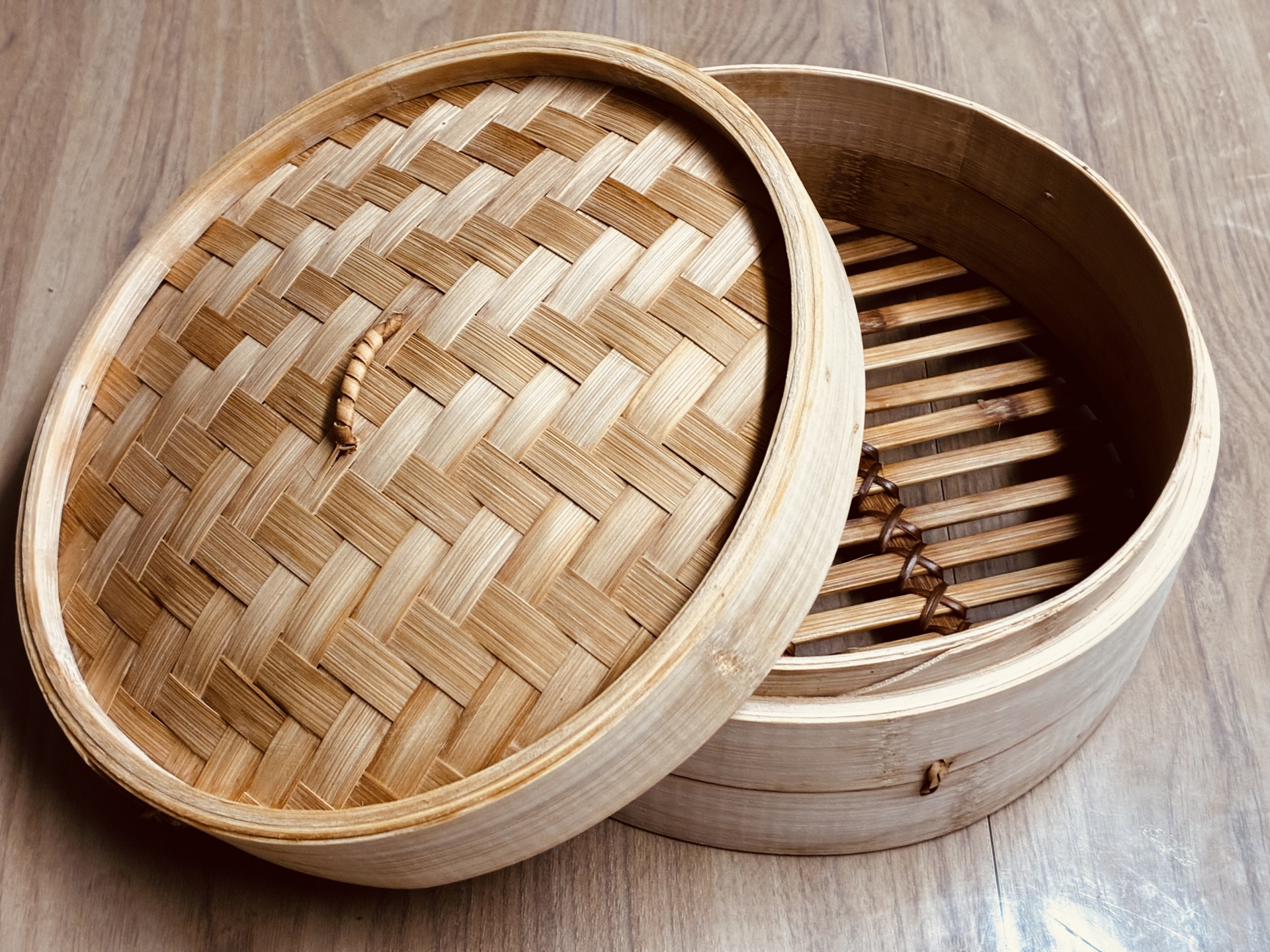
If you want a traditional Japanese steaming basket without guesswork, our top pick is the Nichinichi Utensils Japanese Seiro Steamer with Lid ($137.65) — a full hinoki-and-bamboo tiered steamer with a lid, sold through Amazon Japan and backed by a 4.5-star average. If you’d rather start smaller and cheaper, the Manyo Takenosei Japanese Seiro ($33.76) is a compact single-tier basket that’s an easy, low-cost way to try seiro cooking for the first time.
- What Is a Seiro?
- Comparison Table
- What to Look for When Buying a Seiro
- Product Reviews in Detail
- Which One Should You Buy?
- Sizing Guide
- Bamboo vs. Stainless Steel: Which Material Should You Choose?
- Caring for Your Seiro
- How to Use a Seiro
- How We Use Our Own Two-Tier Seiro at Home
- Common Mistakes to Avoid
- Frequently Asked Questions
- Is it safe to steam food in a bamboo basket?
- Can I use a seiro on an induction stovetop?
- Do I need to season a new bamboo seiro before using it?
- Why did my rice or dumplings stick to the bottom of the basket?
- Does a seiro come with a pot, or do I need my own?
- How long do bamboo seiro typically last?
- Is a more expensive seiro actually better, or just pricier?
- What You’ll Also Need
- Final Thoughts
What Is a Seiro?
A seiro (蒸籠) is the traditional Japanese steaming basket — a round or square container, usually built from bamboo or thin cedar/cypress slats, that sits on top of a pot of simmering water. Unlike a metal steamer insert, the woven or slatted sides let excess steam escape instead of condensing and dripping back onto the food, which is the main reason rice, buns, vegetables, and fish come out of a seiro drier and less waterlogged than they do from a solid steamer basket.
Seiro cooking is everyday, not special-occasion, in a lot of Japanese kitchens: a quick steam of sweet potato or shumai, or rice reheated so it tastes freshly cooked instead of microwaved. Traditional woodworkers still hand-bend and stitch bamboo or cedar seiro today, though modern kitchens have also added stainless steel steaming plates and tabletop pot-and-steamer sets from manufacturing hubs like Tsubame-Sanjo that solve some of the same problems — keeping food above the water, letting steam vent — without the upkeep bamboo needs. We’ve included both styles below so you can pick based on how you actually cook, not just tradition.
🏆 Best Choice: Nichinichi Utensils Japanese Seiro Steamer with Lid →
Comparison Table
| Product | Price | Material / Size | Best For |
|---|---|---|---|
| Manyo Takenosei Seiro | $33.76 | Bamboo, single-tier, 5.9 in (15 cm), no lid | Best Value / Solo Cooking |
| Nichinichi Utensils Seiro with Lid | $137.65 | Bamboo/wood, tiered, 8.3 in (21 cm), with lid | Best Overall |
| Wahei Freiz Tsubamesanjo Pot & Steaming Plate | $70.39 | Stainless steel, 10.2 in (26 cm) pot + steaming plate | Best All-in-One Set / Induction |
| Yoshikawa YJ2538 Steamer for Pots | $19.67 | Stainless steel steaming plate, fits 18–20 cm pots | Best Budget / Add-On for a Pot You Own |
What to Look for When Buying a Seiro
- Basket vs. steaming plate/set. Some products are a complete steaming vessel with sides and (sometimes) a lid; others, like the Yoshikawa pick below, are just a stainless steaming plate meant to sit inside a pot you already own, and some, like the Wahei Freiz pick, come as a complete pot-and-steamer set. Check which one you’re buying — the listing photos and dimensions make this clear, but the product name alone can be ambiguous.
- Lid included or not. Not every seiro basket comes with its own lid. Owner reviews are often the most reliable way to confirm this, since some listings don’t spell it out clearly in the bullet points.
- Material. Traditional seiro use bamboo or cedar/cypress (hinoki) slats; stainless steel steamer pots and plates are a modern alternative that skips the wood-care routine entirely and works reliably on induction stovetops, which bamboo can’t be used on directly.
- Made in Japan verification. Check for an explicit “Made in Japan” or “Country of Origin: Japan” statement in the listing, not just a Japanese-sounding brand or manufacturer name — the two aren’t always the same thing, and we found at least one listing during research where a Japanese-named manufacturer’s product was explicitly marked “Country of Origin: China.”
- Size vs. your cookware. A seiro basket or steaming plate needs to match the diameter of the pot you’ll set it over (or in). Measure your cookware before ordering rather than guessing from the product photos.
- Stock and shipping time. Several genuine Japan-made seiro on Amazon.com are low-volume imports — it’s worth checking current stock and shipping estimates before you buy, since they can run low or slip to multi-week shipping windows.
Product Reviews in Detail
Manyo Takenosei Japanese Seiro — Best Value / Solo Cooking
This is a single-tier bamboo seiro basket from ma:nyo (萬洋), sold through Amazon Japan with a 5.0-star average across a small number of reviews. At 5.9 inches (15 cm), it’s sized for one serving rather than a family meal — Japanese owner reviews describe using it for wappa-meshi-style dishes, steaming a portion of rice together with chicken breast, salmon, or eel. One important detail confirmed by an owner review: this listing does not include a lid, so you’ll need to improvise with foil, a plate, or a separate lid you already own. Reviewers also recommend lining the bamboo with parchment or cooking paper rather than placing rice directly on the slats, since that makes cleanup considerably easier.
Pros:
- Lowest price of the group, a low-risk way to try seiro cooking
- Genuine bamboo construction, sold through Amazon Japan
- Good single-serving size for rice-and-protein steamed dishes
Cons:
- No lid included — you’ll need to source your own
- Too small for steaming for more than one person at a time
- Very few reviews so far to judge long-term durability
Bottom line: A cheap, genuine way to find out if you actually like cooking with a seiro before spending more on a larger set.
Nichinichi Utensils Japanese Seiro Steamer with Lid — Best Overall
This is a complete tiered seiro — basket and lid — at 8.3 inches (21 cm), sold by 日々道具 (Nichinichi Dougu) through Amazon Japan and explicitly marked “Made in Japan.” It’s the most-reviewed traditional bamboo pick in this roundup, with a 4.5-star average across 17 ratings, and several Japanese owner reviews specifically mention the pleasant hinoki (cypress) aroma that comes through during steaming — a detail that’s hard to fake and a good sign of genuine wood construction rather than a cheap import. One reviewer did note their unit measured about a centimeter smaller across than expected and wished they’d sized up for two servings, so it’s worth treating the listed dimension as approximate rather than exact.
Pros:
- Comes as a complete set with a lid, unlike some competitors here
- Most reviews of any bamboo pick in this guide
- Owner reviews confirm genuine wood aroma and construction
Cons:
- Most expensive product in this comparison
- At least one owner reported sizing running slightly smaller than listed
- Ships as a Japan import, so delivery windows can run longer than domestic items
Bottom line: If you want one seiro that does the traditional job properly and don’t mind paying for it, this is the safest, best-documented pick here.
Wahei Freiz Tsubamesanjo Stainless Steel Pot & Steaming Plate — Best All-in-One Set / Induction
This is a genuine departure from bamboo, and the best-reviewed product in this entire comparison: a stainless steel tabletop pot (10.2 in / 26 cm) that comes with its own matching steaming plate, from Wahei Freiz, made in Tsubame-Sanjo — Japan’s best-known metalworking region for kitchenware — and explicitly marked “Made in Japan.” It’s induction-compatible as well as gas, which the bamboo picks here can’t manage on their own, and it holds a 4.3-star average across 122 ratings, by far the most review history of any product in this guide. Because the pot and steaming plate are sold together, it directly solves the “what do I even put this in” question that comes up with a standalone steamer accessory — everything you need is in one box.
Pros:
- By far the most review history of any pick here (122 ratings)
- Comes as a complete pot-and-steamer set, not just an accessory
- Works on induction stovetops, unlike the bamboo picks in this guide
Cons:
- Stainless steel loses the traditional bamboo aroma and moisture-venting properties that define seiro cooking
- Pricier than the Yoshikawa pick below, since you’re buying the pot as well
- 26 cm sizing won’t suit every household or storage space
Bottom line: The pick to reach for if you don’t already own a suitable steaming pot, want induction compatibility, and would rather trust review volume than a newer or more niche listing.
Yoshikawa YJ2538 Steamer for Pots — Best Budget / Add-On for a Pot You Own
This is a stainless steel steaming plate — not a full pot — designed to sit inside a pot you already own, sized for 18–20 cm pots. It’s from Yoshikawa, a Tsubame-Sanjo brand already featured elsewhere on this site’s tempura pot guide, and the listing states “Country of Manufacture: Japan.” At $19.67 it’s the cheapest product in this comparison by a wide margin, and it carries a strong 4.4-star average across 255 ratings — the second-most review history here after the Wahei Freiz set. The plate and lid are stainless steel (SUS304/SUS430), with a nylon-resin base. At the time of research, stock was down to the last unit, so availability is worth double-checking before you count on it.
Pros:
- Cheapest product in this comparison by a wide margin
- Strong review history (255 ratings) for a low-cost accessory
- From an established Tsubame-Sanjo brand already trusted elsewhere on this site
Cons:
- Not a standalone steamer — you need a compatible 18–20 cm pot to use it with
- Stock was down to the last unit at the time of research
- Smaller capacity than the other picks here
Bottom line: If you already own a pot in the right size range and just want an inexpensive, well-reviewed steaming insert, this is a smarter first purchase than a whole new set.
Which One Should You Buy?
- New to seiro cooking and want to try it cheaply? Start with the Manyo Takenosei — just remember to source your own lid.
- Want one complete, traditional bamboo seiro that just works? The Nichinichi Utensils set is the best-documented, most-reviewed bamboo choice here.
- Don’t already own a steaming pot, or want induction compatibility and the most review history? Go with the Wahei Freiz Tsubamesanjo pot-and-steamer set.
- Already own a pot in the 18–20 cm range and just want a cheap, well-reviewed steaming plate? Add the Yoshikawa YJ2538 instead of buying a whole new set.
Sizing Guide
| Size | Roughly Serves | Good For |
|---|---|---|
| 15 cm (5.9 in) | 1 person | A single rice-and-protein dish, small vegetable portions |
| 18–21 cm (7.1–8.3 in) | 2 people | Everyday steaming — buns, fish fillets, vegetable sides |
| 24–28 cm (9.4–11 in) | 3–4 people | Larger vegetable batches, whole fish, dumplings for a family meal |
These are general guidelines based on typical listed capacities, not precise measurements from any one manufacturer — when in doubt, size up, since a too-small seiro is more limiting than a slightly larger one.
Bamboo vs. Stainless Steel: Which Material Should You Choose?
Bamboo and cedar/cypress seiro are widely described as producing drier results than solid metal steamers, because steam can escape through the woven or slatted sides instead of condensing on a solid lid and dripping back down onto the food. Reviewers of the wood-based picks in this guide specifically mention the pleasant aroma the wood imparts during steaming, something a stainless steel pot or plate can’t replicate. The tradeoff is upkeep: bamboo needs to be hand-washed, air-dried thoroughly before storage to avoid mold, and generally isn’t dishwasher safe.
Stainless steel steamers, like the Wahei Freiz and Yoshikawa picks above, skip that maintenance routine entirely and work on induction stovetops, which bamboo can’t be used on directly (bamboo has to sit over or in a metal pot that’s actually in contact with the burner). What you lose is the moisture-wicking effect and aroma that come from the wood itself. If you’re drawn to seiro cooking specifically for those qualities, a bamboo or wood option is the more authentic choice; if convenience, stovetop compatibility, and stronger review history matter more, stainless steel is the more practical one.
Caring for Your Seiro
Bamboo and wood seiro (Manyo, Nichinichi): Rinse with warm water after each use — avoid soaking it or leaving it wet for long periods, since standing water is what leads to mold or warping. Wash by hand rather than in a dishwasher, and let it air-dry completely, ideally upright and away from direct sun, before storing it. Lining the basket with parchment paper or a reusable steaming cloth (see “What You’ll Also Need” below) cuts down on food sticking to the slats and makes cleanup faster.
Stainless steel steamers (Wahei Freiz, Yoshikawa): Both of these are stainless steel, so day-to-day care is simpler than bamboo — wash, dry, and store like any other stainless cookware. As with any stainless pot or plate, drying it promptly after washing helps avoid water spots.
How to Use a Seiro
- Set up your pot. Fill a pot with a couple of inches of water — enough to generate steam for the cooking time, but not so much that it touches the bottom of the basket or plate once it’s in place.
- Line the basket (bamboo/wood picks). Place a piece of parchment paper, cabbage leaf, or a reusable steaming cloth on the bottom before adding food, especially for rice or anything that could stick to or stain the wood.
- Bring the water to a boil, then reduce to a steady simmer. A hard rolling boil isn’t necessary and can cause the pot to boil dry faster than expected.
- Set the seiro or steaming plate in place and add the lid. If your basket didn’t come with a lid (like the Manyo pick), a well-fitting pot lid or a layer of foil works as a substitute.
- Check water levels on longer steams. For anything cooking more than 15–20 minutes, glance at the water level partway through and top it up with hot water if it’s getting low.
How We Use Our Own Two-Tier Seiro at Home
We use a two-tier bamboo seiro every day in our own kitchen, and it’s genuinely one of our favorite ways to cook. Our routine: buy rice, bread, and a mix of vegetables and meat in bulk, portion everything out, and freeze it. When it’s time to eat, we set the food straight into the seiro from frozen and steam it for about 12 minutes, then serve it with ponzu sauce. In our experience, proper care — drying the basket thoroughly somewhere well-ventilated after every use — is what makes it last for years. We also like that steaming, unlike boiling, doesn’t strip out as many nutrients, which we consider a small bonus for skin and overall health. And since the basket looks good on its own, we bring it straight to the table instead of transferring the food to a serving dish first — one less thing to wash.
Common Mistakes to Avoid
- Letting the pot boil dry. This is the most common way to damage a bamboo seiro — scorching happens fast once the water’s gone. Keep an eye on longer cooks.
- Storing it wet. Putting a damp bamboo seiro away in a cabinet is a fast route to mold. Always let it air-dry fully first.
- Assuming every listing includes a lid. As with the Manyo pick in this guide, some seiro baskets are sold as the basket only — check the listing and reviews before assuming.
- Using a bamboo seiro directly on an induction burner. Bamboo and wood need to sit over or inside metal cookware that’s actually making contact with the heat source — they aren’t cookware on their own.
Frequently Asked Questions
Is it safe to steam food in a bamboo basket?
Yes — bamboo steaming is a long-standing, widely used cooking method across Japanese and Chinese cuisine. The main safety-adjacent habit to maintain is drying it thoroughly between uses so mold doesn’t develop, the same as with any wood kitchen tool.
Can I use a seiro on an induction stovetop?
Not directly if it’s bamboo or wood — those aren’t induction-compatible on their own. You’ll need to set the seiro over or inside a pot or wok that is induction-safe and sitting on the burner. If you specifically want induction compatibility built in, the stainless steel Wahei Freiz pot-and-steamer set in this guide is made for it directly.
Do I need to season a new bamboo seiro before using it?
Many owners rinse a new bamboo seiro with warm water and let it dry before first use, mainly to clean off any dust from manufacturing and shipping rather than as a required “seasoning” step the way you would with cast iron. Check the specific product’s included instructions if there are any.
Why did my rice or dumplings stick to the bottom of the basket?
This is common with bare bamboo or wood. Lining the basket with parchment paper, a cabbage leaf, or a reusable steaming cloth before adding food — a tip echoed in owner reviews of the Manyo pick above — solves this in most cases.
Does a seiro come with a pot, or do I need my own?
It depends on the product. The Nichinichi and Manyo bamboo baskets sit on top of a pot of simmering water you already own; the Yoshikawa steaming plate likewise needs its own compatible pot. The Wahei Freiz pick is the exception here — it’s sold as a complete pot-and-steaming-plate set, so there’s nothing extra to buy.
How long do bamboo seiro typically last?
With proper drying and hand-washing, bamboo and cedar seiro can last for years of regular use — reviewers of the picks above describe them as a routine kitchen tool rather than a fragile or disposable one. Cracking, warping, or persistent mold are generally signs of moisture damage from improper drying rather than normal wear.
Is a more expensive seiro actually better, or just pricier?
Not consistently in this comparison. The Nichinichi bamboo set is the priciest and has strong reviews to back it up, but the cheapest pick here — the Yoshikawa steaming plate at $19.67 — actually has the second-highest review count of the group (255 ratings), well ahead of the pricier Manyo bamboo basket. Price tracks completeness (a full pot-and-steamer set costs more than an accessory) more than it tracks quality on its own.
What You’ll Also Need
A roll of perforated bamboo steamer liners ($5.99 for 100) makes cleanup dramatically easier with the bamboo picks above — line the basket before adding rice, dumplings, or anything else prone to sticking, and skip scrubbing the slats afterward. If steamed rice is going to be a regular part of your routine, it’s also worth reading our guide to Japanese donabe rice cookers — a seiro is great for reheating rice so it tastes freshly cooked, but a donabe is the traditional way to cook it from raw in the first place.
Final Thoughts
A seiro isn’t a gadget — it’s one of the simplest, longest-standing tools in a Japanese kitchen, and the right pick mostly comes down to how you already cook. The Manyo Takenosei is a cheap, genuine way to find out if you like steaming this way at all. The Nichinichi Utensils set is the most complete and best-reviewed traditional bamboo option if you decide you do. If you’d rather skip wood care altogether and don’t already own a steaming pot, the Wahei Freiz Tsubamesanjo set covers the same ground with induction compatibility and the strongest review history of the group. And if you already own a compatible pot, the Yoshikawa steaming plate is the smallest, cheapest way to get better results out of it rather than buying a whole new set. None of these require you to overhaul your kitchen — just add steam to what you already cook.
コメント