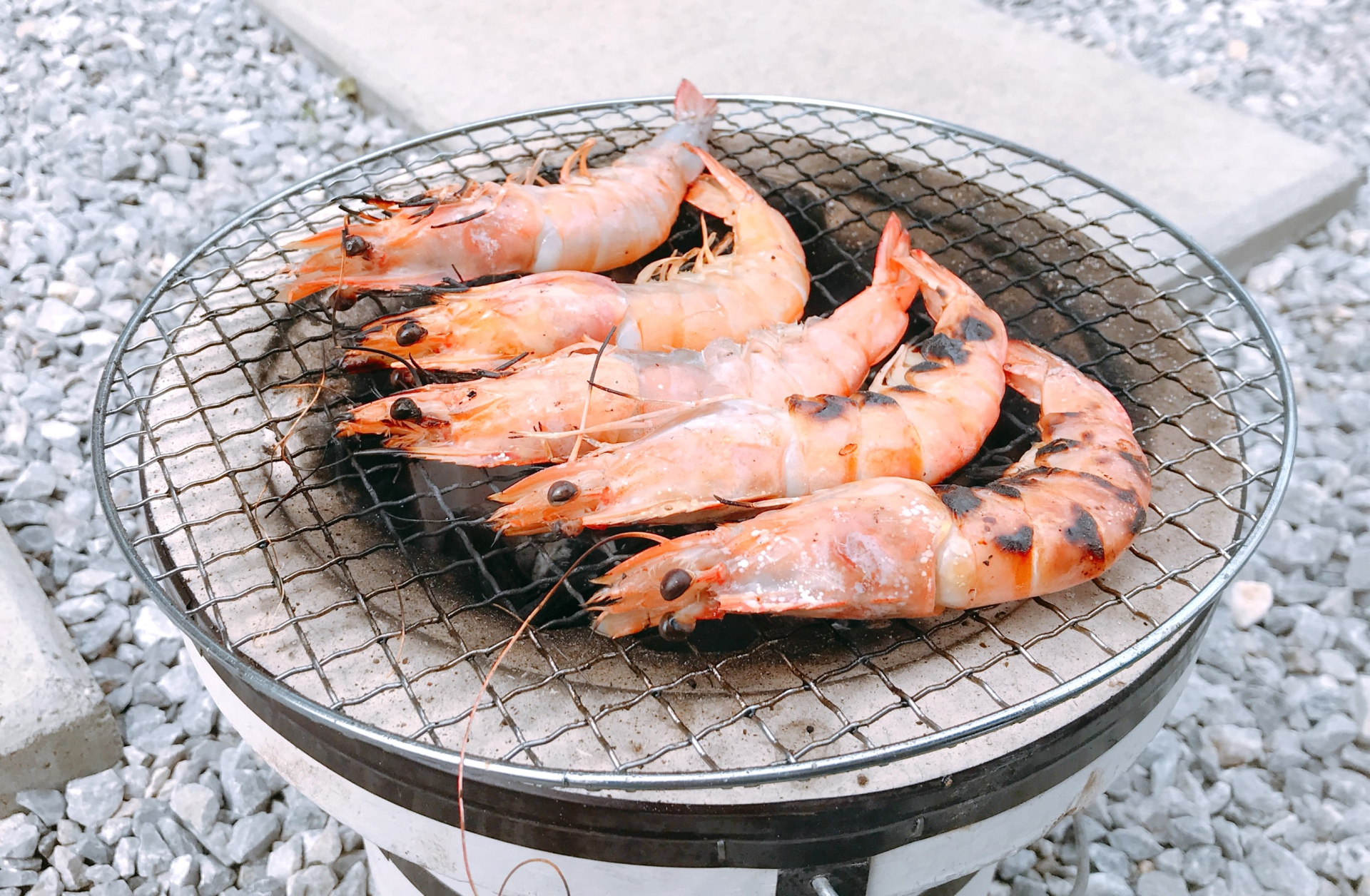
Quick answer: If you want a genuine diatomaceous-earth shichirin — the actual insulating clay body traditional grills are made from, not a metal box shaped like one — the Kinka Diatomite Charcoal Grill (Konro) BQ8F ($398.88) is the real thing. If you’re grilling for one or two people, or just want to try binchotan-style grilling without a big investment, the IPPINKA Water Stove (7.87 x 7.87 in) at $111.95 is the easiest entry point.
- What Is a Shichirin (and How Is It Different From a Konro or Hibachi)?
- Compare the Top Japanese Charcoal Grills
- What to Look for When Buying a Japanese Charcoal Grill
- The 3 Best Japanese Charcoal Grills, Reviewed
- Which One Should You Buy?
- Understanding “Water Stove” Technology vs. Traditional Shichirin Construction
- Caring for Your Japanese Charcoal Grill
- How to Use a Charcoal Water Stove Grill
- Common Mistakes to Avoid
- Frequently Asked Questions
- Is it safe to use a charcoal shichirin grill indoors?
- What’s the difference between a shichirin, a konro, and a hibachi?
- What kind of charcoal should I use?
- Can I use these grills for more than yakitori-style skewers?
- How many people can one of these grills realistically feed?
- Do these grills come with charcoal or tongs included?
- What You’ll Also Need
- Final Thoughts
What Is a Shichirin (and How Is It Different From a Konro or Hibachi)?
A shichirin is a small, portable charcoal stove traditionally used in Japan for grilling fish, yakitori skewers, mochi, and vegetables directly over charcoal. The name is often used interchangeably with “konro” and “hibachi” in English-language product listings, though the three terms don’t mean quite the same thing traditionally. Konro is a broader Japanese term for a cooking stove or burner, and in English-language listings it’s often applied specifically to rectangular charcoal grills like the ones used at yakitori counters. A traditional hibachi, meanwhile, is a charcoal brazier historically associated mainly with heating rather than grilling — which matters for US shoppers in particular, since “hibachi” in American English usually brings to mind a completely different thing: the large flat-top griddle used for tableside teppanyaki-style cooking at Japanese-American steakhouses. None of the grills in this guide are that kind of hibachi. In Western marketing, all three labels tend to get applied to the same category of compact tabletop charcoal grill, so it’s worth reading the specific product description and dimensions rather than assuming from the name alone.
What sets these grills apart from a typical Western charcoal grill is the insulating material. Classic shichirin are built from diatomaceous earth (a porous, fossilized-algae sediment) or heat-resistant clay, which holds heat efficiently at the coal bed while staying relatively cool on the exterior. That efficiency is part of the appeal: a shichirin can get a small bed of charcoal very hot with less fuel than an open metal grill, and the reflected, radiant heat is often described as giving grilled food a cleaner, more even sear than an open flame.
Compare the Top Japanese Charcoal Grills
| Product | Price | Size / Material | Best For |
|---|---|---|---|
| Kinka Diatomite Charcoal Grill (Konro) BQ8F | $398.88 | 12.2 x 9.06 x 7.87 in, diatomaceous earth | Overall pick / genuine diatomaceous-earth shichirin |
| IPPINKA Water Stove (7.87 x 7.87 in) | $111.95 | Ceramic/pottery, wood base | Best value / 1-2 people |
| IPPINKA Water Stove (11.81 x 11.81 in) | $133.01 | Ceramic/pottery, wood base | Small groups / more grilling surface |
What to Look for When Buying a Japanese Charcoal Grill
- An explicit “Made in Japan” claim. A huge number of “Japanese-style” charcoal grills sold on Amazon are generic imports that borrow the aesthetic and terminology without being made in Japan. Check the listing’s own bullet points and specifications, not just the product title or brand name.
- Body material. Diatomaceous earth or ceramic bodies retain heat efficiently and stay cooler to the touch on the outside, but they’re heavier and more fragile than metal — and many “shichirin-style” grills sold on Amazon are actually plain painted metal boxes rather than the real insulating clay. Check the listing’s material spec, not just the shape, if authenticity matters to you.
- Ventilation and airflow control. Look for an adjustable air vent or damper — this is how you control how hot the coals burn.
- What’s included. Some grills ship as just the stove body; others include a grate, stand, and even tongs. Check exactly what’s in the box before assuming you’re ready to grill on arrival.
- Intended use (indoor vs. outdoor). Burning charcoal produces carbon monoxide, which can accumulate even in a room with some airflow. Check whether the listing designates the grill for outdoor use only, and follow the manufacturer’s specific location and ventilation guidance rather than assuming a “compact” or “tabletop” grill is meant for indoor use.
- Size relative to your household. Shichirin-style grills are typically compact and built for small-scale cooking rather than a backyard cookout for a crowd. Check the actual cooking-surface dimensions — smaller tabletop models tend to suit one or two people, while larger models can accommodate a small group.
The 3 Best Japanese Charcoal Grills, Reviewed
Disclosure: As an Amazon Associate I earn from qualifying purchases.
1. Kinka Diatomite Charcoal Grill (Konro) BQ8F — Best Overall
Price: $398.88 | Rating: 5.0 stars (6 ratings) | Made in Japan: Manufacturer confirmed as Kinka Co., Ltd., a konro/shichirin maker based in Hekinan, Aichi Prefecture, Japan. The Amazon U.S. listing doesn’t include a separate country-of-origin field, but Kinka’s identical diatomaceous-earth konro line is sold in Japan explicitly labeled “日本製” (Made in Japan).
This is a genuine diatomaceous-earth shichirin — not a metal box shaped like one. The body (12.2″W x 9.06″D x 7.87″H, 16.6 lbs) is molded from diatomite, the same porous, heat-insulating clay traditional shichirin have always been made from, topped with a metal grate. The listing describes it as staying cooler on the outside than a metal-bodied grill while radiating far-infrared heat from the inner wall. It’s sold on Amazon by NIPPON Go Go Go and ships from Amazon.
One verified owner review describes it as running very hot and producing a quick, even sear while keeping the inside of the meat tender and juicy, though they noted the metal grate and hardware feel comparatively cheap next to the diatomite body itself.
Pros:
- Genuine diatomaceous-earth body — the traditional shichirin material, not painted metal
- Compact size suited to small-batch grilling for two or three people
- Consistent 5-star reviews, though from a small sample
Cons:
- The most expensive of the three grills in this guide
- Only 6 published ratings at the time of writing, so the owner track record is still limited
- Diatomaceous earth is more fragile than metal if dropped or knocked — handle it carefully
Bottom line: If you want the real material a shichirin is traditionally built from, this is the one to start with.
2. IPPINKA Japanese Tabletop BBQ Charcoal Grill Water Stove (7.87 x 7.87 in) — Best Value
Price: $111.95 | Rating: 5.0 stars (1 rating) | Made in Japan: Confirmed in listing
This is a different design from the classic shichirin shape — it’s built around what IPPINKA calls “water stove technology.” The grill has two nested bowls: charcoal burns in a perforated ceramic trivet, which sits inside a lower basin holding about 2 centimeters of water. According to the listing, this setup helps keep the exterior cooler, reduces smoke and moisture in the combustion gases, and reflects heat back up through the coal bed via far-infrared radiation. A wood base and metal grate finish the set. At 3.6 pounds it’s the lightest and smallest grill in this lineup, sized for one or two people at a time.
One verified purchaser who reviewed this exact grill described it as “really only useful for 1 or 2 person meals” but noted it gets very hot despite the small charcoal capacity, and that they’ve used it successfully to toast marshmallows for s’mores — a good sign that the heat output is real even at this compact size.
Pros:
- Lowest price of the three, with a genuinely different (and interesting) heating mechanism
- Small footprint — easy to store, easy to justify for occasional use
- In stock with reasonable availability at the time of writing
Cons:
- Small grilling surface — not designed for feeding more than one or two people at once
- Not dishwasher safe; the listing specifies hand cleaning only
- Made of pottery, so it’s more fragile than a metal-bodied grill if dropped
Bottom line: A low-cost, low-commitment way to try authentic Japanese charcoal grilling before deciding whether to invest in something larger.
3. IPPINKA Japanese Tabletop BBQ Charcoal Grill Water Stove (11.81 x 11.81 in) — Best for Small Groups
Price: $133.01 | Rating: No customer reviews yet at the time of writing | Made in Japan: Confirmed in listing
This is the larger sibling of the water stove grill above, using the same nested-bowl, water-stove design and the same ceramic and wood-base construction, but with roughly 50% more surface area (11.81 x 11.81 inches versus 7.87 x 7.87 inches) and about twice the weight at 7.3 pounds. The larger grate area makes it more realistic for grilling for two or three people, or for laying out several yakitori skewers at once, while keeping the same low-smoke, water-cooled design as the smaller version.
Pros:
- More grilling surface than the compact water stove without moving up to the full shichirin/konro price point
- Same smoke-reducing, heat-retaining water stove design as the smaller model
- Mid-range price between the two other options in this guide
Cons:
- No customer reviews yet for this specific size at the time of writing
- Still made of ceramic/pottery, so it needs the same careful handling as the smaller water stove
- Stock was limited (4 units) at the time of writing
Bottom line: The middle-ground pick if the compact water stove feels too small but the full-price shichirin feels like more than you need.
Which One Should You Buy?
- Want a genuine diatomaceous-earth shichirin: Go with the Kinka Diatomite Charcoal Grill (BQ8F).
- Cooking for one or two people, or trying this style of grilling for the first time: The compact 7.87 x 7.87 in Water Stove is the lowest-risk entry point.
- Cooking for a small group but don’t need a full-size grill: The 11.81 x 11.81 in Water Stove splits the difference in size and price.
- Buying as a gift: The genuine diatomaceous-earth shichirin (option 1) reads as the more obviously “authentic” gift, since it’s made of the actual traditional material rather than metal.
In my own home, a full-size BBQ grill is what we reach for when we’re hosting a crowd, but for two or three people, we almost always use a shichirin instead. It burns through far less charcoal, which keeps costs down, and cleanup is simple — once the coals are out, there’s nothing to scrub, just a small amount of spent charcoal to toss. We usually set it up in the yard and grill together as a family, and between the smaller batches and the far-infrared heat, we find the food comes out noticeably plumper and more tender than off a standard grill.
Understanding “Water Stove” Technology vs. Traditional Shichirin Construction
Two of the three grills in this guide use a water-based design that’s worth explaining, since it’s a genuine point of difference rather than just marketing language. In the water stove design, charcoal burns in a perforated upper bowl (the trivet) that sits above a lower reservoir holding a small amount of water. According to the manufacturer, this arrangement does a few things: it keeps the outer body cooler to the touch than a grill where the coal bed sits directly against the walls, it’s said to reduce the moisture content of the combustion gases for a cleaner grilling environment, and the water is described as reflecting radiant heat back up toward the food. The underlying mechanism — a water buffer between the fire and the outer shell — is a legitimate and long-used approach to indirect, controlled-temperature cooking.
The classic shichirin/konro shape, by contrast, doesn’t use a water layer — it relies on the insulating properties of the diatomaceous earth body itself, paired with a metal grate positioned above the coal bed and a stand that provides basic airflow underneath. Both approaches are legitimate designs rooted in Japanese manufacturing; the water stove is simply a more recent variant on the same core idea of contained, efficient charcoal grilling.
Caring for Your Japanese Charcoal Grill
Cleaning instructions vary by model, so always follow the manufacturer’s own care guidance for your specific grill rather than assuming one set of rules applies across all three. Both water stove models explicitly state they are not dishwasher safe and should be cleaned by hand; the classic shichirin/konro grill’s listing doesn’t make a dishwasher claim either way, so treat gentle hand cleaning as the safer default for that one too unless you find guidance stating otherwise. Let the grill cool completely before cleaning, empty out spent ash and charcoal residue, and wipe down the interior and grate with a damp cloth. Avoid soaking a ceramic or diatomaceous-earth body in water unless the manufacturer’s care instructions say it’s fine to do so. Clean removable metal components (the grate and stand) according to the manufacturer’s instructions and dry them thoroughly before storage to prevent rust.
Ceramic, pottery, and diatomaceous-earth bodies can all chip or crack if dropped or knocked against a hard surface, so handle them carefully.
How to Use a Charcoal Water Stove Grill
Based on IPPINKA’s own instructions for the water stove models, the setup is straightforward:
- Place the main body (the lower water bowl) on a heat-safe surface, such as the included wood base, and add roughly 2 centimeters (about 0.8 inches) of water.
- Load charcoal into the trivet (the upper, perforated bowl) and light it — the manufacturer suggests lighting the charcoal on a gas stove burner before transferring it.
- Once the charcoal is fully lit, set the trivet on top of the main water-filled body.
- Place the metal grate on top and begin grilling.
For the classic diatomaceous-earth konro, the process is simpler: load charcoal (binchotan or general lump charcoal) into the diatomite body, light it according to the charcoal manufacturer’s instructions, and then position the metal cooking grate on top as directed.
Common Mistakes to Avoid
- Assuming “ventilation” makes indoor charcoal grilling safe. Burning charcoal produces carbon monoxide, an odorless gas that can accumulate to dangerous levels even in a room with an open window or a fan running. Follow the manufacturer’s location guidance for your specific grill, and never use a grill designated for outdoor use only indoors.
- Skipping the water in a water stove model. If the manufacturer’s instructions call for water in the base, don’t operate the grill without it.
- Using an unsuitable fire starter. Follow the grill and charcoal manufacturer’s lighting instructions — some specialty charcoals like binchotan require a different lighting approach than standard briquettes, and lighter fluid can leave an unwanted chemical taste.
- Overloading the cooking grate. Keep food within the usable cooking area rather than exceeding the load or placement guidance provided by the manufacturer.
- Dishwashing a body that isn’t labeled dishwasher-safe. As noted above, this applies to both water stove models; hand-clean unless your specific grill’s instructions say otherwise.
Frequently Asked Questions
Is it safe to use a charcoal shichirin grill indoors?
Burning charcoal produces carbon monoxide, an odorless gas that can be dangerous — even deadly — in enclosed spaces, and it can build up to unsafe levels regardless of how small the grill is or how much airflow you think a room has. Follow the manufacturer’s location and ventilation instructions for your specific grill, and never use a grill that’s designated for outdoor use only indoors. If you’re unsure, grilling outdoors is the safer default.
What’s the difference between a shichirin, a konro, and a hibachi?
English-language retailers often use these terms loosely and interchangeably. Shichirin refers to a small, portable Japanese charcoal stove; konro is a broader Japanese term for a cooking stove or burner and is often used for rectangular charcoal grills in English-language listings. A traditional hibachi is a charcoal brazier historically associated mainly with heating rather than the flat-top “hibachi” cooking familiar to many Americans from Japanese-American steakhouses. Don’t rely on the name alone to judge a product — check the actual dimensions, materials, and intended use in the listing.
What kind of charcoal should I use?
Compatibility varies by grill, so check the manufacturer’s fuel recommendations before use. Diatomaceous-earth konro grills like the Kinka model in this guide are traditionally paired with binchotan (a dense, slow-burning Japanese charcoal prized for high, steady heat with minimal smoke or flame) — it’s also the charcoal shown paired with this grill in its own listing. General lump charcoal will work too, but binchotan is the more traditional and typically pricier choice.
Can I use these grills for more than yakitori-style skewers?
Yes. Small tabletop charcoal grills like these are traditionally used for a range of foods — fish, vegetables, mochi, and small cuts of meat — not just skewers. The main constraint is the compact grilling surface, not the type of food.
How many people can one of these grills realistically feed?
This is our own assessment based on cooking-surface dimensions and at least one owner’s direct experience, not a manufacturer-stated capacity. Based on its size, we think the smallest water stove model is best suited to one or two people at a time. The larger water stove and the full shichirin/konro model seem more practical for two to three people if you’re comfortable grilling in batches, since this style of cooking is inherently “cook in rounds” rather than a full-size barbecue.
Do these grills come with charcoal or tongs included?
At the time we checked, no — charcoal, tongs, and a way to light the charcoal (such as a chimney starter) were sold separately for all three grills. Check the “What You’ll Also Need” section below for specific in-stock options.
What You’ll Also Need
- Binchotan charcoal — for the most traditional flavor and burn characteristics, such as IPPINKA’s Binchotan charcoal sourced from Kishu, Japan.
- Long stainless steel grilling tongs — IPPINKA also sells Japanese stainless steel tongs made for yakiniku and yakitori-style grilling, sized for maneuvering food over a small coal bed without reaching too close to the heat.
- A charcoal chimney starter — for lighting charcoal safely and evenly before transferring it to the grill, rather than using lighter fluid, such as the Kingsford Heavy Duty Charcoal Chimney Starter, the #1 best-seller in its category with a 4.7-star rating across more than 21,000 reviews.
Final Thoughts
None of the three grills in this guide are cheap impulse buys, and none of them are meant to replace a full-size backyard grill — they’re a different category of tool built around a specific, traditional style of small-batch, radiant-heat charcoal grilling. All three are currently in stock, and all three come from Japanese manufacturers — the two water stove models are explicitly listed as made in Japan, and the diatomaceous-earth konro’s manufacturer (Kinka Co., Ltd.) is a verified Japan-based maker even though its U.S. Amazon listing doesn’t include a separate country-of-origin field. Each serves a slightly different need: the diatomaceous-earth konro for the most traditional material and feel, and the two water stove sizes for a lower-cost or larger-surface alternative built around a genuinely different heating mechanism. Whichever size you choose, plan on gentle hand cleaning, careful handling of the ceramic bodies, and following the manufacturer’s location and ventilation instructions closely any time you’re cooking with charcoal.
コメント