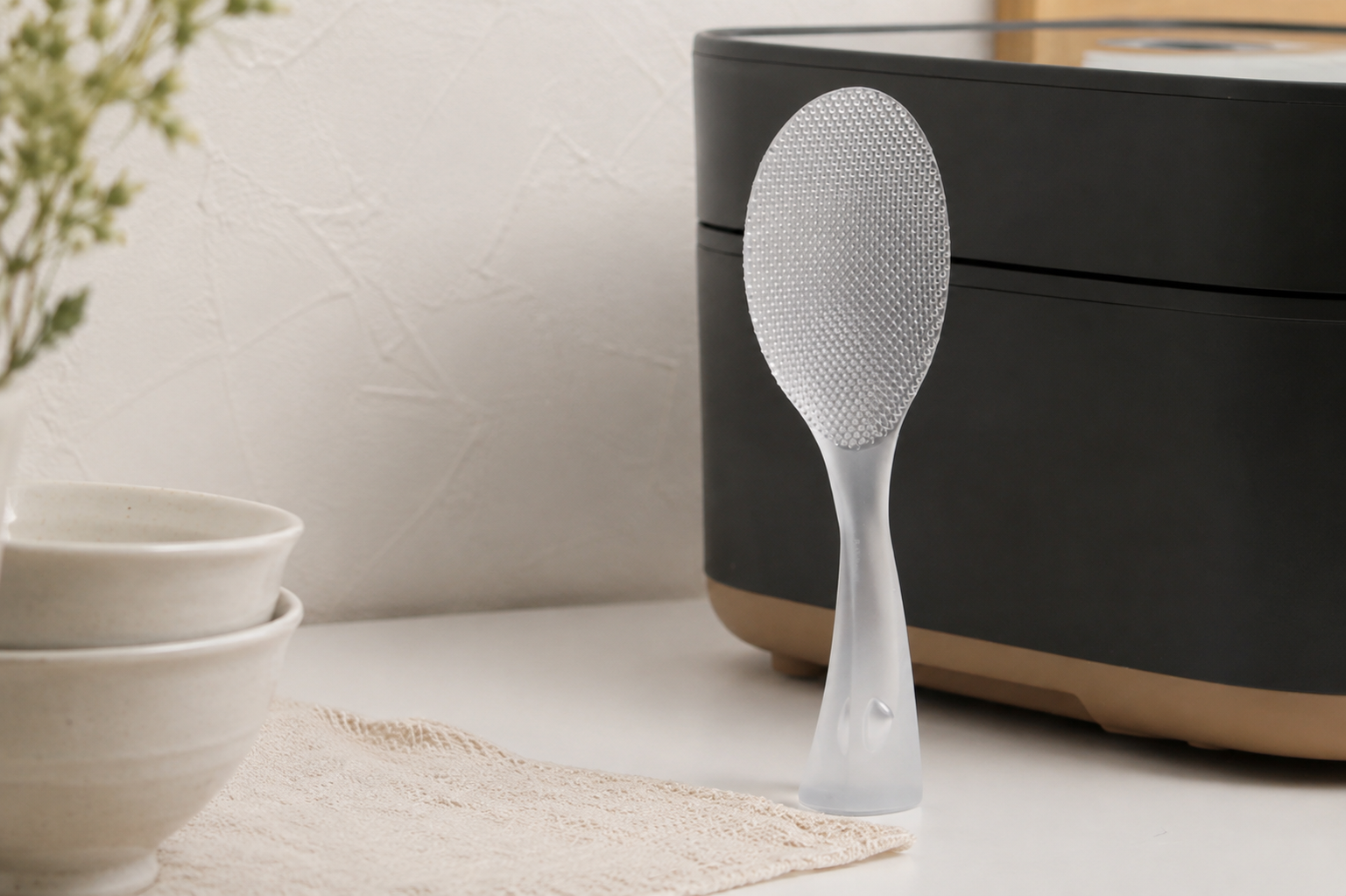
If you’re just here for the quick answer: the Marna K555CL Standing Rice Spoon ($10.98) is our top pick for most kitchens — a Good Design Award-winning, Made in Japan rice paddle with an embossed non-stick surface and a wide base that lets it stand upright, keeping the rice-contact surface off the counter between servings. If you want the traditional wooden version, the Yamaco Temahima Kobo Hinoki Rice Spoon ($14.80) is the pick.
- What Is a Shamoji, and Why Does It Matter?
- Comparison Table
- What to Look for When Buying a Rice Paddle
- Product Reviews in Detail
- Which One Should You Buy?
- Sizing Guide
- Material Deep Dive
- Care and Maintenance
- How to Use a Shamoji Properly
- Common Mistakes
- FAQ
- Is it safe to use a metal rice paddle in my rice cooker?
- Can I put a wooden or bamboo shamoji in the dishwasher?
- Why does my rice stick to the paddle?
- What’s the difference between a shamoji and a regular serving spoon?
- Do I need a different paddle for sushi rice versus regular rice?
- Are all Japanese-branded rice paddles actually made in Japan?
- What You’ll Also Need
- Final Thoughts
What Is a Shamoji, and Why Does It Matter?
A shamoji (しゃもじ) is the flat, paddle-shaped scoop Japanese cooks use to serve rice and fold it after cooking — distinct from a Western serving spoon or ladle. The shape matters more than it looks: a shamoji’s broad, thin, slightly curved blade is built to slide under a mound of hot rice and lift or turn it, pressing down far less than a rounded spoon or ladle typically would.
The tool also carries cultural weight beyond the kitchen. The rice-paddle-making town of Miyajima, in Hiroshima Prefecture, is closely associated with the shamoji’s popularization — local legend credits a Buddhist monk named Seishin, around the 1790s–1800s, with a dream of the goddess Benzaiten holding a biwa (a Japanese lute) shaped like a rice scoop, which he then taught islanders to carve. Because “scooping up rice” (meshi wo toru) sounds like “scooping up good fortune,” the shamoji became a good-luck charm — Miyajima is home to a famous oversized ceremonial shamoji, and rice paddles are still given as gifts for new households, weddings, and sports victories.
Functionally, a shamoji’s broad, relatively flat shape makes it easier to lift, turn, and portion rice without pressing down on it as much as a deep serving spoon would, and — on the non-stick versions — it resists the sticky starch that makes freshly cooked Japanese short-grain rice cling to plain plastic or metal.
Comparison Table
| Product | Price | Material | Best For |
|---|---|---|---|
| Marna K555CL Standing Rice Spoon | $10.98 | TPX (polymethylpentene) resin | Best Overall |
| JapanBargain Standing Rice Scoop | $9.99 | Polypropylene, silicone, stainless-steel base | Best Budget |
| Yamaco Temahima Kobo Hinoki Rice Spoon (Medium) | $14.80 | Unpainted hinoki (Japanese cypress) wood | Best Traditional Wooden Pick |
| Morikuru Bamboo Rice Paddle | $19.99 | Natural bamboo | Best Bamboo Pick |
What to Look for When Buying a Rice Paddle
- Material compatibility with your rice cooker. If your inner pot has a non-stick or Teflon-style coating, avoid rigid metal paddles — manufacturers of non-stick cookware generally advise against metal utensils because they can scratch the coating. Wood, bamboo, and soft resin/silicone paddles are the safer everyday choice.
- Country of manufacture. Look for an explicit “Made in Japan” claim or a stated country of manufacture on the listing itself — not just a Japanese-sounding brand name, and not a claim that only appears in a customer review.
- Self-standing vs. flat design. A weighted or wide-based paddle that stands upright keeps the working end off the counter, which is both more hygienic and less messy than a flat paddle that has to rest on a dish or directly on the counter.
- Surface texture. Embossed or dimpled non-stick surfaces (common on Japanese resin paddles) are specifically designed to reduce rice sticking compared to a smooth surface.
- Size. Most standard shamoji run 7–9 inches long, sized for a rice cooker pot and a few bowls of rice; larger paddles (10+ inches) are meant for serving bigger batches or communal pots.
- Care requirements. Wood and bamboo paddles are generally hand-wash only; resin and silicone versions are usually dishwasher-safe. Check the specific listing, since this varies by product.
Product Reviews in Detail
Disclosure: As an Amazon Associate I earn from qualifying purchases.
Marna K555CL Standing Rice Spoon — Best Overall
Marna’s clear standing rice spoon is a genuine design landmark in Japanese kitchenware — the listing describes this design as a Good Design Award winner in 2009, the same award program that recognizes projects ranging from consumer electronics to public infrastructure in Japan. The blade is molded from TPX resin (a heat- and scratch-resistant polymethylpentene plastic made by Mitsui Chemicals), with an embossed surface pattern the listing describes as designed to keep rice grains from sticking without crushing them. The wide, flat base lets the whole paddle stand upright on the counter rather than lying flat or leaning in a rest.
What makes the Marna stand out isn’t any single feature — it’s that it combines the things most people actually notice day to day: the paddle stays off the counter, the textured face addresses sticking, and the resin build needs less care than wood.
Pros: Made in Japan; award-winning design; large, well-established review base (4.5 stars from roughly 4,470 ratings, with 400+ bought in the past month at time of writing); dishwasher-safe; genuinely functional self-standing base.
Cons: It’s plastic, so it lacks the tactile, traditional feel of a wood or bamboo paddle; the clear finish can show rice residue if not rinsed promptly.
Bottom line: The specific combination of a real design pedigree, verified Japanese manufacture, and an enormous, consistently positive review base makes this the easiest all-around recommendation for most home kitchens.
JapanBargain Standing Japanese Rice Scoop — Best Budget
This is the least expensive Made in Japan option in this guide at $9.99, and it still checks the important boxes: the listing states the body is made from food-grade polypropylene and silicone, it’s BPA-free, and it stands upright thanks to a weighted stainless steel base. JapanBargain calls the standing motion a “teeter-totter” design — the paddle rocks slightly on its base rather than staying rigidly still, which some reviewers describe as a fun, if minor, quirk rather than a functional issue.
Pros: Lowest price of the Made in Japan picks here; explicit BPA-free, food-grade material claim; self-standing weighted base; dishwasher safe per the listing; comes in multiple colors.
Cons: Smaller review base (122 ratings) than the Marna pick; the rocking “teeter-totter” base is a matter of taste — some cooks may prefer a paddle that sits perfectly still.
Next to the Marna, this is the one to reach for when the extra couple of dollars matters more than the design pedigree — it still checks every Made in Japan and food-safety box that matters.
Bottom line: If you want a genuine Made in Japan shamoji without paying a premium, this is the one to buy.
Yamaco Temahima Kobo Hinoki Rice Spoon — Best Traditional Wooden Pick
For cooks who want the pre-plastic version of this tool, Yamaco’s Temahima Kobo line makes an unpainted hinoki (Japanese cypress) rice spoon with a Country of Manufacture listed as Japan on the product page. Hinoki has a long history in Japanese kitchenware — it’s the wood traditionally used for oshizushi presses, hangiri sushi tubs, and cutting boards, prized for its light color, clean scent, and workability. It’s also often described as having mild natural antibacterial properties, though that’s a general property of hinoki as a wood rather than something tested on this specific listing.
Next to the two resin picks, the appeal here isn’t a feature spec — it’s the plain, single-material simplicity for cooks who’d rather avoid molded plastic in the kitchen entirely.
Pros: Confirmed country of manufacture Japan; unpainted, single-material construction with no plastic or coating to wear off; hinoki’s aroma and light color are part of the appeal for cooks who want a traditional look and feel; lightweight at under an ounce.
Cons: Unpainted wood requires hand-washing and prompt drying to avoid staining or warping; smaller listing with fewer accumulated reviews than the resin picks, so there’s less review history to lean on; doesn’t stand upright on its own like the resin paddles.
Bottom line: This is the pick for someone who specifically wants a traditional, single-material wooden shamoji rather than a modern molded one.
Morikuru Bamboo Rice Paddle — Best Bamboo Pick
Morikuru’s bamboo paddle is described on the listing as handcrafted in Japan from natural bamboo, with a smoothly polished surface the brand markets as safe for non-stick, coated rice cooker pots. Worth noting: the resin paddles in this guide (Marna, JapanBargain) aren’t rigid metal either, so they’re also gentle on coated pots — bamboo isn’t uniquely protective here, just a different, plastic-free material option. At 9.05 inches long and about 68mm wide, it’s sized similarly to the resin standing paddles in this guide, just without the weighted standing base.
Pros: Explicit “handcrafted in Japan” claim on the listing; bamboo’s smooth, hard surface won’t scratch cookware coatings; lightweight and simple, with no plastic parts.
Cons: Highest price in this guide at $19.99 despite being one of the simpler designs; doesn’t self-stand, so it needs a rest or plate; smallest review base of the four (61 ratings) and the lowest average rating (4.2 stars), though still solidly positive; like any bamboo tool, it should be hand-washed rather than run through the dishwasher.
Bottom line: If you’d simply rather use bamboo than plastic or resin, this is a solid, gentle-on-cookware option — not because it’s uniquely better at protecting non-stick coatings than the resin picks above, but because some cooks just prefer a plastic-free tool.
Which One Should You Buy?
Having gone through all four, the Marna is our default recommendation for most kitchens: the JapanBargain model costs a little less, and the Yamaco has more traditional appeal, but the Marna strikes the best overall balance — it stands upright, needs little maintenance, is dishwasher-safe, and carries by far the largest and most consistent body of owner feedback of the four.
- Want the best all-around option? Marna K555CL — award-winning design, huge review base, self-standing.
- On a budget but still want Made in Japan? JapanBargain Standing Rice Scoop.
- Want a traditional, single-material wooden paddle? Yamaco Temahima Kobo Hinoki Rice Spoon.
- Prefer bamboo over plastic or resin? Morikuru Bamboo Rice Paddle.
Sizing Guide
These are general size categories rather than a strict industry standard — the right length comes down to your rice cooker’s capacity and how much you’re serving at once.
| Length | Typical Use |
|---|---|
| 5–7 inches | Small rice cookers (3-cup or smaller), single servings |
| 7–9 inches | Everyday household rice cookers (5–6 cup) — all four picks in this guide fall in or near this range |
| 10+ inches | Large donabe or communal serving pots, bigger batches (e.g., for sushi rice prep in a hangiri tub) |
Material Deep Dive
The four paddles above cover the three materials you’ll actually find in Japanese-made rice paddles:
TPX resin (Marna): TPX is a brand name for polymethylpentene, a clear, heat-resistant plastic developed by Mitsui Chemicals. On this paddle it’s molded with an embossed pattern the listing says is meant to reduce rice sticking without crushing grains — a middle ground between the toughness of plastic and the low-stick surface cooks want.
Polypropylene + silicone (JapanBargain): A common, food-grade, BPA-free plastic combination; the stainless steel weighted base is what gives this design its self-standing “teeter-totter” behavior rather than the blade material itself.
Hinoki wood (Yamaco): A single-material, unpainted cypress wood traditionally used across Japanese kitchen tools — from cutting boards to hangiri sushi tubs — valued for its workability, light color, and clean scent, and often described as having some natural antibacterial character. That’s a general property of hinoki as a wood rather than a tested spec of this specific listing.
Bamboo (Morikuru): A fast-growing, naturally hard, smooth-surfaced material that’s gentle on non-stick coatings compared to metal or harder woods — the main reason to reach for it if your rice cooker pot has a non-stick lining.
Care and Maintenance
Resin/plastic paddles (Marna, JapanBargain): Both listings describe their paddles as dishwasher-safe, but hand-washing promptly after use will keep the embossed non-stick surface working longer and prevent staining from foods like curry.
Wood paddle (Yamaco hinoki): Hand-wash only, and dry it promptly rather than leaving it to air-dry flat in a wet dish rack — standing water can warp or stain unpainted wood over time. Avoid soaking it for extended periods.
Bamboo paddle (Morikuru): Also hand-wash only; avoid the dishwasher’s heat and prolonged soaking, which can dry out or crack bamboo over years of use. A light wipe with food-safe oil occasionally can help keep bamboo tools from drying out, though this isn’t a requirement from the manufacturer’s own listing.
How to Use a Shamoji Properly
The traditional technique for mixing rice — especially sushi rice, where texture matters most — is to cut and fold rather than stir. Hold the shamoji at a slight angle and slice through the rice in straight lines, then fold sections over from the edges toward the center, rotating the bowl as you go. This “cutting” motion separates individual grains and lets steam escape without mashing them into a paste, which is exactly what stirring in circles tends to do. For everyday serving (not sushi prep), simply sliding the flat blade under a scoop of rice and lifting works fine — the flat, thin profile of a proper shamoji makes this easier than using a spoon or ladle.
Common Mistakes
- Using a metal spoon in a non-stick rice cooker pot. This is the single most common way home cooks scratch an expensive non-stick coating; stick to wood, bamboo, resin, or silicone.
- Stirring rice in circles instead of cutting and folding. Circular stirring crushes grains and makes rice gummy, especially with short-grain Japanese rice.
- Leaving a wood or bamboo paddle to soak in the sink. Standing water is the fastest way to warp, stain, or crack an unfinished wood paddle.
- Assuming “Japanese-style” means Made in Japan. Many rice paddles sold on Amazon use Japanese design language or naming without being manufactured in Japan — check the listing’s stated country of manufacture rather than the branding.
FAQ
Is it safe to use a metal rice paddle in my rice cooker?
Only if your rice cooker’s inner pot is bare stainless steel. If it has any non-stick or Teflon-style coating — which most home rice cookers do — manufacturers generally recommend against metal utensils because they can scratch the coating over time. Wood, bamboo, resin, or silicone paddles are the safer default.
Can I put a wooden or bamboo shamoji in the dishwasher?
It’s not recommended. The sustained heat and water exposure in a dishwasher cycle can warp, crack, or dry out unfinished wood and bamboo faster than hand-washing and air-drying.
Why does my rice stick to the paddle?
Freshly cooked short-grain Japanese rice releases starch as it cools, which is naturally sticky. Embossed or dimpled non-stick surfaces (like the Marna and JapanBargain picks) are specifically designed to reduce this; rinsing the paddle in water before use also helps prevent sticking with any material.
What’s the difference between a shamoji and a regular serving spoon?
A shamoji’s blade is flat, broad, and thin, built to slide under rice and lift or fold it without crushing the grains. A rounded spoon or ladle tends to compress and mash rice rather than separate it.
Do I need a different paddle for sushi rice versus regular rice?
Not strictly, but many cooks prefer a slightly larger, flat wooden or bamboo paddle for sushi rice prep in a hangiri tub, since the cutting-and-folding technique benefits from a wide, thin blade. Any of the paddles in this guide will work for both.
Are all Japanese-branded rice paddles actually made in Japan?
No. Some listings use Japanese-sounding names or design cues without stating a country of manufacture, or are made elsewhere despite Japanese branding. Always check the listing itself for an explicit “Made in Japan” or “Country of Manufacture: Japan” statement rather than assuming based on the name.
What You’ll Also Need
If you’re setting up a full rice station, pair your shamoji with a rice paddle stand or rest to keep the working end off the counter between uses — useful for paddles that don’t self-stand, like the Yamaco hinoki and Morikuru bamboo picks above. If you’re using your paddle for sushi rice specifically, see our guide to Japanese hangiri sushi rice tubs for the wooden tub these paddles are traditionally used with, and our donabe and kamado-san rice cooker guide if you’re cooking the rice itself the traditional way.
Final Thoughts
A rice paddle is a small purchase, but the material and design differences here are real: a Made in Japan resin paddle like the Marna or JapanBargain picks gets you a genuinely non-stick, self-standing tool for a normal kitchen utensil price, while the Yamaco hinoki and Morikuru bamboo picks are better choices if you specifically want a traditional, single-material, plastic-free tool. All four listings we reviewed here state an explicit Made in Japan or Country of Manufacture: Japan claim on the product page itself — for the Yamaco hinoki spoon specifically, note that this confirms manufacture in Japan, not necessarily that every material detail we describe (like the general antibacterial character of hinoki wood) has been tested on this exact product. For most home cooks, the Marna K555CL remains the easiest recommendation: a strong design pedigree, a huge and consistently positive review base, and a genuine “Made in Japan” pedigree for about $11.
コメント