Affiliate disclosure: This post contains affiliate links. If you buy through them, I may earn a commission at no extra cost to you.
Quick answer: If you just want my top pick, go with the TIKUSAN Ceramic Ripple Ridge Mortar & Pestle Set. It offers the classic Mino-ware grinding ridges, a built-in pour spout, and a size that works for everyday cooking, typically in the $40–$50 range. Read on for the full comparison, how to use one, and three simple recipes to get you started.
What Is a Suribachi, and Why Do You Need One?
If you’ve ever tried to make real sesame dressing, goma-ae, or a proper pesto and ended up with something more “chunky paste” than “silky sauce,” the problem probably wasn’t your recipe. It was your tool.
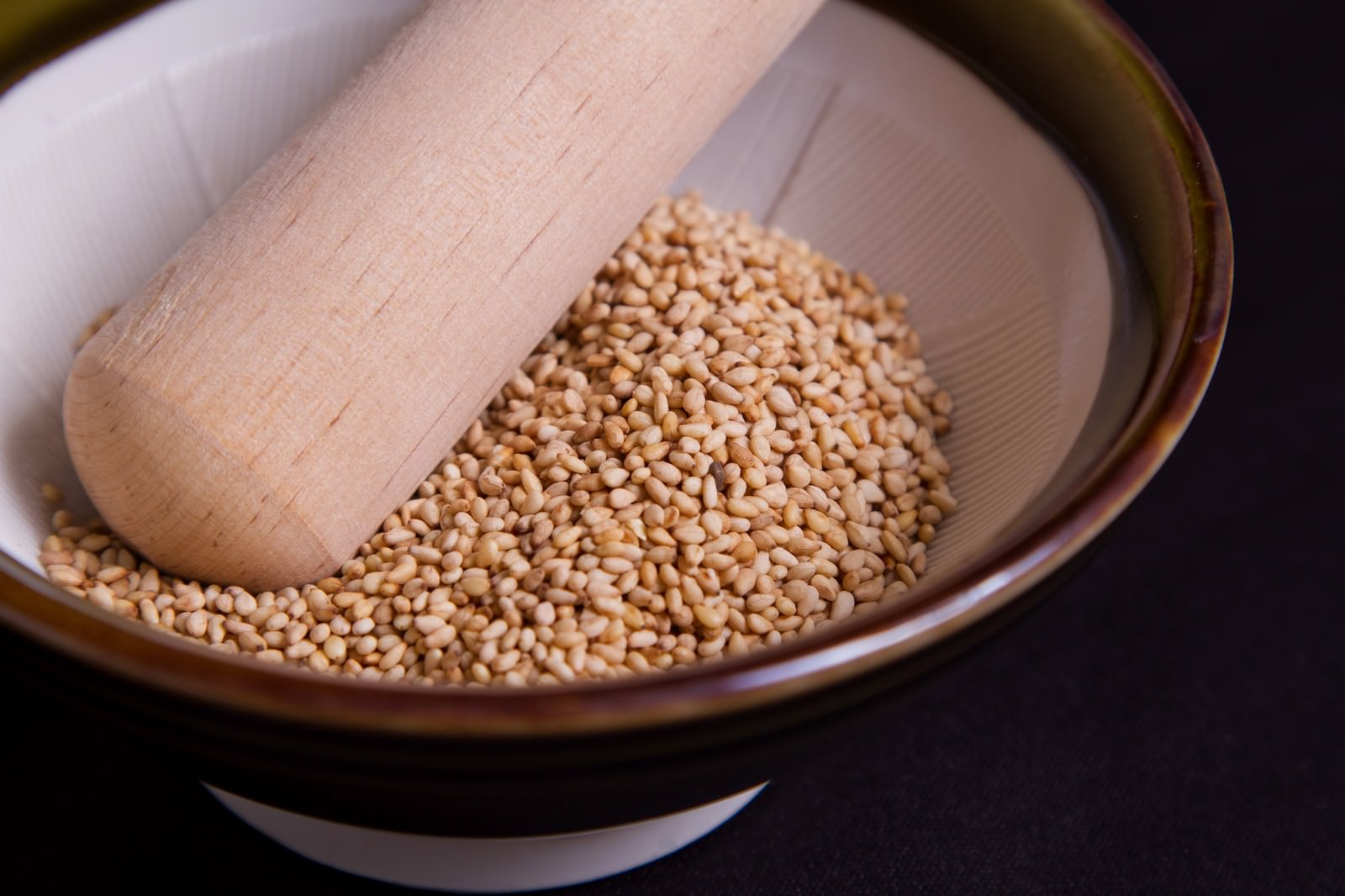
A suribachi is a Japanese ceramic mortar with fine grooves — called kushi-no-me — carved into the unglazed interior. Paired with a wooden pestle (the surikogi), it grinds sesame seeds, garlic, and herbs into a smooth paste far more effectively than a smooth Western mortar. Japanese households have used this pair for generations, mostly because nothing else does the job quite as well.
I’ve tested four sets that consistently show up as favorites for home cooks outside Japan. Here’s how they compare.
Comparison at a Glance
| Product | Price Range | Size | Best For |
|---|---|---|---|
| TIKUSAN Ripple Ridge Set | $40–$50 | 7.1 in | Everyday all-purpose use |
| Zen Table Japan Traditional (Large) | $17–$23 | 8.6 in | Families, bigger batches |
| Made in Japan Ripple Ridge (Ambidextrous) | $30–$40 | 5.91 in | Left-handed cooks |
| Made in Japan Ripple Ridge (Small, Ivory) | $28–$38 | 4.92 in | Gifts, small kitchens |
What Serious Suribachi Users Actually Look For
Once you’ve used a few of these, you start noticing details that don’t show up in a spec sheet. Here’s what separates a suribachi you’ll love from one you’ll tolerate.
Hand-Carved Ridges vs. Mold-Pressed
Not all ridges are made the same way. Traditional workshops carve the interior grooves — the kushime — by hand, pressing a sharpened metal comb into the clay before firing, then re-sharpening that tool regularly the way you’d sharpen a knife. Mold-pressed suribachi skip this step for speed, and the ridges come out shallower and duller as a result. You can usually feel the difference with a fingertip before you ever grind anything: hand-carved ridges have a slight bite to them, while mold-pressed ones feel smoother and rounder.
Two of the four sets above are explicitly handcrafted, and both actually come from the same workshop — Yamagata Touen, with roots back to 1794 — just in different sizes and finishes. Worth a closer look if hand-carved ridges matter to you.
How Long Do the Ridges Actually Last?
With normal home use, the ridges on a quality suribachi will outlast most other kitchen tools you own — we’re talking years, even decades, not months. That said, they do wear down gradually with heavy daily use, especially on mold-pressed pieces where the ridges were shallower to begin with. You’ll know it’s time to consider a replacement when sesame seeds start sliding around instead of breaking down, even with proper technique. For most home cooks grinding a few times a week, this simply isn’t something you’ll need to think about for a very long time.
Beyond Sesame: Other Ways to Use a Suribachi
Sesame gets all the attention, but a suribachi earns its keep on other dishes too. Tororo (grated mountain yam) turns silkier when finished in a suribachi rather than a box grater alone. It’s also a quick way to grind whole spices for curry — cumin, coriander, and dried chilies release more aroma when ground by hand than pre-ground from a jar. And for miso-based dressings, grinding the miso with a little sesame first, before adding liquid, gives a noticeably smoother result than just stirring it together.
Product Reviews in Detail
TIKUSAN Ceramic Ripple Ridge Mortar & Pestle Set — Best Overall
Check the latest price on Amazon →
This is the one I’d point most people toward first. It’s made from Mino ware, one of Japan’s most established pottery traditions, and the ridged interior is deep enough to handle everything from sesame paste to a rough salsa.
Pros:
- Built-in spout makes pouring dressings and sauces mess-free
- Mid-size bowl (7.1 in) works for both small and family-size batches
- Lightweight and easy to handle, though it’s worth keeping a firm grip while grinding since it can shift on a slick counter
Cons:
- No lid included, so leftover paste needs to be transferred to another container
Bottom line: This is the one to buy if you don’t want to think about it too much — it just works.
Zen Table Japan Traditional (Large) — Best for Families
Check the latest price on Amazon →
If you’re cooking for more than two or three people, or you like to batch-make sesame dressing for the week, size matters. At 8.6 inches, this is noticeably roomier than the others on this list.
Pros:
- Noticeably roomier than the smaller sets, so you can grind bigger batches without refilling
- Made by a pottery workshop with over a century of history
- Doubles as a rustic serving bowl for dips
Cons:
- Takes up more cupboard space than the smaller options
Bottom line: Go with this if you’re regularly cooking for a crowd — the extra size earns its keep.
Made in Japan Ripple Ridge Set (Ambidextrous) — Best for Left-Handed Cooks
Check the latest price on Amazon →
Most suribachi are designed with a clockwise grinding motion in mind, which quietly favors right-handed cooks. This one solves that with a ridge pattern that works equally well in either direction — a small detail, but one that matters if you’ve ever fought your own mortar.
Pros:
- Genuinely ambidextrous ridge design
- Compact 5.91 in size fits easily in smaller kitchens
- Comes from Mino ware potters with a documented design process
Cons:
- On the smaller side if you cook for a crowd
Bottom line: If you’re left-handed, skip the guessing game and just get this one.
Made in Japan Ripple Ridge (Small, Ivory) — Best for Gifts
Check the latest price on Amazon →
This smaller sibling of the ambidextrous set above comes from the same 230-year-old workshop, Yamagata Touen, just in a compact size and a soft ivory glaze that presents beautifully as a gift. It’s the same waved-ridge design, just scaled down.
Pros:
- Handmade by a workshop with a documented history back to 1794
- Ivory glaze and compact 4.92 in size make it feel like a considered gift, not just a kitchen tool
- Same ambidextrous ridge design as the larger version, so it works for left- and right-handed cooks alike
Cons:
- Small capacity (about 15 fl oz) — better suited to individual portions than big batches
Bottom line: This is the one I’d wrap up and give away, not the one I’d keep for myself.
Which One Should You Buy?
- If you want one set that does everything well, get the TIKUSAN.
- If you cook in large batches or for a family, get the Zen Table Japan Traditional.
- If you’re left-handed, get the Ambidextrous Ripple Ridge Set.
- If you’re buying a gift, get the Small Ivory Ripple Ridge Set.
How to Use a Suribachi
Using a suribachi is simple, but a few small habits make a big difference in the result.
- Set the bowl on a stable, non-slip surface. If it doesn’t have a rubber base, place a damp kitchen towel underneath to stop it sliding.
- Hold the pestle with both hands and press gently while moving it in a circular motion. Don’t pound — the ridges do the work, not your force.
- Grind in one direction at first, then switch directions if needed to break down stubborn pieces.
- Check the texture as you go. For pastes like sesame or shiraae, keep grinding until it turns glossy and holds together, rather than staying crumbly.
That’s really it. The learning curve is short, and most people notice a smoother result within their first two or three uses.
3 Simple Recipes to Try With Your Suribachi
All three of these use ingredients you can find at any well-stocked grocery store or Asian market outside Japan — no obscure imports required.
Classic Shiraae (Tofu and Sesame Salad)
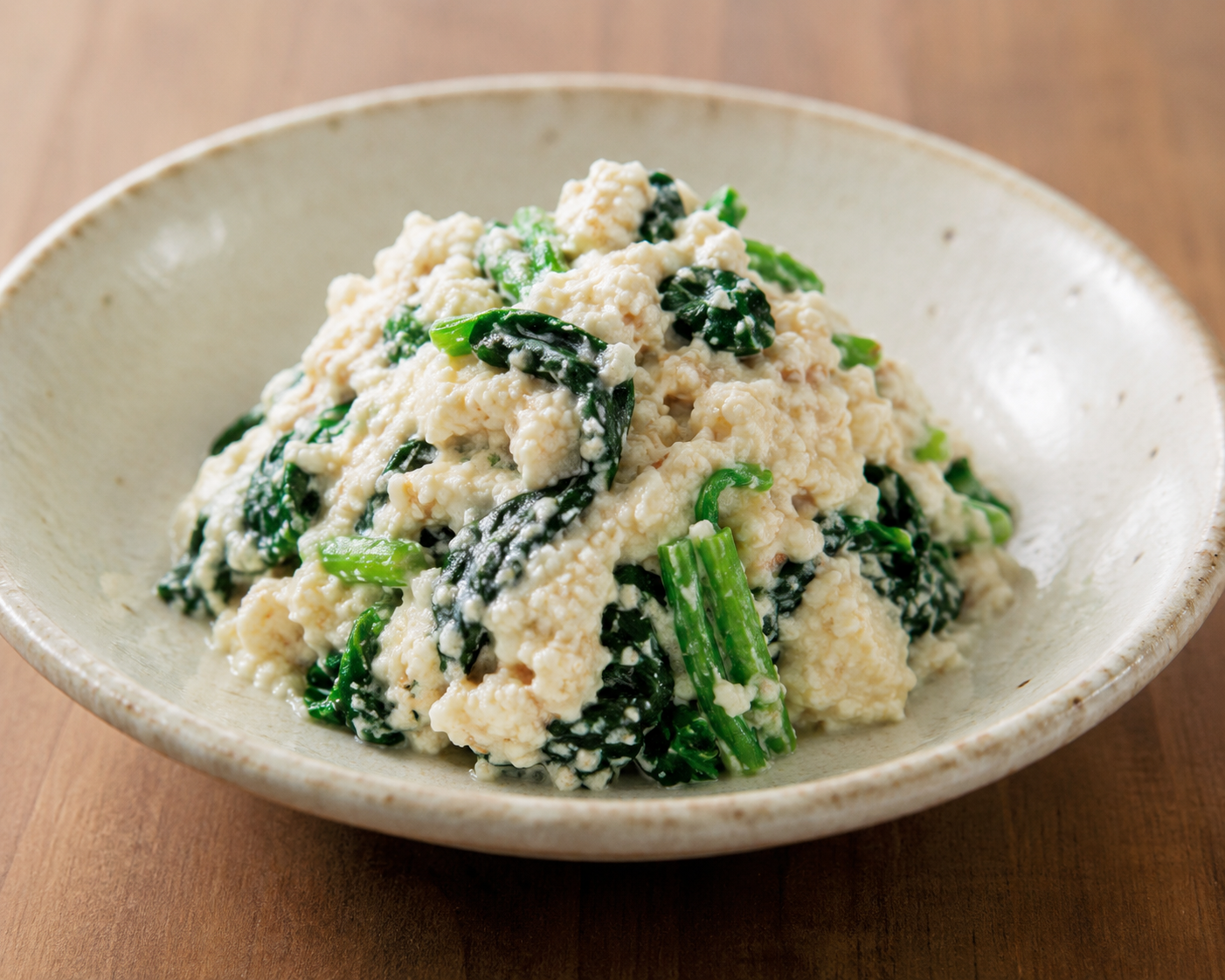
A staple Japanese side dish that takes about 10 minutes and turns simple vegetables into something genuinely special.
Ingredients: 1/2 block silken tofu, 2 tbsp white sesame seeds, 1 tbsp sugar, 1 tsp soy sauce, a pinch of salt, 1 cup blanched green beans (or spinach), cut into short pieces.
- Press the tofu between paper towels for a few minutes to remove excess water.
- Toast the sesame seeds lightly in a dry pan, then grind them in the suribachi until they turn into a rough paste.
- Add the tofu, sugar, soy sauce, and salt to the suribachi, and grind everything together until smooth and creamy.
- Fold in the green beans and mix until evenly coated. Serve chilled or at room temperature.
Goma-dare (Sesame Dipping Sauce)
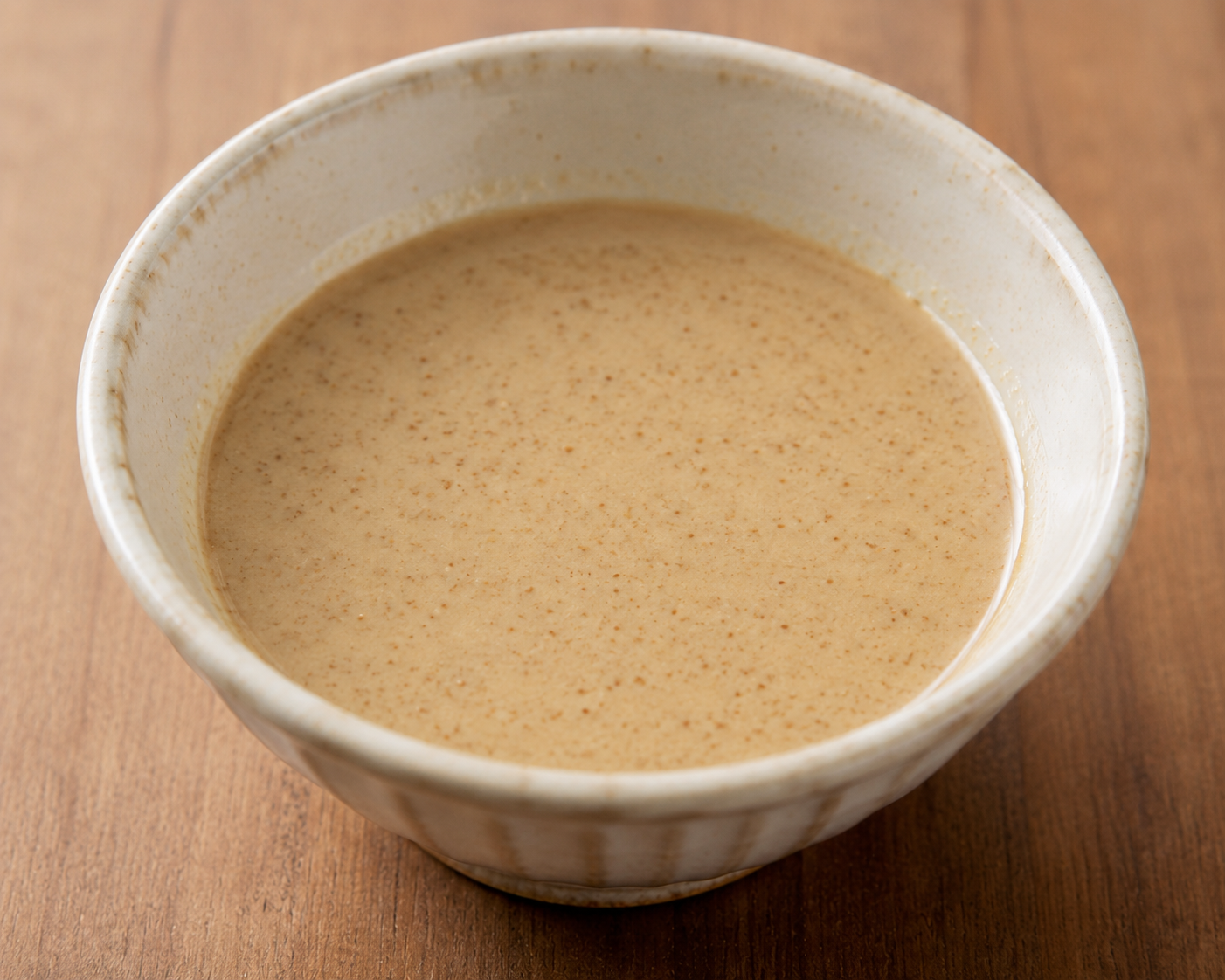
This is the easiest way to see what a suribachi can do. Drizzle it over salads, cold noodles, or grilled vegetables.
Ingredients: 3 tbsp white sesame seeds, 1 tbsp soy sauce, 1 tbsp rice vinegar, 1 tsp sugar, 1 tbsp water.
- Toast the sesame seeds briefly, then grind in the suribachi until the oils release and it forms a thick paste.
- Add the soy sauce, vinegar, and sugar, and continue grinding until combined.
- Stir in the water a little at a time until you reach a pourable consistency.
Gomasio (Sesame Salt)
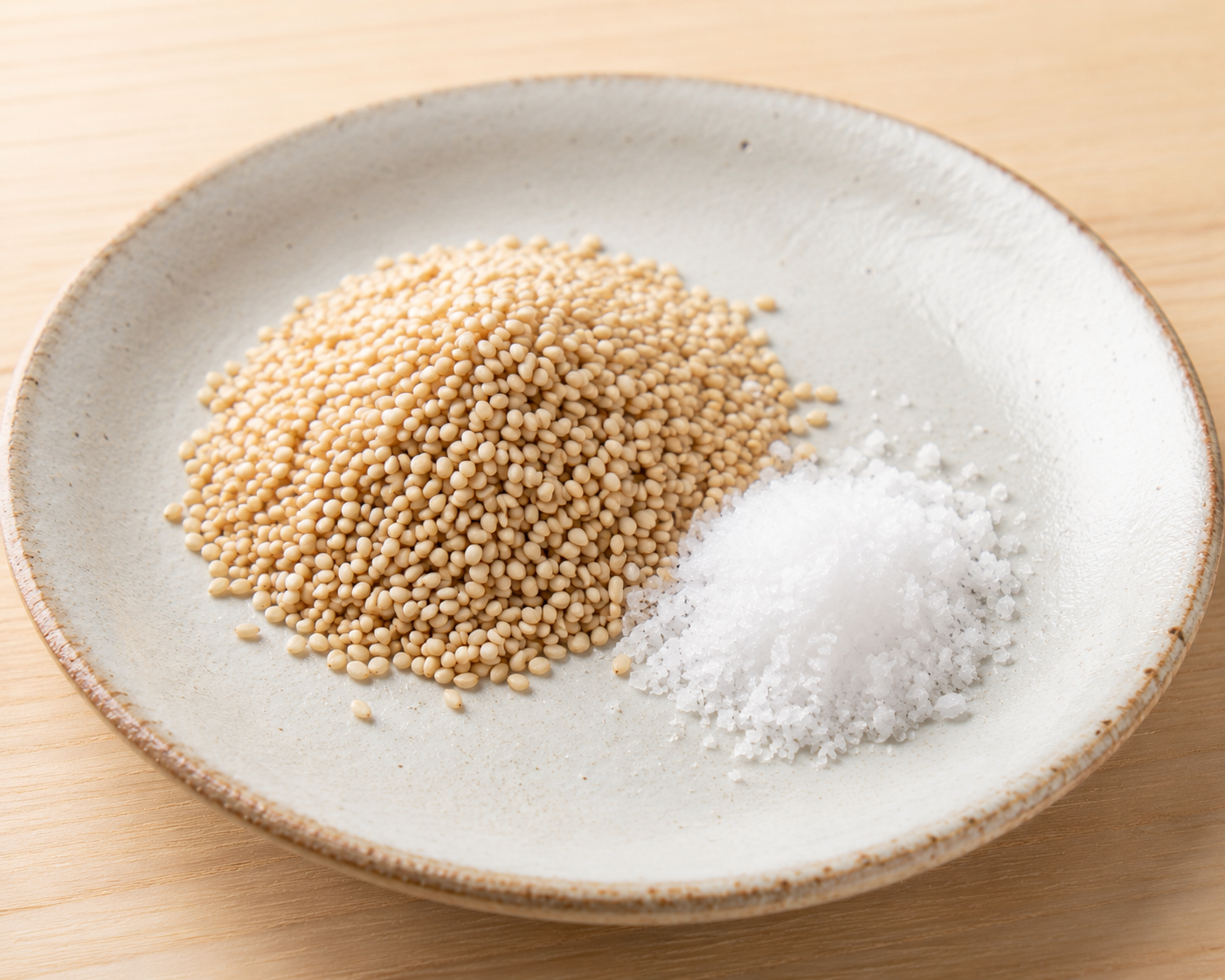
The simplest possible starting point if you’re brand new to using a suribachi — just two ingredients, ready in under five minutes.
Ingredients: 4 tbsp white sesame seeds, 1 tsp salt.
- Toast the sesame seeds in a dry pan until fragrant.
- Add the seeds and salt to the suribachi and grind lightly — you want about 70% of the seeds crushed, not a full paste.
- Sprinkle over rice, vegetables, or roasted sweet potatoes.
FAQ
Can you put a suribachi in the dishwasher?
You can, but I wouldn’t. The high heat and harsh detergent wear down the ridges faster, and those ridges are the whole point. Hand-washing takes about ten seconds anyway.
What actually makes it different from a regular mortar and pestle?
Mostly the ridges. A smooth Western mortar just can’t grip oily ingredients like sesame seeds the way an unglazed, ridged surface can — you end up with seeds sliding around instead of breaking down.
Should a beginner get a small one or a large one?
Somewhere in the 6–7 inch range. Big enough that you’re not refilling constantly, small enough that it doesn’t take over a shelf.
Why This Small Tool Changes the Way You Cook
A food processor can crush sesame seeds. It cannot coax out the same aroma, or leave you with the same texture, as slowly working them by hand against a ridged ceramic bowl. That difference is small on any single dish, but it adds up — dressings taste rounder, pastes hold together better, and dishes that once felt like restaurant-only specialties start showing up in your own kitchen.
There’s also something to be said for a tool that asks you to slow down for two or three minutes. In a kitchen full of appliances that promise to save time, a suribachi does the opposite — and somehow that’s exactly the point. Once you’ve made one dish with it, you’ll likely find yourself reaching for it again, then looking for more dishes to try. That’s how a $30 ceramic bowl quietly ends up changing how you cook.
Final Thoughts
A suribachi isn’t a flashy purchase, but it’s one of those tools that quietly earns its place in a kitchen. My pick for most people is still the TIKUSAN Ripple Ridge Set — but if you’ve got a specific need (family-size batches, left-handed grinding, or gifting), one of the others above will serve you better.
コメント