Quick answer: For most people, the IPPINKA Japanese Donabe Smoker for 2 People (Banko-Yaki) is the best value — a genuinely Made in Japan clay smoker from Mie, priced around $95, that’s simple to use on a regular stovetop.
- What Is a Japanese Stovetop Smoker, and Why Does It Matter?
- Comparison at a Glance
- How I Chose These Smokers
- What to Look for When Buying a Japanese Smoker
- Product Reviews in Detail
- Which One Should You Buy?
- Banko-Yaki vs. Iga-Yaki: What the Clay Actually Changes
- How to Actually Use a Stovetop Smoker
- Care and Maintenance
- Common Mistakes (and What’s Actually Going Wrong)
- Wood Chips Worth Keeping on Hand
- FAQ
- Final Thoughts
What Is a Japanese Stovetop Smoker, and Why Does It Matter?
A Japanese stovetop smoker — a donabe-style clay pot — lets you smoke cheese, nuts, fish, meat, and vegetables indoors on an ordinary gas or portable stove, without a backyard smoker or a bag of charcoal. You scatter a small amount of wood chips in the bottom, set a wire rack or mesh above it, cover the pot, and apply heat for a few minutes so the chips smolder instead of burn.
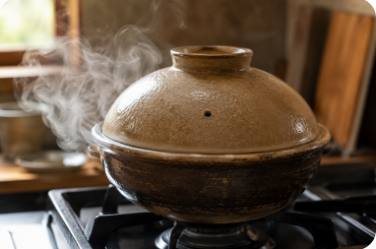
Ceramic donabe smokers build on the same donabe tradition used for Japanese hot pot and rice cooking — thick-walled pottery that holds heat once it’s hot. The appeal is simple: real wood-smoke flavor from a footprint that fits in a kitchen cabinet, with the same craftsmanship as the donabe you’d use for rice or hot pot.
Comparison at a Glance
| Product | Price* | Material | Made in Japan | Best For |
|---|---|---|---|---|
| IPPINKA Donabe Smoker for 2 People (Banko-Yaki) | Around $95 | Heat-resistant ceramic (Banko-yaki) | Yes (confirmed) | Best value, most affordable |
| IPPINKA Donabe Smoke Cooker with Glass Dome Lid | Around $119 | Ceramic + glass lid | Yes (confirmed) | Watching the smoke happen |
| Nagatani-en “Ibushigin” Smoker (ACT-80) | Around $309 | Iga ceramic | Yes (confirmed, named manufacturer) | Premium pick, most established maker |
*Prices checked in August 2026 and may change.
How I Chose These Smokers
I compared these based on four factors: stated country of manufacture, material and construction, how the listing describes real-world usability (capacity, stovetop compatibility, cleanup), and patterns in owner reviews. Amazon’s “Japanese smoker” results are a mix of genuinely Japanese-made donabe smokers, generic Western-style stovetop smoker boxes with no Japan connection at all, and outdoor charcoal grills that aren’t really the same category — I filtered out the unrelated ones and kept candidates with an explicit “Made in Japan” claim, a named manufacturer, or both.
I also looked at metal smoker boxes sold as “Japanese,” including well-reviewed models from established manufacturers, but the Amazon listings for these were inconsistent or contradicted the manufacturers’ own specs on basics like material (stainless vs. iron). Rather than pass along that ambiguity, I’ve kept this guide to ceramic donabe smokers, where the material and origin claims were independently verifiable.
What to Look for When Buying a Japanese Smoker
- Material and clay type. Banko-yaki (used in the two IPPINKA models) and Iga-yaki (used in the Nagatani-en model) are both traditional Japanese ceramic types prized for heat resistance, but they come from different regions and workshops — check which one a listing actually uses rather than assuming all “Japanese donabe” are the same clay.
- Stovetop compatibility. None of the ceramic smokers in this guide are confirmed induction-compatible — they’re designed for direct-flame or portable-stove use. If you’re shopping outside this guide and see a metal smoker marketed as more IH-friendly, verify that directly with the manufacturer rather than assuming; material alone doesn’t guarantee it.
- Capacity and servings. Smaller units (1–2 servings) are enough for a block of cheese or a couple of fillets; if you regularly smoke for a group, look for a larger capacity, like the Nagatani-en model’s roughly 2.4-liter body.
- Lid design. A glass dome lid lets you watch the smoke build up without opening the pot and losing heat, but reviewers note it isn’t fully airtight. A water-sealed lid (used on the premium Nagatani-en model) is designed by the manufacturer to trap smoke more completely, at the cost of extra setup.
- Genuine Made in Japan confirmation. Check the listing’s own product description for an explicit country-of-origin statement rather than assuming a Japanese-sounding product name means Japanese manufacture.
Product Reviews in Detail
Disclosure: As an Amazon Associate I earn from qualifying purchases.
IPPINKA Japanese Donabe Smoker for 2 People (Banko-Yaki) — Best Value
Check the latest price on Amazon →
This compact donabe smoker is made from Banko-yaki, a well-known ceramic tradition from Mie prized for heat resistance and heat retention — the listing itself describes it as “a famous ceramic in Mie, Japan.” The listing also states it’s handmade in Japan by a company with over a century of donabe-making experience, and the set includes the donabe body, a lid, and one grill rack. It’s sized for 1–2 servings, works on gas and portable stoves, and is listed as dishwasher-safe. As a newer listing, it doesn’t yet have a review history to point to, so weigh that alongside the seller’s own description.
Pros:
- Made in Japan (confirmed on the listing), from a Banko-yaki maker described as having over 100 years of experience
- Simple, compact design — heat the chips for 5 minutes, then let it rest for 5 more
- Dishwasher-safe, which isn’t true of every ceramic smoker in this guide
- Lowest price of the three options here, and the smallest footprint for a 1–2 person kitchen
Cons:
- No owner reviews yet at the time of writing, so there’s no track record beyond the seller’s own listing
- Sized for 1–2 servings only — not a fit if you regularly smoke for a group
- Not confirmed compatible with induction stoves
Bottom line: the easiest, least expensive way into genuinely Japanese-made stovetop smoking — best thought of as the beginner-friendly pick rather than the most capable one.
IPPINKA Japanese Donabe Smoke Cooker with Glass Dome Lid — Best for Watching the Smoke
Check the latest price on Amazon →
This version swaps the standard ceramic lid for a glass dome, so you can actually watch the smoke build up inside instead of guessing. The listing confirms it’s made in Japan, and it comes with a side handle, wood chips, and a wire mesh rack included. It’s dishwasher-safe and microwavable (body only — the lid has its own separate care instructions and a 120°C limit), and like the other ceramic smokers here, it isn’t confirmed induction-compatible.
Pros:
- Confirmed Made in Japan
- Glass dome lid lets you monitor smoking progress without lifting the lid
- Comes with wood chips and a wire mesh rack included, ready to use out of the box
- Has an actual review history (7 ratings, 4.1 stars) to reference, unlike the newer Banko-Yaki listing
Cons:
- At least one reviewer notes the glass lid isn’t fully airtight, which can let some smoke escape
- More expensive than the plain ceramic-lid version for a similar size
- Lid can’t go in the oven or microwave and is rated only to 120°C
Bottom line: worth the extra cost specifically if you want to see the smoking process happen rather than treating it as a sealed black box.
Nagatani-en “Ibushigin” Smoker (ACT-80) — Premium Pick
Check the latest price on Amazon →
This is the most expensive and most specialized option here, made by Nagatani Seitou (Nagatani-en) — the same Iga-yaki pottery house behind the Kamado-san donabe rice cooker, one of the most established names in Japanese donabe craft. The listing explicitly confirms Japan as the country of origin. It’s built from Iga clay, a porous stoneware the manufacturer describes as retaining heat well, and it uses a water-sealed lid — you fill a channel between the lid and the pot with water — rather than a simple ceramic or glass cover; the manufacturer describes this as designed to keep smoke and aroma from escaping. The set includes the smoker body, three metal racks, and roughly 100g of cherry wood chips, with a stated smoking time of around 35 minutes.
Pros:
- Confirmed Made in Japan, from Nagatani-en — a well-known Iga-yaki workshop with a long track record in Japanese donabe cookware
- Water-sealed lid is designed by the manufacturer to contain smoke and aroma more completely than a dry ceramic or glass lid
- Largest capacity of the three options here (about 2.4 liters), with three included racks for layering different foods
- Comes with cherry wood chips and a recipe included
Cons:
- By far the most expensive option here, roughly three times the price of the IPPINKA Banko-Yaki pick
- Only 4 ratings at the time of writing on this specific listing, including one report of a damaged/incomplete shipment — a genuinely small sample to judge shipping reliability from
- Direct-fire use only, with no dishwasher-safe claim on the listing
Bottom line: the most purpose-built donabe smoker in this comparison, from a maker with real staying power in Japanese ceramics — worth it if you want a larger-capacity, water-sealed design and don’t mind paying a premium, though this specific listing’s review history is thin relative to the price.
Which One Should You Buy?
- If you want the most affordable, genuinely Japanese-made way to try stovetop smoking, get the IPPINKA Donabe Smoker for 2 People.
- If you want to actually watch the smoke build up rather than guessing, get the IPPINKA Glass Dome Smoke Cooker.
- If you want the most established maker, a larger capacity, and a water-sealed design, and don’t mind the price, get the Nagatani-en Ibushigin Smoker.
Banko-Yaki vs. Iga-Yaki: What the Clay Actually Changes
Both clay types used in this guide are long-established Japanese ceramic traditions valued for heat resistance, but they aren’t identical. Banko-yaki, from Mie, is the clay behind the two IPPINKA smokers; Iga clay, used in the Nagatani-en model, is described by its maker as a more porous stoneware with strong heat retention — part of why Iga-yaki has long been used for donabe rice cookers and hot pots that need to hold steady heat over a long cook. How much practical difference that makes for smoking specifically, versus a standard Banko-yaki donabe, isn’t something I can confirm without hands-on side-by-side testing, but both are genuine, purpose-built ceramic traditions rather than generic stoneware.
Ceramic donabe smokers generally heat more gradually and hold onto that heat longer than a thin metal box once they’re hot, which is part of why thick-walled donabe pottery has long been used in Japanese cooking. The tradeoff is fragility: a dropped ceramic smoker can crack, and none of the smokers in this guide are confirmed induction-compatible.
Japanese ceramic cookware, including donabe smokers, is also frequently marketed with a specific claim: that thick clay walls radiate far-infrared heat that’s said to help food cook more evenly and stay moist rather than drying out. This is a claim you’ll see repeated across donabe and clay-cookware marketing generally, more than something independently verified for these specific smokers, so it’s worth treating as “commonly claimed” rather than settled fact. Compared with generic imported metal or enamel stovetop smokers, ceramic donabe smokers are generally described as producing a moister result with more even smoke penetration, and water-sealed designs like the Nagatani-en model are built specifically to keep more smoke and aroma from escaping into the kitchen. Metal or enamel smoker boxes typically win on durability, weight, and ease of cleaning — they’re less likely to crack and don’t need the same careful handling — but aren’t generally credited with the same moisture-retention or aroma-infusion properties as clay.
How to Actually Use a Stovetop Smoker
Stovetop smoking is simpler than backyard smoking, but a few details matter:
- Use the amount of wood chips the manufacturer recommends. These stovetop smokers are small, enclosed spaces, and generally need far less wood than a full-size outdoor smoker — more isn’t better, and too much can make food taste bitter or acrid.
- Line the bottom with foil for easy cleanup. Several of these listings specifically mention foil lining as a way to make post-smoking cleanup faster.
- Pat food dry before smoking. Excess surface moisture can affect browning, texture, and how well smoke flavor comes through.
- Don’t lift the lid constantly. Every time you open the pot to check on food, you lose heat and smoke — this is part of why the glass-lid version and the water-sealed Nagatani-en design exist, to let you monitor or better contain the process without opening it.
- Let it rest after smoking. Most of these listings recommend a short rest period (around 5 minutes) after the heat is off, to let the smoke fully settle into the food before serving.
Care and Maintenance
IPPINKA Banko-Yaki and IPPINKA Glass Dome: Both are listed as dishwasher-safe, though foil-lining the interior before use will meaningfully cut down on residue and smoke smell buildup. Let the pot cool completely before washing to avoid thermal shock, which can crack ceramic donabe.
Nagatani-en Ibushigin: The listing doesn’t make a dishwasher-safe claim, so hand washing is the safer default. Dry thoroughly, since porous Iga clay can hold onto moisture longer than denser ceramics.
Common Mistakes (and What’s Actually Going Wrong)
Food tastes bitter or acrid instead of smoky: This usually means too many wood chips or too much heat, causing the chips to burn instead of smolder. Start with less than you think you need — you can always smoke longer next time.
The ceramic smoker cracked: Thermal shock — going from hot to cold too quickly, or vice versa — is the most common cause. Let a ceramic donabe smoker cool naturally before washing, and don’t set a hot pot directly on a cold, wet counter.
Smoke is leaking out and the kitchen smells stronger than expected: A glass dome or standard ceramic lid isn’t fully airtight by design, per at least one owner review — if this bothers you, the water-sealed Nagatani-en lid is built specifically to address it, or crack a window and run your range hood.
Wood Chips Worth Keeping on Hand
Each of the smokers above includes a small amount of chips to get started, but it’s worth having a few different woods on hand once you’re hooked, since the wood you choose changes the flavor as much as the smoker itself.
- Weber Cherry Wood Chips — a mild, slightly sweet and fruity smoke that pairs well with poultry, pork, and fish, and is close in character to the cherry (sakura) chips that come included with these Japanese smokers. A good everyday default.
- Mr. Bar-B-Q Apple, Mesquite & Hickory Chip Bundle — apple is another mild, sweet option good with pork and poultry; hickory is bolder and works well with red meat and bacon-style smoking; mesquite is the strongest and most assertive of the three, best used sparingly with heartier cuts.
As a rule of thumb: reach for cherry or apple with fish, poultry, cheese, and vegetables, and save hickory or mesquite for red meat and richer dishes where a stronger smoke won’t get lost.
FAQ
Can I use a Japanese stovetop smoker on an induction cooktop?
Not the products in this guide. None of the three ceramic donabe smokers here are confirmed induction-compatible — they’re designed for direct-flame or portable-stove use. Don’t assume a smoker (ceramic or metal) is IH-compatible without checking the specific manufacturer’s guidance.
Do these smokers work for cold smoking, or only hot smoking?
These are designed for hot or warm smoking, where the food cooks while it picks up smoke flavor. None of the listings or manufacturer pages I reviewed describe a dedicated cold-smoking mode, which requires keeping the smoke source separate from the food to avoid cooking it.
Is Iga-yaki better than Banko-yaki for smoking?
Not definitively — both are established, genuine Japanese ceramic traditions valued for heat resistance. Iga clay is described by its maker as especially porous with strong heat retention, which is part of why it’s also used for donabe rice cookers, but I can’t confirm a meaningful smoking-specific advantage without side-by-side testing.
Will my kitchen smell like smoke afterward?
Some smoke smell is normal and part of the process — running your range hood or cracking a window helps. Owner reviews note that lids on these smokers (aside from the water-sealed Nagatani-en design) aren’t fully airtight, so expect some smoke to escape around the edges.
How much wood should I use?
Follow the amount the manufacturer includes or recommends — these are small, enclosed smokers, and they generally need much less wood than a full-size outdoor smoker. Start with less than you think you need.
Do I need a big block of cheese or meat to make this worth using?
No — these smokers work fine for small batches. A block of cheese or a couple of fish fillets is enough to get real use out of one.
Final Thoughts
A Japanese stovetop smoker is a genuinely fun way to add real wood-smoke flavor to food without a backyard rig, and the difference between a confirmed Made in Japan smoker and a generic import is mostly about craftsmanship and manufacturer transparency rather than a dramatic difference in results. For most people, the IPPINKA Donabe Smoker for 2 People is the easiest, least expensive entry point: it’s genuinely made in Japan and simple enough to use on a weeknight, even without a review history to lean on yet.
If you want to actually watch the smoke happen, the IPPINKA Glass Dome Smoke Cooker is worth the step up. And if you want the most established maker here, a larger capacity, and a water-sealed design built to contain smoke and aroma, the Nagatani-en Ibushigin Smoker is the premium choice — the same trusted Iga-yaki workshop behind the Kamado-san donabe rice cooker.
コメント