Affiliate disclosure: This post contains affiliate links. If you buy through them, I may earn a commission at no extra cost to you.
Quick answer: For most kitchens, the TIKUSAN Bamboo Zaru Basket (24cm) is the easiest recommendation — a practical size, genuine bamboo weave, and priced around $28. Read on for the full comparison, a sizing guide, care instructions, and a simple zarusoba recipe.
What Is a Zaru, and Why Does It Matter?
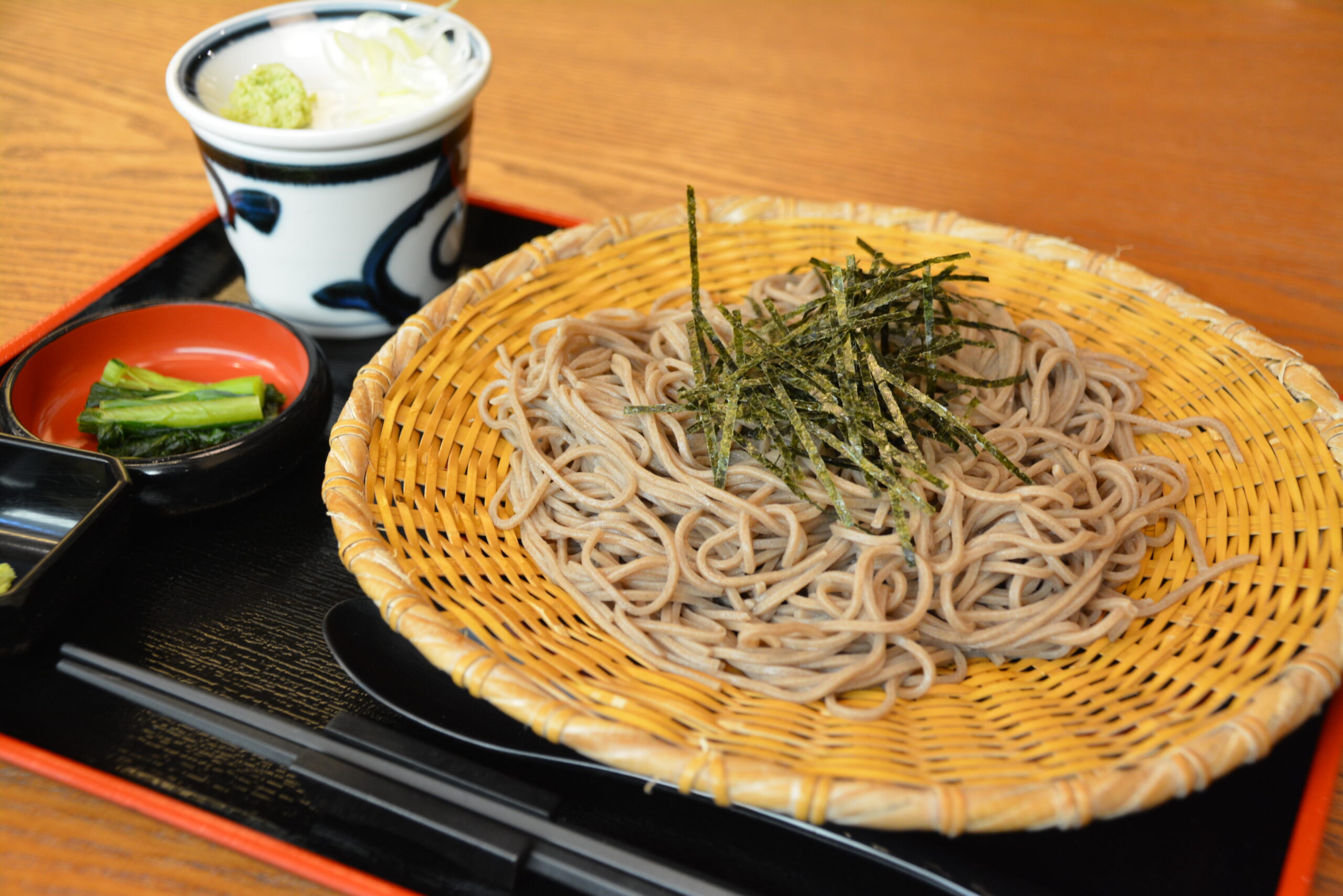
A zaru — sometimes called a bamboo noodle basket, soba serving basket, or traditional Japanese strainer — is a shallow, round basket woven from bamboo, traditionally used to drain and serve cold noodles like soba and udon. The open weave lets water drain quickly and lets excess moisture evaporate more easily, which helps keep noodles from sitting in pooled water compared with many solid-bottom containers.
It also does double duty as a serving piece — and not just for soba. Cold noodles (soba or udon), blanched vegetables, edamame, tempura, and even wagashi (Japanese sweets) or fresh fruit are all traditionally presented directly on a zaru at the table, so it functions as strainer and serving dish in one.
What to Look for When Buying a Bamboo Zaru
- Size — matched to how many people you’re typically serving
- Handmade vs. machine-woven — affects both price and weave quality
- Rim reinforcement — a wire-reinforced rim holds up better to daily use
- Flat, stable base — keeps the basket from tipping when full
- Food-safe finish — untreated, natural bamboo rather than a lacquered coating
- Ease of cleaning — open, evenly spaced weaves are easier to rinse clean than tightly packed ones
Comparison at a Glance
| Product | Price | Size | Best For |
|---|---|---|---|
| TIKUSAN Bamboo Zaru (24cm) | Around $28 | 9.4 in | Everyday all-purpose use |
| KAGOYA Bamboo Zaru (18cm) | Around $20 | 7.1 in | Small portions, artisan quality |
| Zaru Soba Tray with Misu Set | Around $15 | 8.3 in | Authentic zarusoba serving, best value |
Specs Side by Side
| Product | Diameter | Weave | Rim | Dishwasher Safe |
|---|---|---|---|---|
| TIKUSAN Bamboo Zaru | 24cm | Woven by craftsmen (per listing) | Not specified as reinforced | No |
| KAGOYA Bamboo Zaru | 18cm | Marketed as individually hand-woven | Reinforced stainless-steel | No |
| Zaru Soba Tray with Bowl | 21cm | Not specified | Not specified | No |
Product Reviews in Detail
TIKUSAN Bamboo Zaru Basket (24cm) — Best Overall
Check the latest price on Amazon →
Bottom line: If you’re buying your first bamboo zaru, this is the one I’d recommend. It’s large enough for everyday cooking without taking up much storage space.
Pros:
- Versatile 24cm size works for noodles, vegetables, and serving
- The weave appears well suited to draining soba and udon without noticeably large gaps
- Made from untreated bamboo, without a plastic or synthetic coating
Cons:
- Not dishwasher safe — hand wash only
- As a natural material, slight variations in weave and shape are normal
Bottom line: If you only buy one, this is the size and brand that covers the most use cases.
KAGOYA Bamboo Zaru Basket (18cm) — Best Artisan Quality
Check the latest price on Amazon →
KAGOYA markets each basket as individually hand-knitted, with a finer, more delicate weave than the TIKUSAN. The smaller 18cm size here is sized more for individual portions, appetizers, or display than a full family meal.
Pros:
- Marketed as individually hand-woven, with a noticeably finer weave
- Reinforced stainless-steel rim adds rigidity
- Compact size looks good as a table setting piece, not just a kitchen tool
Cons:
- 18cm is too small for a full noodle serving for more than one person
- As handmade goods, size and shape vary slightly piece to piece
Bottom line: The one to get if you care about craftsmanship and don’t need a large size.
Zaru Soba Tray with Misu Set — Best Value
Check the latest price on Amazon →
This one includes both the zaru basket and a small rinsing bowl, meant for giving the noodles a final cold-water rinse right before serving. If you’re setting up zarusoba from scratch and don’t already have a bowl for this step, this pairing saves a separate purchase.
Pros:
- Comes as a complete set — no need to hunt down a separate rinsing bowl
- Lowest price of the three
- 8.3in size is a sensible middle ground between the other two
Cons:
- Weave quality is a step below the artisan-grade KAGOYA basket
Bottom line: The easiest way to get everything you need for zarusoba in one purchase.
Which One Should You Buy?
- If you want one basket that handles everything well, get the TIKUSAN 24cm.
- If craftsmanship and presentation matter most, get the KAGOYA 18cm.
- If you mainly want this for noodles specifically, get the Misu Set — the included bowl is intended for rinsing or serving, depending on how you use it.
What Size Should You Buy?
| Size | Best For |
|---|---|
| 18cm (7 in) | Single portion |
| 21cm (8 in) | Typically 1 serving |
| 24cm (9 in) | Typically 1–2 servings |
| 27–30cm (11–12 in) | Typically 2–4 servings |
How to Care for a Bamboo Zaru
Rinse the basket with water before its first use. After cooking, wash with water and, if needed, a small amount of mild dish soap — never soak it, and skip the dishwasher entirely. Rinse the soap off thoroughly, then let the basket air dry in a well-ventilated, shaded spot rather than direct sunlight, which can cause the bamboo to warp or crack over time. Make sure it’s completely dry before storing; leftover moisture in a closed cupboard is the most common cause of mold on bamboo kitchenware.
Simple Zarusoba Recipe
Ingredients (serves 2): 200g dried soba noodles, store-bought mentsuyu (or a quick homemade version: 4 tbsp soy sauce, 4 tbsp mirin, 2 tbsp sugar, and 1 cup dashi, simmered together for a few minutes), sliced scallions, wasabi, nori strips (optional).
- Bring a large pot of water to a boil and cook the soba according to the package instructions, usually 4–5 minutes.
- Drain the noodles into a regular colander, then immediately rinse under cold running water while gently rubbing the noodles between your hands — this removes surface starch and stops the cooking. Very hot noodles can shorten the life of untreated bamboo and may stain or warp the basket over time, so save the bamboo zaru for serving rather than draining boiling water.
- Gently shake off any excess water, then transfer the noodles to the bamboo zaru for serving.
- Serve with the dipping sauce in a separate small bowl, topped with scallions, wasabi, and nori as desired.
FAQ
Can a bamboo zaru go in the dishwasher?
No. The heat and moisture can warp the weave and cause premature cracking. Hand washing and air drying is the only way to keep one long-term.
Is it normal for a new zaru to smell like bamboo?
Yes, and it fades with use and washing. It’s simply the natural scent of untreated bamboo, not a sign of anything wrong.
Can I use a zaru for things other than noodles?
Definitely — a zaru isn’t a single-purpose soba tool. It works just as well for udon, for draining and cooling blanched vegetables, for serving tempura, edamame, or wagashi (Japanese sweets), and even as a fruit bowl or bread basket.
Why does the price vary so much between similar-looking baskets?
Several factors add up: whether the bamboo is hand-woven or machine-woven, the bamboo’s region and grade, weave density, and whether the rim is reinforced with wire. Hand-woven baskets from smaller workshops, like KAGOYA, tend to cost more than mass-produced versions even at the same size.
Can you cook noodles directly in a bamboo zaru?
No. A bamboo zaru is meant for draining and serving only. It should never be placed over direct heat or immersed in boiling water.
What You’ll Also Need for Zarusoba
A zaru basket is only half the setup. Here are two pantry staples that round out the meal:
Hakubaku Organic Soba Noodles
Check the latest price on Amazon →
A well-known Japanese brand, made from organic buckwheat. A reliable choice if you’re not sure which soba to start with.
Kikkoman Hon Tsuyu (Noodle Soup Base)
Check the latest price on Amazon →
A concentrated dipping sauce base, Product of Japan. Dilute with water to taste and serve cold alongside your zarusoba — also doubles as a tempura dipping sauce.
Final Thoughts
A bamboo zaru is one of those simple kitchen tools that makes Japanese cooking feel more authentic while also being genuinely practical, and it earns its keep well beyond noodle nights. For most people, the TIKUSAN 24cm is the size and quality that covers the widest range of everyday use — but if you’re setting up zarusoba from scratch, the Misu Set gets you there in a single purchase.
コメント