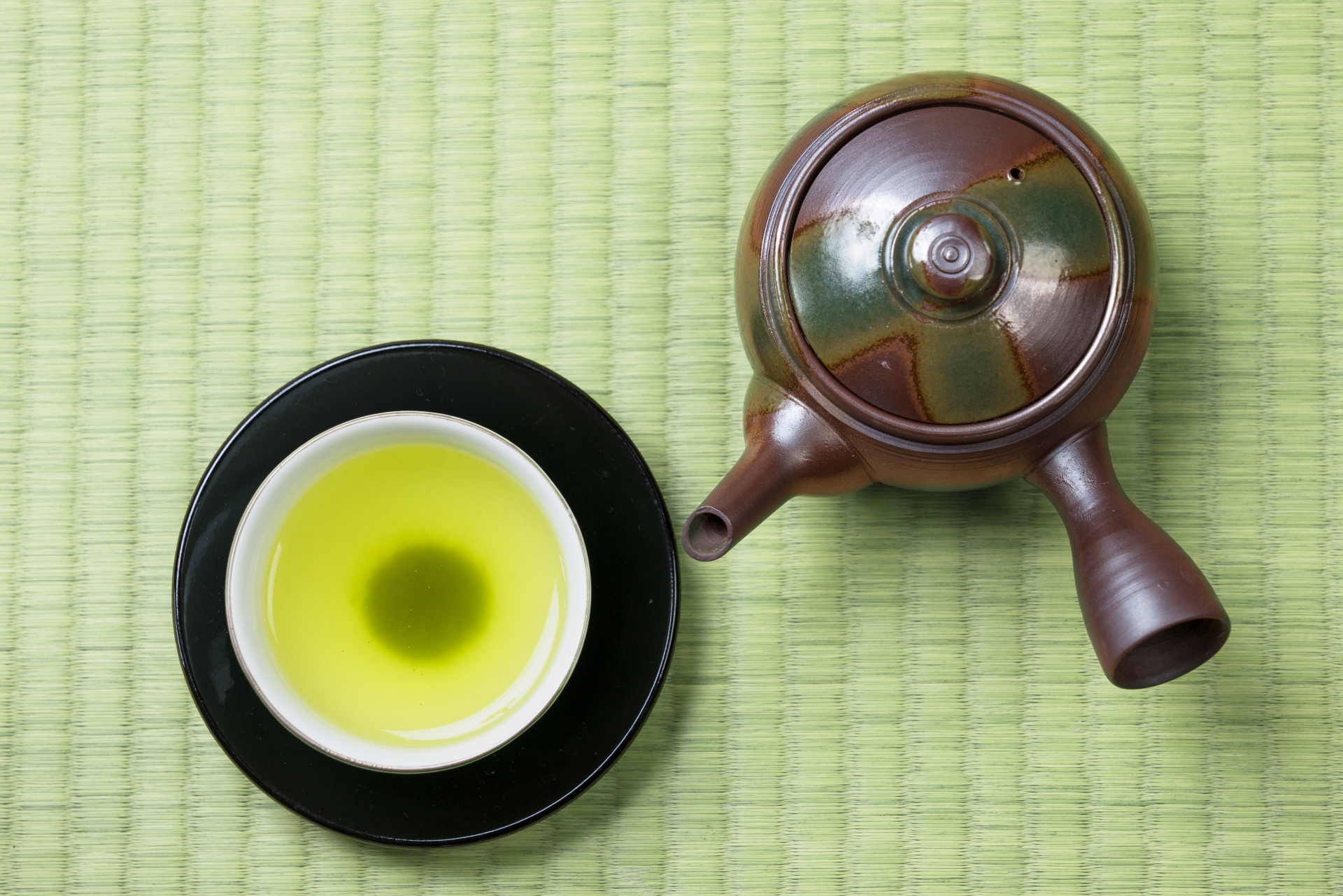
If you’ve only ever brewed green tea with a tea bag or a basket infuser, a kyusu can genuinely change what the tea tastes like. The wide, shallow shape gives the leaves room to unfurl instead of sitting cramped in a narrow tube, and pouring through a built-in strainer with one motion of the wrist is part of how the flavor comes out different — less flat, more of the natural sweetness and umami sencha is actually capable of.
A kyusu is the teapot with a built-in strainer that Japan actually reaches for at home for loose-leaf green tea. Our top pick overall is the Hario ChaCha Kyusu “Maru” 700ml ($20.15) — an affordable, dishwasher-safe glass kyusu that’s genuinely made in Japan and easy to recommend to almost anyone starting out. We also researched a traditional unglazed Tokoname clay teapot for daily use, a more serious Tokoname Yaki-Shime pick for deep-steamed sencha, and an Arita-ware porcelain kyusu that makes a strong gift.
- What Is a Kyusu, and Why Not Just Use an Infuser?
- How We Chose
- Comparison Table
- What to Look For When Buying a Kyusu
- Product Reviews
- Which One Should You Buy?
- How to Brew Green Tea in a Kyusu
- How to Care for Your Kyusu
- Common Mistakes to Avoid
- Frequently Asked Questions
- Is it safe to put boiling water directly into a kyusu?
- Why does my kyusu’s clay change color or develop a sheen over time?
- Can I use my kyusu for tea other than green tea?
- What’s the difference between a kyusu and a tetsubin?
- Do I need a separate tea strainer if my kyusu has a built-in one?
- Why is my kyusu dripping instead of pouring cleanly?
- What You’ll Also Need
- Final Thoughts
What Is a Kyusu, and Why Not Just Use an Infuser?
Kyusu (急須) is the Japanese word for a teapot with a built-in strainer, purpose-built for brewing loose-leaf green tea. Unlike a Western teapot with a removable metal infuser, a kyusu’s strainer and body are designed together, and the wide, shallow shape gives tea leaves room to unfurl fully, which a narrow infuser doesn’t allow. The most common design uses a side handle — called yokode — set at a right angle to the spout so you can pour one-handed with a flick of the wrist, but it’s actually a common misconception that every kyusu is built this way: uwade (top handle) and ushirode (rear handle) styles exist too. Our top pick below, the Hario ChaCha “Maru,” is a good example — its all-glass handle arcs up and over the top of the pot rather than sticking out to the side, closer to an uwade-style design than a classic yokode. It’s still a true kyusu because of the built-in strainer and integrated design, just not the “side handle” shape people often picture. Either way, the material of the body (glass, unglazed clay, or porcelain) actually affects how the tea tastes, not just how the pot looks.
How We Chose
We required each product to be explicitly listed as made in Japan on its own Amazon product page — either in the title, bullets, or “Made in Japan” claim in the listing itself, not just a Japanese-sounding brand name. From there we compared material (glass, Tokoname clay, Arita porcelain), strainer type, capacity, and price against the actual listing details and patterns in verified-owner reviews. We haven’t tested these four side by side in our own kitchen; two of us do use two of these picks daily, which we’ve noted in the relevant reviews below, but the guide as a whole is based on listing research and review patterns rather than a full hands-on comparison.
Comparison Table
Prices, ratings, and stock status were checked at the time of publication and can change — always confirm current details on the Amazon listing before buying.
| Product | Price | Material / Capacity | Dishwasher Safe | Best For |
|---|---|---|---|---|
| Hario ChaCha Kyusu “Maru” | $20.15 | Heatproof glass / 700ml | Yes | Best overall, best for beginners |
| Asayu Japan Traditional Kyusu | $39.99 | Unglazed Tokoname-style clay / 430ml | No — hand wash only | Best everyday clay teapot |
| KIMIKURA Tokoname Yaki Kyusu | $59.90 | Tokoname Yaki-Shime clay / 260ml | No — hand wash only | Best for deep-steamed (fukamushi) sencha |
| Arita-Imari Ceramic Kyusu | $46.20 | Arita porcelain / 11.5 fl oz | No — hand wash only | Best gift / porcelain pick |
What to Look For When Buying a Kyusu
- Country of manufacture, verified on the listing itself. Check the actual product details or bullets, not just the brand name — plenty of “Japanese-style” teapots aren’t made in Japan.
- Strainer type. Most affordable kyusu use a built-in stainless steel mesh strainer, which works well for standard sencha. Finer, deep-steamed (fukamushi) tea benefits from a finer mesh, since it produces more small leaf particles.
- Material. Glass shows you the tea as it brews and is the easiest to keep spotless; unglazed clay (Tokoname or Banko ware) is traditionally said to soften tannins and round out flavor over repeated use; glazed porcelain (like Arita ware) doesn’t interact with the tea at all, which keeps flavor neutral between different tea types.
- Capacity relative to how you drink tea. Roughly 200–300ml suits solo daily brewing; 350–450ml is a common size for two people; anything near 700ml, like the Hario ChaCha, is meant for serving three or four small cups at once.
- Whether you’re prepared for hand-wash-only care. Unglazed clay kyusu should never go in the dishwasher and traditionally shouldn’t be washed with soap. If that’s a dealbreaker, a dishwasher-safe glass or glazed porcelain kyusu is the more practical choice.
Quick tip: If a listing doesn’t say “Made in Japan” anywhere in the title, bullets, or description, treat the country of manufacture as unconfirmed — a Japanese-sounding brand name by itself isn’t proof.
Product Reviews
Disclosure: As an Amazon Associate I earn from qualifying purchases.
Hario ChaCha Kyusu “Maru” 700ml — Best Overall
This is the one that actually lives on our counter rather than in a cabinet — the kyusu we reach for on an ordinary weekday morning, and the one we’d point most people toward first too. The glass body and lid are made in Japan; the listing is upfront that the stainless steel strainer inside is made in China, which is a level of disclosure we appreciate rather than a knock against the product. At 700ml it comfortably brews three or four small cups in one steep, the strainer is large enough for leaves to expand and unfurl fully, and being able to watch sencha or hojicha change color as it steeps is genuinely useful for gauging strength, especially if you’re new to loose-leaf green tea. It’s also dishwasher safe, which removes the hand-wash-only routine that clay kyusu require. The one real trade-off with a clear glass pot: tea tannins show up as visible staining over time. We rinse ours after every use, but every couple of months we still do a diluted bleach or oxygen-bleach soak to keep the glass looking clear — a normal part of owning a transparent teapot, not a sign anything’s wrong with it.
Pros:
- Glass body and lid made in Japan, with honest disclosure that the strainer is made in China
- Dishwasher safe — no hand-wash-only routine
- Large capacity (700ml) suits sharing tea with a few people at once
- Over 15,000 reviews averaging 4.6 stars
Cons:
- Visible tannin staining over time, since the body is clear glass
- Doesn’t offer the flavor-mellowing effect some tea drinkers associate with unglazed clay
Bottom line: The easiest kyusu to recommend without reservations — affordable, dishwasher safe, and made by a well-known Japanese glassware brand.
Asayu Japan Traditional Kyusu Teapot 430ml — Best Everyday Clay Teapot
This is a straightforward, well-documented entry point into unglazed clay kyusu. The listing states the origin directly — Aichi Prefecture, the region Tokoname pottery comes from — and describes the piece as handmade, with a flat stainless steel mesh strainer built into the rim. At 430ml it’s sized for two to three people, and the traditional yokode side-handle shape is the classic kyusu silhouette. As with the other clay picks here, we haven’t tested this exact model side by side against the others, so this review is based on the listing details and buyer reviews rather than our own hands-on comparison.
Pros:
- Origin explicitly listed as Aichi Prefecture, Japan
- Handmade, unglazed Tokoname-style clay
- Flat stainless mesh strainer built into the rim — no separate filter needed
- Mid-range capacity (430ml) works for solo or small-group brewing
Cons:
- Hand-wash only, no soap recommended on the unglazed interior
- Fewer total reviews than the Hario ChaCha
Bottom line: A solidly documented, mid-priced way to try a genuine unglazed Tokoname-style clay kyusu without committing to a premium price.
KIMIKURA Tokoname Yaki Kyusu, Earth Color 260ml — Best for Fukamushi (Deep-Steamed) Sencha
“Made in Japan” appears directly in this listing’s title, and the description specifies the traditional yaki-shime firing process — a reduction-fired, unglazed technique that leaves the clay’s natural dark earth color instead of a glaze. The listing specifically calls out a fine mesh filter designed to hold back the small leaf particles that deep-steamed (fukamushi) sencha produces, which is a real functional difference from a standard mesh strainer, not just marketing language. At 260ml it’s the smallest of our four picks — closer to a solo-brewing size — and it currently has a smaller review base (12 reviews) than the other picks here, which is worth factoring in given it’s also the most expensive option in this guide.
Pros:
- “Made in Japan” stated directly in the listing title
- Traditional yaki-shime (reduction-fired, unglazed) process specified
- Fine mesh filter suited to fukamushi sencha’s finer leaf particles
Cons:
- Smallest capacity of the four picks — best for solo brewing, not sharing
- Highest price in this guide, with a comparatively small review base
Bottom line: The pick to reach for if you specifically drink fukamushi sencha and want a strainer built for it, rather than a general-purpose kyusu.
Arita-Imari Ceramic Kyusu 11.5 fl oz — Best Gift / Porcelain Pick
This is the one that comes out of the cabinet when someone’s visiting — we keep it specifically for guests rather than everyday use. Arita, in Saga Prefecture, has been a center of Japanese porcelain production for roughly 400 years, and this kyusu’s listing confirms both the Arita origin and that it’s made in Japan. It arrives in a gift box, which makes it an easy choice if you’re buying for a tea-loving friend rather than for daily solo use. Unlike the clay picks above, glazed porcelain doesn’t interact with the tea at all, so flavor stays neutral — a practical advantage if you switch between different types of tea and don’t want any carryover between brews. It has a stainless steel inner strainer rather than a fine mesh, so it suits standard sencha better than very finely cut fukamushi leaves.
Pros:
- Made in Arita, Japan, with roughly 400 years of porcelain-making history behind the region
- Arrives in gift packaging — genuinely gift-ready out of the box
- Glazed porcelain doesn’t absorb or carry over flavor between different teas
- 4.9-star average, though from a modest review count (27 reviews)
Cons:
- Not dishwasher safe and not for direct heat or microwave use
- Standard stainless strainer, not a fine mesh — less ideal for very finely cut fukamushi tea
Bottom line: The pick we reach for when we have company — polished enough to serve guests, and a strong gift for anyone who already loves tea.
Which One Should You Buy?
- Want one easy, dishwasher-safe kyusu to start with: Hario ChaCha Kyusu “Maru” 700ml
- Want to try genuine unglazed Tokoname clay without a big investment: Asayu Japan Traditional Kyusu Teapot
- Drink a lot of deep-steamed (fukamushi) sencha: KIMIKURA Tokoname Yaki Kyusu
- Buying a gift, or want a polished pot for guests: Arita-Imari Ceramic Kyusu
How to Brew Green Tea in a Kyusu
The biggest difference between kyusu brewing and just dunking a tea bag is water temperature. Green tea brewed with boiling water tends to taste bitter and astringent; cooler water brings out more natural sweetness.
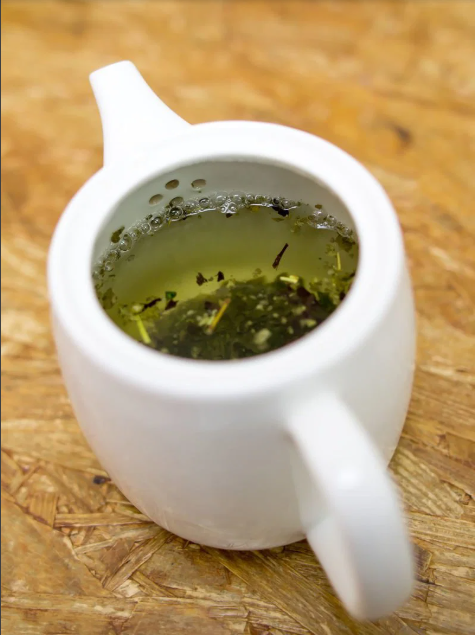
- Cool the water first. Pour freshly boiled water into your teacups and let it sit for a minute or two before moving on to the next step. This is the traditional yuzamashi technique — each time you pour boiling water into another vessel, it loses roughly 5–10°C, and letting it sit uncovered cools it further. The goal is to get into the neighborhood of 160–175°F (70–80°C), the range most commonly recommended for sencha, though the exact temperature and how long it takes depends on your cup, the room, and how much water you’re cooling — if you want to be precise, a cheap kitchen thermometer removes the guesswork.
- Add leaves and steep. Use about 1–2 teaspoons of loose leaf tea per person, add the cooled water from the cups into the kyusu, and put the lid on. Let it sit for about a minute without shaking or swirling the pot — agitating the leaves tends to pull out more bitterness.
- Pour in rounds, and don’t leave any behind. If you’re filling multiple cups, pour a little into each cup in turn rather than filling one cup completely before moving to the next — this keeps the strength even across cups. Tilt the kyusu fully at the end; the last few drops are the most concentrated, and leaving water in the pot lets the leaves oversteep before your next round.
Quick tip: No thermometer on hand? Pouring boiling water back and forth between your teacups once or twice before adding it to the kyusu gets you into roughly the right temperature range without any special equipment.
How to Care for Your Kyusu
Care depends heavily on material, so we’ve split this by type rather than giving one blanket routine.
Glass kyusu (like the Hario ChaCha): Dishwasher safe, per the manufacturer. Rinse after use to limit tannin buildup, and if visible staining develops over time, an occasional diluted bleach or oxygen-bleach soak (rinsed thoroughly afterward) is a normal way to keep the glass clear.
Unglazed clay kyusu (Tokoname or Banko ware, like the Asayu Japan and KIMIKURA picks): Rinse with water only after each use — skip dish soap, since the clay is porous enough that soap can be absorbed and affect the flavor of later brews. Remove the lid and let the pot air-dry completely with the opening facing up before storing; trapped moisture can lead to mold. Never put an unglazed clay kyusu in the dishwasher, and avoid direct heat. If a new clay kyusu has a small vinyl cap on the spout, remove and discard it before first use — it’s shipping protection, not a permanent part.
Glazed porcelain kyusu (like the Arita-Imari pick): Hand wash with warm water; avoid the dishwasher, microwave, and direct stovetop heat, and avoid sudden temperature swings that can stress the glaze.
Removing stains from a clay kyusu: A diluted baking soda soak (warm water, roughly a teaspoon of baking soda, left for an hour or two) can lift built-up tannin stains if you want to reset the look. That said, many tea drinkers deliberately leave the tannin buildup alone, since it’s considered part of a clay kyusu’s seasoning over time.
Common Mistakes to Avoid
- Brewing green tea with boiling water. This is the single most common reason people find kyusu-brewed sencha bitter — let the water cool first.
- Using dish soap on unglazed clay. It can be absorbed into the porous surface and taint the flavor of your next several brews.
- Leaving tea leaves and water sitting in the pot after brewing. This oversteeps the leaves and can leave your next pour tasting flat or overly bitter — empty the pot fully after each round.
- Forcing a left-handed pour on a standard side-handle design. Most yokode kyusu are designed for right-handed pouring; left-handed users may find a rear-handle (ushirode) or top-handle (uwade) style noticeably easier to use.
Frequently Asked Questions
Is it safe to put boiling water directly into a kyusu?
For glass kyusu like the Hario ChaCha, yes — it’s designed for heatproof use with boiling water. For unglazed clay kyusu, a sudden temperature change can stress the material over time; many owners pre-warm the pot with warm water first as a precaution. In either case, for the tea itself, cooling the water before brewing green tea is about flavor, not just safety.
Why does my kyusu’s clay change color or develop a sheen over time?
On unglazed clay kyusu, this is a well-known and generally welcomed effect of repeated use — sometimes called seasoning. It isn’t a defect.
Can I use my kyusu for tea other than green tea?
Yes, though the material matters. Glazed porcelain, like the Arita-Imari pick, doesn’t retain flavor between brews, so it’s the most flexible choice for switching between tea types. Unglazed clay is traditionally dedicated to one type of tea, since the porous surface can carry flavor from one blend into the next over time.
What’s the difference between a kyusu and a tetsubin?
A tetsubin is a cast iron kettle used to heat water — see our guide to Japanese cast iron kettles if you’re weighing the two. A kyusu is the teapot you actually steep tea leaves in, using water that’s already been boiled and then cooled. They serve different steps of the same process rather than being interchangeable.
Do I need a separate tea strainer if my kyusu has a built-in one?
No — that’s the point of a kyusu’s design. A built-in strainer (stainless mesh or, on some higher-end pieces, a ceramic sasame strainer) is what distinguishes it from a plain teapot that requires a separate infuser.
Why is my kyusu dripping instead of pouring cleanly?
This is usually about pour angle and speed rather than a flaw in the pot — tilt further and pour with a steadier, more deliberate motion. If a specific kyusu drips consistently even with a confident pour, that’s worth flagging in a review of that particular product, since spout design does vary between pieces.
What You’ll Also Need
A few companion pieces that pair naturally with a kyusu setup: a set of matching yunomi teacups sized for the way you drink tea, and good loose-leaf sencha or gyokuro to actually brew in it — a new kyusu is only as good as the tea you put in it. For an everyday sencha, Ippodo Tea Hosen Sencha ($20) is a good, widely recognized starting point — Ippodo is one of Japan’s oldest and best-known tea houses, based in Kyoto since 1717, and Hosen is their classic, best-selling everyday sencha with balanced umami, sweetness, and a light astringency. If you want to try gyokuro — a shade-grown, more delicate and expensive style of green tea worth experiencing at least once — Senbird Gyokuro Isshin ($29.99) is a well-reviewed Kyoto loose-leaf gyokuro with a mellow, umami-rich flavor; it brews best at a lower temperature (around 122–140°F / 50–60°C) than sencha does. Ippodo also makes a respected gyokuro, though on Amazon it’s currently sold only as teabags rather than loose leaf.
Final Thoughts
All four kyusu in this guide were explicitly confirmed as made in Japan on their own listings at the time of review, though marketplace details like price and stock can change — always double-check the current listing before buying. We don’t have full hands-on, side-by-side testing of all four to report; this guide leans on listing details, manufacturer specifications, and patterns across verified-owner reviews, except where we’ve specifically noted our own daily use of the Hario ChaCha and Arita-Imari picks. If you’re picking your first kyusu, the Hario ChaCha is the easiest place to start — cheap, dishwasher safe, and hard to get wrong. If you’re ready to explore what unglazed Tokoname clay actually does to the taste of your tea, the Asayu Japan or KIMIKURA picks are a reasonable next step.
コメント