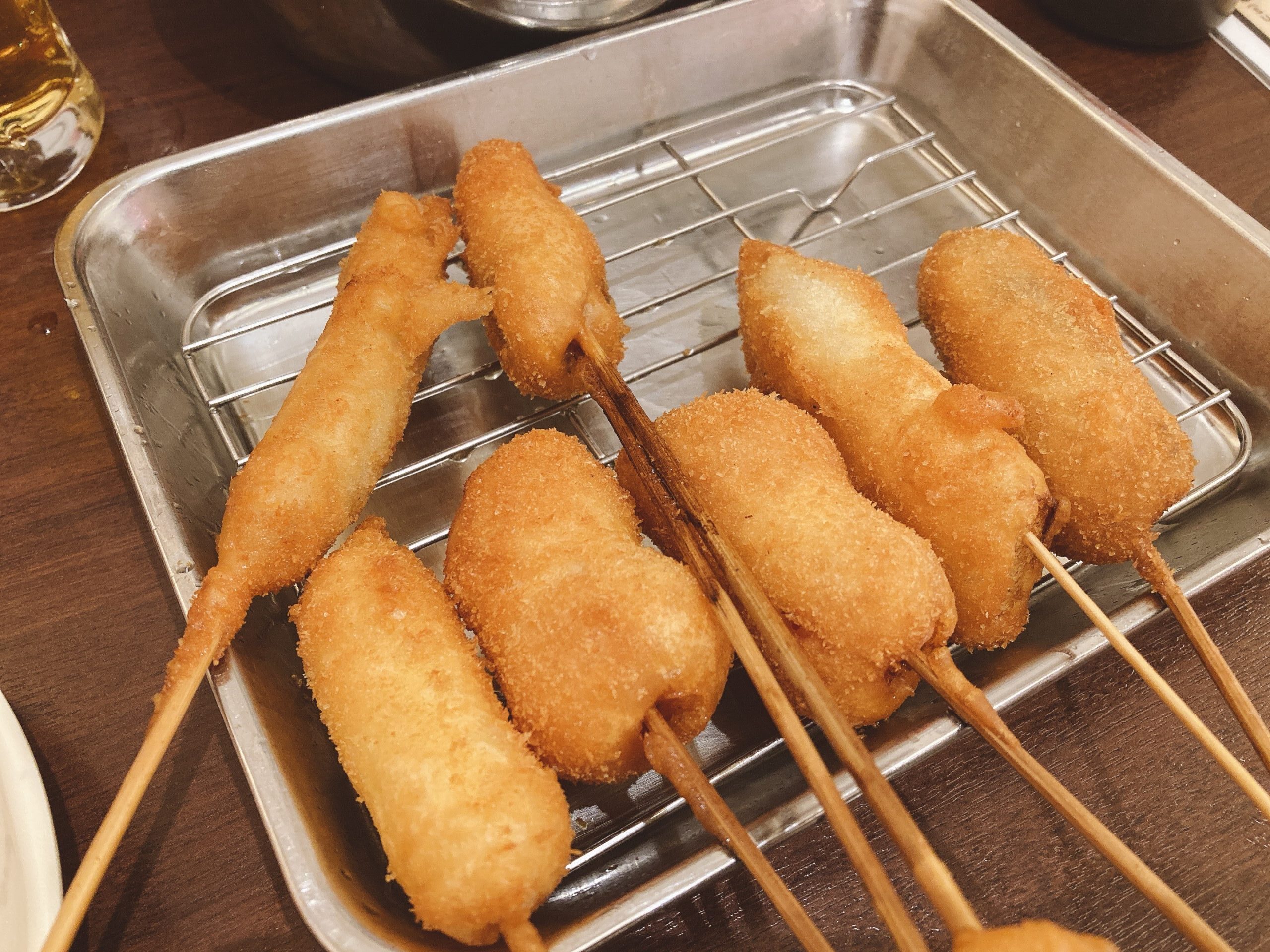
If you want one versatile Japanese frying tray set for everyday use, the Arnest 7-Piece Stainless Steel Frying Bat Set ($52.90) is the easiest place to start — it combines three stainless steel trays, one colander, and three lids, useful for draining fried food, prep, and refrigerator storage alike. If you specifically want a design built to stand tempura or karaage upright to drain, the Yokoyama Tsubame no Matsuki Oil-Draining Net ($40.57) is the more specialized pick. We’ve also added three more options below — an all-in-one breading station, a freezer-friendly individual-portion set, and a budget pick — so there’s a fit whether you’re outfitting a full kitchen or just want one inexpensive tray to start with.
- What Is a Frying Tray (Bat) Set, and Why Bother With One?
- Do You Really Need a Japanese Frying Tray Set?
- Comparison Table
- What to Look for When Buying a Frying Tray Set
- The Frying Tray Sets, Reviewed
- Arnest A-76437 7-Piece Stainless Steel Frying Bat Set — Best Overall
- Yokoyama Tsubame no Matsuki RB-250 Oil-Draining Net — Best Upright Draining Design
- Shimomura 43377 Square Bat with Silicone Lid (Set of 3) — Best Multi-Purpose Prep & Storage Set
- Yoshikawa 1214991 Tray Bat, Stainless Steel (3 Pieces) — Best All-in-One Breading Station
- Shimomura Planning 31552 Deep Frying Bat, Set of 10 — Best for Individual Portions & Freezer Meal Prep
- JapanBargain 3067 Stainless Steel Tray (2-Pack) — Best Budget
- Which One Should You Buy?
- How to Use a Frying Tray Set
- Common Mistakes
- Care and Maintenance
- FAQ
- Useful Accessories for Japanese Frying
- Final Thoughts
What Is a Frying Tray (Bat) Set, and Why Bother With One?
In Japanese kitchens, the rectangular tray used for prepping and draining fried food is called a bat (バット) — one confusing point for English-speaking shoppers: it comes from the English word “vat,” meaning a shallow container, and has nothing to do with a baseball bat. Paired with a wire rack or draining net set inside or over it, it does two jobs at once: it catches the excess oil dripping off freshly fried tempura, karaage, or tonkatsu, and it keeps the food up off a flat surface. Paper towels alone can’t really do the second part.
It solves a specific, common problem. Food fried well but served on a plate lined only with paper towels can steam itself soft on the underside within a couple of minutes, since the towels trap moisture and heat against the food even as they absorb oil from below. A wire rack allows air to circulate underneath, which can help the crust you worked for survive to the table.
I own several of these myself, deliberately all the same size, specifically so they stack neatly in a cabinet instead of taking up a shelf each. When I fry karaage or tempura, food that goes straight onto the rack instead of a paper-towel-lined plate stays noticeably crisper, and since the oil actually drains off rather than half-soaking back into a paper towel, it feels like a genuinely lighter result. Beyond frying, I use mine constantly for other things too — dredging chicken in potato starch (katakuriko) or beaten egg before it goes in the pan, as a mold for coffee jelly, and as everyday refrigerator storage containers. That kind of everyday usefulness is a big part of why I’d recommend having a few on hand even if you don’t fry often.
We chose the six products below because each states Made in Japan directly in its own manufacturer or country-of-origin specification field, not just in marketing copy, and because together they cover the main ways people actually use a set: an all-purpose starter kit, a specialized upright-draining design, a dishwasher-safe multi-use prep set, an all-in-one breading station, an individual-portion freezer set, and a genuinely inexpensive single tray.
🏆 Best Choice: Arnest 7-Piece Stainless Steel Frying Bat Set →
Do You Really Need a Japanese Frying Tray Set?
If you already own a sturdy cooling rack and sheet pan, you may not need a dedicated Japanese bat set at all — functionally, a Western-style wire rack over a sheet pan accomplishes something similar. The main reasons to choose a Japanese bat set instead are its compact footprint, shallow rectangular shape, stackability, and the way some sets combine draining, prep, and storage in one purchase. They’re also generally sized for single-batch home cooking rather than large-format Western baking sheets — if you’re used to Western sheet pans, expect something closer to a salad-plate footprint, and if you regularly fry for a crowd, a larger Western sheet-pan-and-rack combination, or multiple bats used in rotation, may suit you better.
Comparison Table
| Product | Price | Size | Dishwasher Safe | Best For |
|---|---|---|---|---|
| Arnest 7-Piece Frying Bat Set | $52.90 | 8.7 × 6.1 in per bat | Bats/colander: yes; lids: no | Best Overall |
| Yokoyama Oil-Draining Net | $40.57 | 9.53 × 6.02 in | Not specified | Best Upright Draining Design |
| Shimomura Square Bat w/ Silicone Lid (Set of 3) | $97.29 | 6.5 × 4.6 in per bat | Yes | Best Multi-Purpose Prep & Storage Set |
| Yoshikawa 1214991 Tray Bat (3 Pieces) | $40.98 | 15.2 × 9.4 in overall | Not specified | Best All-in-One Breading Station |
| Shimomura Planning 31552 (Set of 10) | $52.98 | 8.7 × 6.6 in per bat | Not specified | Best for Individual Portions & Freezer Meal Prep |
| JapanBargain 3067 (2-Pack) | $8.99 | 8.5 × 6 in per tray | Not specified | Best Budget |
Prices checked as of September 13, 2026 — Amazon prices change frequently, so confirm the current price on the listing before buying.
What to Look for When Buying a Frying Tray Set
- An explicit country-of-origin field. As with most Japanese kitchenware on Amazon, look for a listing that states Country of Manufacture: Japan in its own specification fields, not just “Japanese-style” in the title.
- Stainless steel construction for the tray itself — it’s food-safe with hot, oily food and won’t react the way some other metals can.
- Real size expectations. More than one reviewer across this category has been surprised by how compact these trays are compared to a full sheet pan. If you’re used to Western-style baking sheets, expect something closer to a salad-plate footprint — see the inch measurements in the table above.
- Whether the lids (if included) are actually dishwasher and microwave safe — this varies a lot between products, and it’s easy to assume the whole set matches the tray’s own care instructions when it doesn’t.
The Frying Tray Sets, Reviewed
Disclosure: As an Amazon Associate I earn from qualifying purchases.
Arnest A-76437 7-Piece Stainless Steel Frying Bat Set — Best Overall
We picked this as the overall recommendation for the balance of versatility, included pieces, and customer feedback — not simply because it has the highest review count. On Amazon.com it had 1,829 ratings averaging 4.4 stars and was priced at $52.90 when checked. The set includes three stainless steel bats, one square colander, and three clear polyethylene lids, all confirmed Made in Japan in the listing’s own country-of-manufacture field. Each bat holds about 30 fl oz (900 ml) and measures roughly 8.7 × 6.1 in (22 × 15.5 cm), and the whole set nests together for compact storage, including in the refrigerator.
Among the Amazon.com reviews we checked, common positive comments centered on exactly the fried-food use case — draining and holding tempura, karaage, and similar dishes while keeping things tidy in a small kitchen — along with off-label uses like cake molds, jelly, or general fridge storage thanks to the stackable lids. One caveat worth flagging: stock on this listing has been thin at times, so check current availability before counting on it.
Pros: Versatile 3-bat, 3-lid, 1-colander configuration covers frying, prep, and storage; stacks compactly, including in the refrigerator; by far the deepest review history of any product in this guide.
Cons: Smaller than some buyers expect for the price — a couple of reviewers returned it for that reason; polyethylene lids are hand-wash only, not dishwasher or microwave safe; stock has been limited at times.
Bottom line: The safest default pick given its review volume and versatility, as long as you don’t need dishwasher-safe lids and can find it in stock.
Yokoyama Tsubame no Matsuki RB-250 Oil-Draining Net — Best Upright Draining Design
Yokoyama is a Tsubame-Sanjo metalware maker, and this set pairs an 18-0 stainless steel bat, measuring about 9.53 × 6.02 in (24.2 × 15.3 cm), with a chrome-plated iron draining net designed to stand fried food upright rather than laying it flat — the idea being that gravity pulls oil down and away rather than pooling underneath. The listing confirms Country of Manufacture: Japan. Priced at $40.57 when checked, it’s currently the least-reviewed product in this guide — it had no ratings yet at the time of writing — and stock has also been limited, so this is a pick for buyers comfortable trying something with no track record yet.
Pros: Distinctive upright-draining design not offered by the other sets here; compact size; genuine Tsubame-Sanjo manufacturing.
Cons: No review history yet, so real-world durability and performance claims can’t be verified one way or the other; the net is chrome-plated iron rather than stainless, which is more care-sensitive than an all-stainless set; stock has been limited.
Bottom line: an interesting, more specialized option if the upright-draining design appeals to you, but check current stock and go in aware there’s no review history yet.
Shimomura 43377 Square Bat with Silicone Lid (Set of 3) — Best Multi-Purpose Prep & Storage Set
Shimomura Kihan (下村企販) is a manufacturer based in the Tsubame-Sanjo region, and this set pairs three 18-8 stainless steel bats — each about 6.5 × 4.6 in (16.5 × 11.8 cm) — with three silicone lids rated heat-resistant to 448°F (230°C) and cold-resistant to -30°C. The listing confirms Country of Manufacture: Japan and states the bats and lids are dishwasher safe. Worth noting: the manufacturer’s own product description frames this primarily as a general prep, draining, and temporary-storage set (draining tofu, sifting, short-term fridge storage) rather than a frying-specific product, so it’s a bit different in character from the other picks — still genuinely useful for frying prep and draining, just not marketed around that use case exclusively.
This is the priciest option in the guide at $97.29. The Amazon.com listing had two reviews when checked, both positive but too few to draw a broader conclusion from.
Pros: Dishwasher-safe bats and lids, unlike most of the other sets here; silicone lids are also freezer-rated; manufacturer frames it as a general storage/prep set, not just a frying-specific product.
Cons: By far the most expensive option per bat; very limited review history; not marketed by the manufacturer as a frying-specific product, so it’s a slightly different fit if draining fried food is your only use case.
Bottom line: worth the premium if dishwasher-safe lids and general-purpose storage matter to you; otherwise the Arnest set gets you a similar core frying function for roughly half the price.
Yoshikawa 1214991 Tray Bat, Stainless Steel (3 Pieces) — Best All-in-One Breading Station
Yoshikawa is an established Tsubame-Sanjo kitchenware brand, and this set is built specifically around the three-step breading process rather than draining alone: three connected 18-8 stainless steel compartments, sized roughly 15.2 × 9.4 in (38.5 × 23.8 cm) overall, meant to hold flour, egg wash, and panko or potato starch side by side so you can bread cutlets or karaage in one motion without dirtying three separate bowls. The listing confirms Country of Manufacture: Japan. On Amazon.com it had 25 ratings averaging 4.3 stars and was priced at $40.98 when checked.
Pros: Purpose-built three-compartment layout removes the need for separate breading bowls; large enough to bread bigger cuts like tonkatsu or chicken breast; genuine Tsubame-Sanjo manufacturing.
Cons: Its large, connected footprint takes up more counter and storage space than a standard nesting bat set; the manufacturer doesn’t specify dishwasher compatibility, so hand-washing is the safer default; not designed as a draining rack, so you’ll still want a separate bat and rack for the actual frying and draining step.
Bottom line: the easiest way to streamline the breading step itself, best paired with one of the draining-focused sets above rather than used as your only tray.
Shimomura Planning 31552 Deep Frying Bat, Set of 10 — Best for Individual Portions & Freezer Meal Prep
Also from the Tsubame-Sanjo region, this set includes three 18-8 stainless steel bats (about 8.7 × 6.6 in / 22.2 × 16.8 cm each), three mesh drainer inserts, and three sealed polyethylene lids rated for both heat (to 144°F/60°C) and cold (to -4°F/-25°C), plus one additional lid — ten pieces in total. The listing confirms Country of Manufacture: Japan. That freezer-safe lid rating is the standout feature here: each bat-and-lid combination can go straight from prepping or frying into the freezer as a sealed, labeled individual portion, which the other sets in this guide aren’t rated for. On Amazon.com it had 15 ratings averaging 4.2 stars and was priced at $52.98 when checked.
Pros: Freezer-rated sealed lids make it genuinely useful for portioned meal prep, not just same-day draining; three complete bat-mesh-lid units for batch-freezing multiple portions at once; confirmed Made in Japan.
Cons: Smaller review base than the Arnest set; the manufacturer doesn’t specify dishwasher compatibility, so hand-washing is the safer default; the mesh inserts add another piece to wash and store compared to a simpler bat-and-rack set.
Bottom line: the pick if you want to fry or prep in batches and freeze individual portions, rather than a set meant purely for same-day draining.
JapanBargain 3067 Stainless Steel Tray (2-Pack) — Best Budget
This is a simple pair of solid stainless steel trays, about 8.5 × 6 in (21.6 × 15.2 cm) each, sold under the JapanBargain storefront with the listing stating Made in Japan. Unlike the other sets here, it doesn’t include a rack, net, colander, or lid — it’s just the tray itself, so you’ll want to pair it with your own wire rack if draining is the goal, though plenty of reviewers use it as-is for prep, serving, or camping. On Amazon.com it had 46 ratings averaging 4.0 stars and was priced at $8.99 when checked, by far the least expensive option in this guide.
In fairness to readers: one reviewer reported that a translated care label taped to their tray said not to use it in the microwave or oven, despite oven-safe language elsewhere in the listing — worth double-checking the specific listing’s current wording rather than assuming oven use is safe. Another reviewer questioned how genuinely “Made in Japan” the product was, noting the claim appeared only on a paper tag rather than stamped into the metal itself; we can’t independently verify manufacturing origin beyond what the listing states.
Pros: Lowest price by a wide margin; simple, durable solid tray that reviewers also use for prep, serving, and camping; Made in Japan stated on the listing.
Cons: No rack, net, or lid included, so it doesn’t drain oil on its own; at least one reviewer reported conflicting oven/microwave safety guidance between the listing and the physical product’s label; another reviewer questioned the strength of the Made in Japan claim.
Bottom line: a genuinely inexpensive way to add a tray to your kitchen, but go in aware it’s a plain tray rather than a full draining set, and double-check the specific listing’s current care instructions before using it in an oven.
Which One Should You Buy?
- Want the most all-purpose option with the deepest review history? Arnest 7-Piece Frying Bat Set ($52.90) — check current stock first.
- Want upright oil draining and are comfortable buying with no review history yet? Yokoyama Oil-Draining Net ($40.57) — check current stock first.
- Want dishwasher-safe lids and a set that doubles as general prep/storage? Shimomura Square Bat with Silicone Lid ($97.29).
- Want to streamline breading cutlets or karaage in one motion? Yoshikawa 1214991 All-in-One Breading Station ($40.98).
- Want to fry or prep in batches and freeze individual portions? Shimomura Planning 31552 ($52.98).
- Just want one inexpensive tray to start with? JapanBargain 3067 ($8.99).
How to Use a Frying Tray Set
- Set the bat (or a sheet pan) under the rack or net before you start frying, so you have somewhere to transfer food immediately.
- Use a spider strainer or tongs to lift fried food directly from the oil onto the rack — resist the urge to rest it on paper towels first, since that’s the moisture-trapping problem a rack is meant to solve.
- Leave space between pieces on the rack rather than stacking them, so air can circulate on all sides.
- If you’re doing a double-fry (as with karaage), use one bat-and-rack combination for the first fry’s resting period and, ideally, a second for the final fry, so you’re not returning food to a rack that’s still coated in oil from the first pass.
- After frying, let the tray and rack cool before washing — thermal shock from cold water on a hot tray can warp thinner stainless steel over time.
Common Mistakes
- Lining the tray with paper towels under the food instead of using the rack. Paper towels absorb some oil from the bottom but can trap heat and moisture against the food, which may soften the crust. Use the rack for draining and, if you want extra oil absorption, put paper towels underneath the whole rack-and-bat assembly instead.
- Assuming all bats and lids are dishwasher safe. As covered above, that varies by product — the Arnest set’s polyethylene lids, for instance, are hand-wash only despite the bats and colander being dishwasher safe. Check each piece separately before putting anything in the dishwasher.
- Assuming a tray is oven- or microwave-safe without checking. Even when a tray itself is oven- or microwave-safe, its lid frequently isn’t — check each piece separately, and don’t rely solely on general listing language if a specific product’s own label says otherwise.
Care and Maintenance
Arnest bats and colander: dishwasher safe. The polyethylene lids are explicitly not dishwasher or microwave safe per the listing — hand wash those.
Yokoyama bat and net: the manufacturer doesn’t specify dishwasher compatibility for this model. Because of that, and given the draining net is chrome-plated iron rather than stainless, hand-washing and thorough drying is our recommendation rather than a manufacturer instruction — it’s a reasonable precaution against the plating wearing or the iron beneath corroding over time.
Shimomura Square Bat with Silicone Lid: the listing states the set is dishwasher safe, including the silicone lids, which are also rated for both heat (up to 230°C) and cold (down to -30°C) if you want to use them for freezer storage as well as frying prep.
Yoshikawa breading station: dishwasher compatibility isn’t specified by the manufacturer, so hand washing is the safer default, especially given its larger, connected shape.
Shimomura Planning 31552: dishwasher compatibility isn’t specified by the manufacturer either; the sealed lids are rated for freezer use (down to -25°F/-4°C) but hand washing is still the safer default for all the pieces.
JapanBargain 3067 tray: the listing doesn’t specify dishwasher safety, and at least one reviewer reported a physical care label contradicting oven-safe claims elsewhere — hand washing and checking your specific unit’s label is the cautious approach.
Across all of these: avoid steel wool or abrasive scrubbers, which can scratch the surface finish over time.
FAQ
What is a Japanese frying bat used for? A bat (バット) is a shallow rectangular tray used in Japanese kitchens for prepping, draining, and storing food. Paired with a wire rack or net, it’s commonly used to drain excess oil from fried food like tempura, karaage, and tonkatsu while keeping the food from sitting in its own oil.
Do I really need a rack, or can I just use paper towels? Paper towels alone will absorb some oil but can trap heat and moisture underneath the food, which may soften whatever crust you just fried. A rack keeps air circulating on all sides. Many people use both together — rack on top, paper towel underneath to catch drips.
Why are some of these trays so small? They’re generally sized for single-batch home cooking rather than large-format Western baking sheets. If you regularly fry for a crowd, a larger Western sheet-pan-and-rack combination, or multiple bats used in rotation, may suit you better.
Can these trays go in the oven? Only if the manufacturer specifically lists that exact product as oven-safe — the Arnest listing mentions oven use for the bats, for example, but don’t assume it for other products or for any included lid, and check the physical product’s own label too, since at least one reviewer in this guide found it contradicted the online listing.
What’s the difference between a bat and a colander in these sets? A bat is a solid-bottomed tray; a colander (or netted version) has holes or mesh to let liquid or oil pass through. Several sets, like the Arnest one, include both so you can use the solid bat for prep or storage and the perforated piece for draining.
Is stainless steel safe to put hot, oily food directly on? Yes — stainless steel is a standard, food-safe material for exactly this purpose and won’t react with hot oil the way some other metals can.
Useful Accessories for Japanese Frying
A few other tools commonly pair with a frying tray set: tongs or a spider strainer for lifting food from the oil, an oil thermometer for checking frying temperature, and a whisk or chopsticks for battering. Of these, an oil thermometer is worth calling out specifically since frying temperature is one of the biggest factors in getting a crisp result, and a clip-on model that reads at a glance is an easy, inexpensive addition to whichever tray set you choose.
Final Thoughts
All six picks here confirm Japanese manufacture directly in their own product specifications, and several are sourced from Tsubame-Sanjo manufacturers with long histories in the category. For most people, the Arnest 7-piece set is still the pragmatic choice — it has the deepest review history of the group, and the 3-bat, 3-lid, 1-colander combination covers frying, prep, and storage in one purchase, as long as you’re comfortable with its compact size and can find it in stock. The Yokoyama net is worth a look specifically for its upright-draining design, but go in aware it currently has no reviews and very limited stock. The Shimomura silicone-lid set is the one to reach for if dishwasher-safe lids and general-purpose storage matter enough to justify roughly double the price. If breading is the part of the process you want to streamline, the Yoshikawa set does that specifically; if you regularly fry or prep in batches to freeze, the Shimomura Planning 31552’s freezer-rated lids make it the more useful choice; and if you just want a genuinely inexpensive tray to start with, the JapanBargain 3067 gets you in the door for under $10, provided you go in aware it’s a plain tray without a rack.
One more thing from personal experience: a well-made stainless bat like these isn’t something you’ll be replacing every year — mine have held up for years of regular use. If you fry Japanese food even occasionally, it’s worth picking one up sooner rather than later rather than putting it off.
コメント