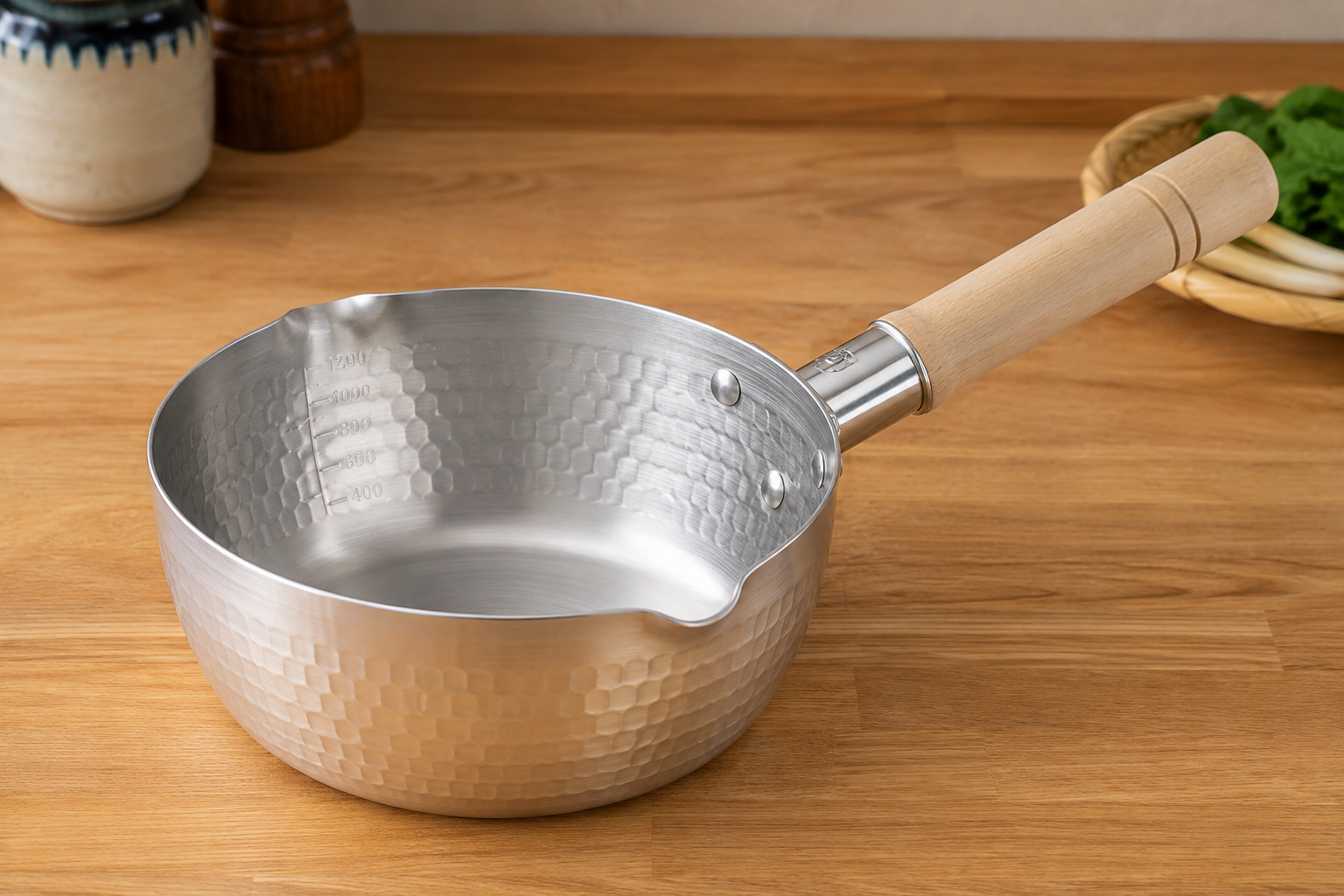
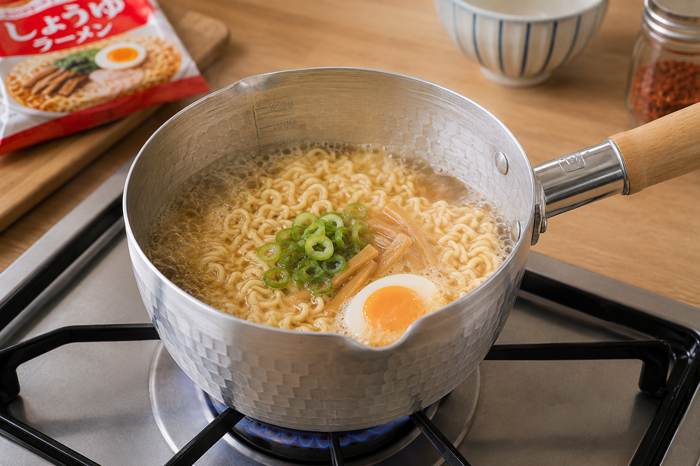
Walk into almost any Japanese kitchen and you’ll probably find a yukihira nabe within easy reach on the stove. It’s the small, single-handled Japanese saucepan used for miso soup, instant ramen, boiling eggs, blanching spinach, warming milk, and making a quick dashi — often several times in the same day. It isn’t treated as a specialty item; it’s simply the pot that stays out because it gets used that often. We own one ourselves, and the thing we notice most in daily use is how light it is and how quickly it brings water to a boil — it’s the pot we reach for to make instant ramen or blanch a handful of vegetables precisely because there’s no waiting around for it to heat up.
A yukihira pot, sometimes just called a Japanese soup pot or hammered saucepan, is traditionally made from aluminum or stainless steel, with a hammered (“tsuchime”) surface and dual pour spouts on either side of the rim. Our top pick overall is the YOSHIKAWA Yukihira Saucepan, 1.7 Quart ($39.00) — a well-established Tsubame-Sanjo stainless steel pot with over 3,300 ratings and an easy-to-recommend size for daily cooking. We also researched a hammered stainless everyday pick built for induction, a premium nickel-free stainless version with a mirror-polished finish, and a larger lightweight aluminum pot for bigger batches.
- What Is a Yukihira Pot, and Why Is It in Every Japanese Kitchen?
- How We Chose
- Comparison Table
- What to Look For When Buying a Yukihira Pot
- Product Reviews
- Which One Should You Buy?
- Sizing Guide
- Aluminum vs. Stainless Steel, and Why Yukihira Pots Are Hammered
- How to Care for Your Yukihira Pot
- How to Use a Yukihira Pot: Quick Dashi
- Common Mistakes to Avoid
- Frequently Asked Questions
- Are yukihira pots safe to use on high heat?
- Can I put a yukihira pot in the dishwasher?
- Do yukihira pots come with lids?
- What’s the difference between a yukihira pot and a regular small saucepan?
- Is aluminum cookware safe to cook with?
- Why does my yukihira pot have a hammered, dimpled texture?
- What size yukihira pot should I buy first?
- Can I cook rice in a yukihira pot?
- Can you deep-fry in a yukihira pot?
- Why don’t more yukihira pots come with a matching lid?
- Why does aluminum cookware turn black or discolor over time?
- What You’ll Also Need
- Final Thoughts
What Is a Yukihira Pot, and Why Is It in Every Japanese Kitchen?
Yukihira nabe (雪平鍋) is the Japanese name for a small, single-handled pot with a flat bottom and, on most models, a hammered dimpled texture across the body. That hammering — called tsuchime, literally “hammer marks” — is created by striking the metal repeatedly with a mallet. It’s typically described as serving two purposes: increasing the surface area to speed up heat conduction, and work-hardening the metal to add strength. Many yukihira pots, including some of the ones in this guide, are produced in the Tsubame-Sanjo region of Niigata Prefecture, an area with a metalworking tradition going back roughly 400 years, though not every yukihira pot sold today is made there.
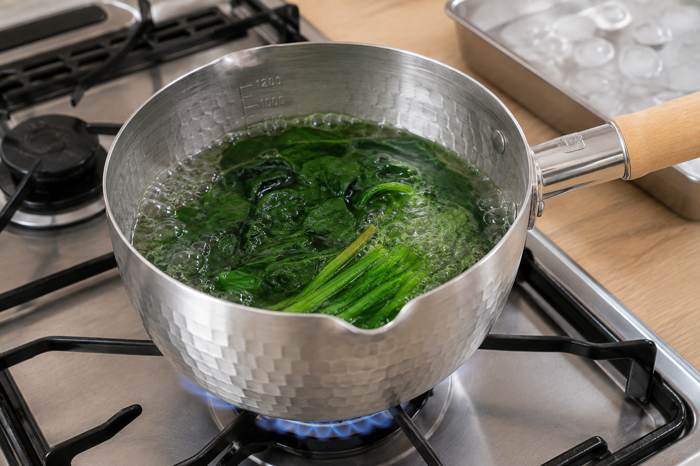
The design itself is simple on purpose: a flat bottom for even contact with the burner, a long single handle (traditionally wood) for one-handed control, and pour spouts on both sides of the rim so you can drain or pour without a colander. That simplicity is exactly why it gets used so often — it’s the pot Japanese home cooks reach for to blanch a handful of vegetables, warm milk for a recipe, make a quick dashi, or simmer a small batch of sauce, rather than dragging out a full-sized saucepan for a two-minute job.
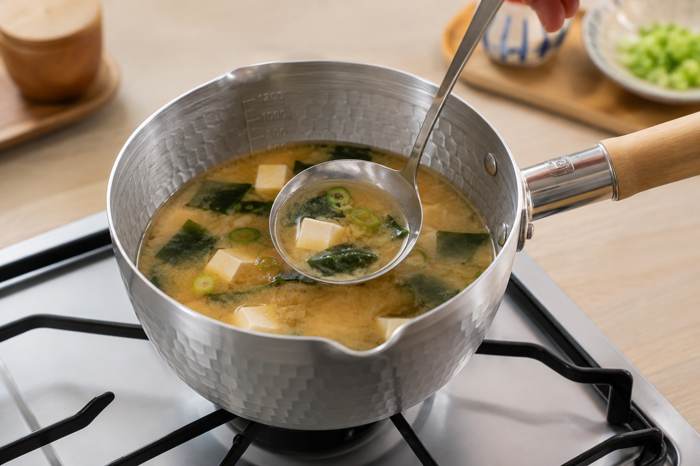
In an ordinary Japanese household, the same small pot tends to get reused for a rotating list of everyday jobs: morning miso soup, a quick bowl of instant ramen, boiling an egg, blanching spinach or other greens for a side dish, warming milk, or even a small batch of baby food. It’s less a specialty tool and more the default answer to “I need to heat a small amount of something, right now.”
How We Chose
We required each product to state “Made in Japan” (or an equivalent, explicit country-of-manufacture claim) directly on its own Amazon listing — in the title, the bullets, or the product details — rather than inferring origin from a Japanese-sounding brand name. We set delivery to a New York (10001) address before checking any price or stock status, and confirmed each listing had both a price and working Add to Cart / Buy Now buttons. From there we compared material, size, finish, and price against the listing’s own stated specifications and patterns in verified-owner reviews. We haven’t tested these four side by side in our own kitchen; this guide is based on listing research and review patterns.
Comparison Table
Prices, ratings, and stock status were checked at the time of publication and can change — always confirm current details on the Amazon listing before buying.
| Product | Price | Material / Size | Best For | Skip If |
|---|---|---|---|---|
| YOSHIKAWA Yukihira Saucepan | $39.00 | Stainless steel, wood handle / 1.7 qt (1.6 L) | Best overall | You want a lid included |
| TIKUSAN Yukihira Pot | $39.99 | Stainless steel, hammered, dual spout / 18 cm | Best for induction & everyday dashi | You want it dishwasher safe |
| MARUYAMA GIKEN KOURIKKA | $54.99 | Nickel-free 16/0 stainless, mirror-polished / 18 cm, 1.8 qt | Premium pick | You’re on a tight budget |
| Taniguchi Metal Yukihira Pot | $40.94 | Anodized aluminum / 24 cm | Best large & lightweight | You cook on induction |
What to Look For When Buying a Yukihira Pot
- Country of manufacture, verified on the listing itself. Look for an explicit “Made in Japan” statement or a “Country of Manufacture: Japan” field in the product details, not just a Japanese-sounding brand name.
- Material: aluminum or stainless steel. Aluminum heats up and cools down faster and is noticeably lighter in hand, but it’s reactive to acid and salt and needs a bit more care to avoid discoloration. Stainless steel is heavier, more durable, and doesn’t react with food, though it typically heats a little more slowly.
- Induction compatibility, if that’s your stovetop. Not every yukihira pot works on induction — plain aluminum generally doesn’t, while stainless steel and specially clad aluminum models often do. Check the listing for an explicit induction (IH) compatibility claim before buying if that matters to you.
- Size relative to how you’ll actually use it. Yukihira pots commonly run from about 14 cm up to 24 cm or more. Smaller sizes (14–18 cm) suit single portions, warming milk, or a quick dashi; larger sizes (20–24 cm) are more useful for blanching vegetables for a family or simmering a bigger batch of sauce.
- Dual pour spouts. Most yukihira pots have a pour spout on both sides of the rim, which is genuinely useful — you can drain or pour with either hand without repositioning the pot.
- Whether it comes with a lid. Many yukihira pots, including several picks in this guide, are sold without one. If you plan to simmer rather than just blanch or boil, budget for a separate lid or wooden drop lid (see “What You’ll Also Need” below).
Quick tip: If a listing doesn’t say “Made in Japan” anywhere in the title, bullets, or product details, treat the country of manufacture as unconfirmed — a Japanese-style shape or a Japanese-sounding name by itself isn’t proof.
Product Reviews
Disclosure: As an Amazon Associate I earn from qualifying purchases.
YOSHIKAWA Yukihira Saucepan, 1.7 Quart — Best Overall
This is the pick with by far the deepest track record in this guide — over 3,300 ratings averaging 4.4 stars, with 50+ bought in the past month at the time we checked. The listing states “Country of Manufacture: Japan” directly in the product details, along with a specific materials breakdown: a 1.0 mm stainless steel body (thicker than the thinnest budget stainless pans, per the listing spec), 18-8 stainless steel fittings, and a natural wood handle. At 1.6 liters (1.7 quarts), it’s a genuinely versatile everyday size — big enough for blanching a couple of servings of vegetables, small enough that it isn’t a hassle to reach for on a whim. The listing also states compatibility across a wide range of heat sources, including induction (IH), sheath heater, halogen heater, and standard gas — broader stovetop coverage than some of the other picks here specify.
Pros:
- Country of manufacture explicitly listed as Japan
- Very large, well-established review base (3,343 ratings, 4.4 stars)
- Specified compatibility across a wide range of heat sources, including induction
- Practical, versatile everyday capacity (1.6 L)
Cons:
- Sold without a lid
- Listing doesn’t specify whether the surface has the traditional hammered (tsuchime) texture
Bottom line: If you’re only going to buy one Japanese saucepan, this is the one we’d point you to first — it’s sized to cover most everyday jobs without being too big or too small, and the review base is deep enough that you’re not gambling on an unknown.
TIKUSAN Yukihira Pot 18cm — Best for Induction & Everyday Dashi
“Made in Japan” appears directly in this listing’s title, and the pot carries the highest rating of the four picks here, 4.7 stars, though from a smaller base of 22 ratings. The listing specifically calls out the hammered tsuchime surface and explains the same rationale we cover above — more surface area for better heat retention. It also explicitly states induction compatibility, which not every pot in this category confirms outright, and the dual-spout design is called out directly in the bullets. The listing does note it isn’t dishwasher safe.
Pros:
- “Made in Japan” stated directly in the listing title
- Explicit induction (IH) compatibility claim
- Highest star rating in this guide (4.7), though from a smaller review base
- Tsuchime hammered texture and dual spouts both explicitly described
Cons:
- Not dishwasher safe, per the listing
- Smaller review base (22 ratings) than the Yoshikawa pick
Bottom line: The pick to reach for if you specifically want confirmed induction compatibility and don’t mind hand-washing.
MARUYAMA GIKEN 煌六花 KOURIKKA Yukihira Saucepan 18cm — Premium Pick
“MADE IN JAPAN” is stated directly in the listing title, and this is the most detailed listing of the four on material specifics: full 16/0 stainless steel, described as nickel-free and naturally induction compatible. The listing describes a mirror-polished exterior with hammered tsuchime markings and a brush-finished interior — a more refined two-tone finish than the other stainless picks here. At 1.8 quarts to the brim with a 7.1-inch opening, it’s sized similarly to the TIKUSAN pick but priced noticeably higher, which tracks with the more detailed finish work described in the listing. It carries a 4.4-star rating from 64 ratings.
Pros:
- “MADE IN JAPAN” stated directly in the listing title
- Nickel-free 16/0 stainless steel, specified as naturally induction compatible
- Mirror-polished exterior with hammered tsuchime detailing, brush-finished interior
- Dual pour spouts and solid wood handle
Cons:
- The most expensive pick in this guide by a meaningful margin
- Sold without a lid
Bottom line: Worth the upgrade if you want a nickel-free stainless pot with a genuinely polished, gift-worthy finish rather than a purely functional one.
Taniguchi Metal Yukihira Pot 24cm — Best Large & Lightweight
This is the only aluminum pot in our lineup, and the largest at 24 cm (9.4 inches) — while still weighing just 530 grams (18.9 oz), noticeably lighter in hand than a stainless pot of the same size. “Made in Japan” is stated directly in the title, and the listing describes the surface as anodized for water resistance, part of the brand’s “Japanese Artisan Series” line. It carries a 4.2-star rating from 129 ratings, the largest review base here after the Yoshikawa pick. Because it’s aluminum rather than stainless, it’s a better fit for stovetop use than induction — the listing doesn’t claim IH compatibility, and plain aluminum generally isn’t induction-compatible unless it’s specially clad.
Pros:
- “Made in Japan” stated directly in the listing title
- Largest capacity in this guide (24 cm) at a very manageable weight
- Anodized surface, intended to resist water spotting and discoloration
- Second-largest review base in this guide (129 ratings, 4.2 stars)
Cons:
- Listing doesn’t claim induction compatibility — likely not a fit for induction cooktops
- Aluminum requires more careful maintenance than stainless to avoid discoloration
Bottom line: The pick for bigger batches — blanching a full head of vegetables or making a larger pot of dashi — without the heft of a stainless pot that size.
Which One Should You Buy?
- Want one well-documented, versatile everyday pot: YOSHIKAWA Yukihira Saucepan, 1.7 Quart
- Cooking on induction and want that confirmed before buying: TIKUSAN Yukihira Pot 18cm
- Want a nicer finish and don’t mind paying more: MARUYAMA GIKEN KOURIKKA Yukihira Saucepan
- Cooking for more than one or two people, or want the lightest option: Taniguchi Metal Yukihira Pot 24cm
Sizing Guide
| Size | Approx. Capacity | Good For |
|---|---|---|
| 14–16 cm | ~0.7–1 L | Warming milk, single-serving miso soup, small sauces |
| 18 cm | ~1.6–1.8 L | Everyday dashi, blanching for 1–2 people, most general use |
| 20–22 cm | ~2–2.5 L | Blanching for a small family, simmered dishes, bigger batches |
| 24 cm+ | ~3 L+ | Larger batches, boiling noodles or vegetables for several people |
Aluminum vs. Stainless Steel, and Why Yukihira Pots Are Hammered
The two picks in this guide split cleanly along material lines, and the difference is more than cosmetic. Aluminum is widely described as heating up and cooling down faster than stainless steel, and it’s noticeably lighter to hold and maneuver — useful for a pot you’re picking up and pouring from often. The tradeoff is that aluminum is reactive: it’s sensitive to acid and salt, and can discolor or take on a metallic taste if left in contact with certain foods for too long. Stainless steel is heavier and generally described as more durable and resistant to corrosion, since it doesn’t react with food the way bare aluminum can, but it typically conducts heat a bit less readily.
The hammered “tsuchime” texture found on many yukihira pots, including two of our picks, isn’t just decorative. It’s produced by repeatedly striking the metal with a mallet, and is generally described as serving two purposes: work-hardening the metal to increase its durability, and increasing the pot’s surface area to improve heat conduction. Not every yukihira pot has this texture — the Taniguchi aluminum pick in this guide, for example, has a smooth anodized surface instead — so it’s worth checking a listing’s photos or description if the hammered look matters to you.
How to Care for Your Yukihira Pot
Care depends on the material, so we’ve split this by type rather than giving one blanket routine. All of the pots in this guide are hand-wash only; none of the listings claim dishwasher-safe status.
Stainless steel (YOSHIKAWA, TIKUSAN, MARUYAMA GIKEN picks): Let the pot cool completely before washing, then hand wash with mild dish soap and a soft sponge. Wipe dry immediately after washing rather than air-drying, since stainless steel can develop visible water spots if left to drip-dry. Avoid abrasive scouring pads, which can scratch the polished or brushed finish.
Aluminum (Taniguchi pick): Aluminum is more reactive than stainless, so a few extra steps help. Before first use, it’s commonly recommended to boil water containing rice-washing water or vegetable scraps in the pot, which is said to help condition the surface and reduce discoloration. If discoloration does show up over time, boiling water with a tablespoon of vinegar, citric acid, or a few lemon slices and letting it cool naturally overnight is a widely used way to address it. Avoid leaving acidic or salty food sitting in an aluminum pot for extended periods, and dry it completely before storing.
All materials: Avoid soaking the wooden handle for long periods, since prolonged water exposure can loosen the wood over time or damage its finish.
How to Use a Yukihira Pot: Quick Dashi
One of the most common everyday uses for a yukihira pot is a fast, small-batch dashi — the foundational stock behind miso soup and countless other Japanese dishes. Here’s a simple version using kombu and katsuobushi (bonito flakes):
- Steep the kombu. Add a 3–4 inch piece of dried kombu to about 2 cups of cold water in your yukihira pot. Let it sit for at least 20–30 minutes (or longer, even overnight in the fridge, if you have time) — this pulls out flavor gradually without any heat.
- Heat gently, then remove the kombu. Warm the pot over medium-low heat. Just before the water reaches a boil, remove the kombu — boiling it directly tends to bring out a bitter, slippery quality that’s worth avoiding.
- Add katsuobushi and steep briefly. Bring the water just to a boil, then turn off the heat and add a handful of katsuobushi. Let it sit undisturbed for about a minute so the flakes sink and release flavor.
- Strain and pour. Strain out the flakes through a fine mesh sieve. The dual pour spouts on most yukihira pots make this step noticeably easier than pouring from a pot with no spout at all.
Quick tip: A yukihira pot’s small size means it heats up fast — keep an eye on it rather than walking away, since a quick simmer for dashi or blanching can go from ready to overdone in under a minute.
Common Mistakes to Avoid
- Assuming every yukihira pot works on induction. Plain aluminum generally isn’t induction-compatible. Check the listing for an explicit IH claim before buying if that’s your stovetop.
- Leaving acidic or salty food sitting in an aluminum pot. This is a common cause of discoloration — transfer leftovers to a different container rather than storing food in the pot itself.
- Air-drying a stainless steel pot instead of wiping it dry. This is the most common cause of water spots and a dull-looking finish over time.
- Buying a size that’s too small for how you actually cook. An 18 cm pot is a great everyday size for one or two people, but if you’re regularly cooking for a family, sizing up to 22–24 cm will save you from cooking in multiple batches.
Frequently Asked Questions
Are yukihira pots safe to use on high heat?
Yes, though because they’re lightweight and relatively thin compared to a heavy-bottomed Western saucepan, they heat up quickly — it’s easy to scorch food on high heat if you’re not paying attention. Medium or medium-low heat is more typical for everyday use.
Can I put a yukihira pot in the dishwasher?
None of the pots in this guide are listed as dishwasher safe. Hand washing is the standard care method for both aluminum and stainless steel yukihira pots.
Do yukihira pots come with lids?
Not always — several of the picks in this guide, including our top overall pick, are sold without one. If you plan to simmer rather than just blanch or boil, check the listing carefully or budget for a separate lid.
What’s the difference between a yukihira pot and a regular small saucepan?
The main differences are the hammered (tsuchime) surface many yukihira pots have, the dual pour spouts on both sides of the rim, and the traditionally single wood handle design. Functionally, a yukihira pot fills a similar role to a small Western saucepan, but the dual spouts and lighter weight are specifically suited to the fast, small-batch cooking style common in Japanese home kitchens.
Is aluminum cookware safe to cook with?
Plain aluminum cookware is widely used in home and professional kitchens and is generally considered safe for normal cooking use. It is more reactive than stainless steel, though, which is why acidic or salty foods shouldn’t be left sitting in it for extended periods.
Why does my yukihira pot have a hammered, dimpled texture?
That’s the traditional tsuchime finish, created by hammering the metal. It’s generally described as serving two purposes: increasing durability by work-hardening the metal, and increasing surface area to improve heat conduction. Not every yukihira pot has this texture — some, like our aluminum pick in this guide, use a smooth anodized finish instead.
What size yukihira pot should I buy first?
An 18 cm pot is the most common general-purpose size and a reasonable starting point for one to two people. Size up to 20–24 cm if you’re regularly cooking for a family or want to make larger batches of dashi or blanched vegetables.
Can I cook rice in a yukihira pot?
It’s not the traditional tool for the job. Japanese rice is normally cooked in a dedicated rice cooker or a donabe built to hold steady, even heat through the whole cooking and resting process — a yukihira pot’s thin walls make that harder to control. In a pinch you could boil rice in one the way you’d boil pasta, but it isn’t what these pots are designed or commonly used for.
Can you deep-fry in a yukihira pot?
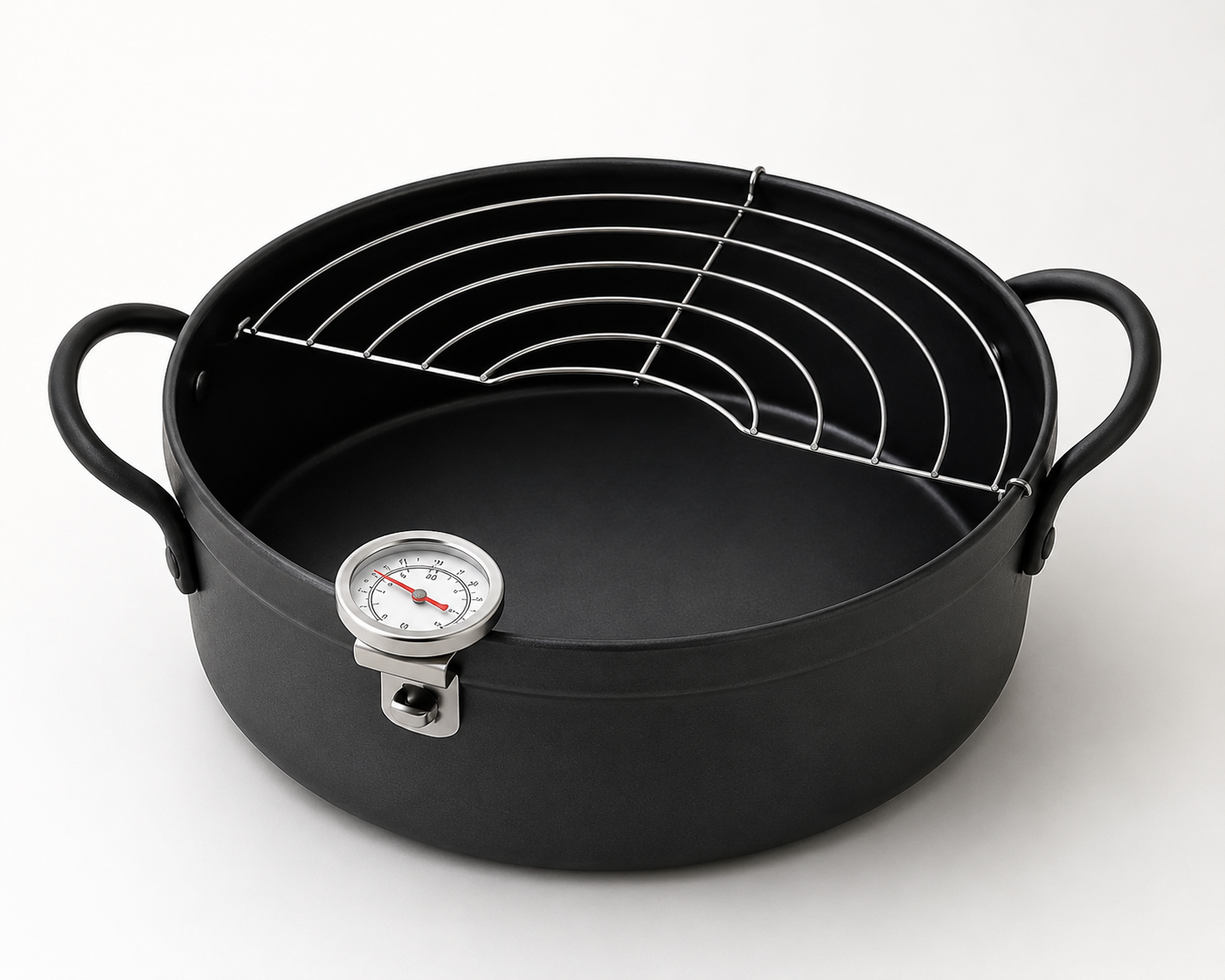
Small-batch deep-frying — a single portion of tempura or karaage, for example — is a common everyday use for a yukihira pot in Japan, and the pour spouts make draining used oil easier than with a spoutless pot. That said, the same thin walls that make it heat up quickly can also make oil temperature swing faster than it would in a heavier-bottomed pot, so keep a thermometer nearby and don’t leave hot oil unattended.
Why don’t more yukihira pots come with a matching lid?
It’s a common enough gap that a small market exists for separate, adjustable lids — like the Kyoto Katsugu pick in this guide, which is sized to fit a range of pot diameters rather than one specific pot. Buying a lid separately, sized to fit whichever pot you already own, is a normal part of owning a yukihira pot rather than a sign something’s missing.
Why does aluminum cookware turn black or discolor over time?
This is generally described as a reaction between the aluminum surface and alkaline minerals in tap water or certain foods, and it’s typically cosmetic rather than a safety issue. See the aluminum care instructions above for how to address it with a vinegar, citric acid, or lemon soak if it bothers you.
What You’ll Also Need
Since several yukihira pots — including our top pick — are sold without a lid, a separate lid is a natural companion purchase. The Kyoto Katsugu Anodized Pot Lid ($38.24) is made in Japan and adjustable to fit pots between 16 and 20 cm, which covers the 18 cm size used by three of the four picks in this guide. If you’re planning to simmer rather than blanch or boil, a wooden drop lid (otoshibuta) is the traditional tool for the job — it sits directly on the surface of the liquid to help ingredients cook evenly and hold their shape. The TIKUSAN Wooden Otoshibuta ($17.59) is made in Japan and sized at 18 cm to match an 18 cm yukihira pot.
Final Thoughts
All four picks in this guide were explicitly confirmed as made in Japan on their own listings at the time of review, though marketplace details like price and stock can change — always double-check the current listing before buying. We don’t have hands-on, side-by-side testing of all four to report; this guide leans on listing details, manufacturer specifications, and patterns across verified-owner reviews. If you want one well-documented, versatile pot to start with, the YOSHIKAWA is the easiest recommendation. If you’re specifically cooking on induction, confirm that directly on the listing rather than assuming — the TIKUSAN and MARUYAMA GIKEN picks both state it explicitly, while the aluminum Taniguchi pick does not.
コメント