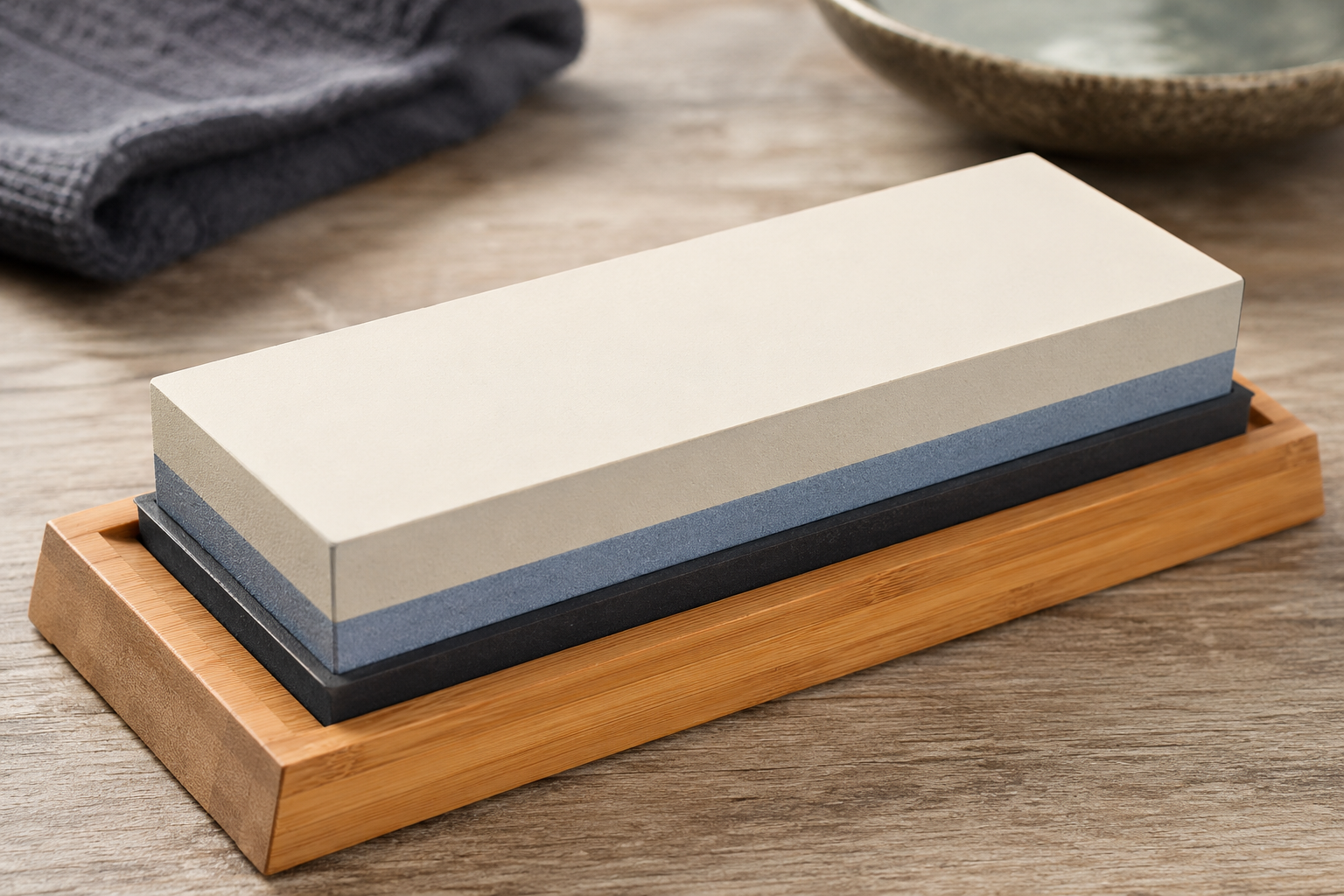
If you own a Japanese kitchen knife, a whetstone isn’t optional — it’s the only sharpening method that won’t ruin the thin, hard edge Japanese blades are known for. If you just want one reliable stone to start with, the KING Whetstone Starter Set (1000/6000 Grit) is the one to buy — genuinely made in Japan, comes with everything a beginner needs, and has by far the deepest review history of anything in this guide at around $54.00.
This comparison is based on manufacturer specifications, product listings, and patterns in verified owner reviews rather than hands-on testing.
- What Is a Whetstone, and Why Not Just Use a Pull-Through Sharpener?
- Comparison at a Glance
- What to Look for When Buying
- Product Reviews in Detail
- How to Sharpen a Knife on a Whetstone
- Whetstone Grit Guide
- Caring for Your Whetstone
- Natural/Traditional vs. Ceramic Whetstones
- Frequently Asked Questions
- Do I need a whetstone if my knife isn’t Japanese?
- How often should I sharpen my knife on a whetstone?
- What’s the difference between honing and sharpening?
- Can I use these stones on stainless steel knives, or only carbon steel?
- Do I need to buy a flattening stone right away?
- Can I sharpen serrated knives on a whetstone?
- Is a combination stone better than buying two single stones?
- What You’ll Also Need
What Is a Whetstone, and Why Not Just Use a Pull-Through Sharpener?
A whetstone (also called a waterstone) is a flat abrasive block that you sharpen a knife against by hand, using water as a lubricant rather than oil. Unlike a pull-through or electric sharpener, which drags the blade through a fixed carbide or ceramic slot at a preset angle, a whetstone lets you control the exact angle, pressure, and grit progression yourself — which matters enormously for Japanese knives.
Most Western pull-through sharpeners are built around a 20-degree-per-side angle and grind away a surprising amount of metal every time you use them. Japanese knives are typically sharpened much thinner, around 10 to 15 degrees per side, with harder steel that holds that finer edge longer. Running a Japanese knife through a pull-through sharpener regularly can chip the edge or wear down the blade far faster than whetstone sharpening would. A whetstone is slower and takes practice, but it’s the method that actually respects how these knives are made — which is why nearly every serious Japanese knife maker and knife shop recommends learning it.
Comparison at a Glance
| Product | Price | Grit | Best For |
| KING Whetstone Starter Set | $54.00 | 1000/6000 | Best Overall / Starter Kit |
| Shapton Kuromaku Whetstone Set | $125.99 | 1000/5000 | Best Premium Upgrade |
| TIKUSAN SAMURAI Ceramic Whetstone | $40.99 | 1000 | Best Single Stone |
| Naniwa Combi Ceramic Whetstone | $28.52 | 1000/3000 | Best Budget |
What to Look for When Buying
- Genuine Made in Japan confirmation. Amazon’s whetstone search results are dominated by generic sharpening kits from brands like Sharp Pebble, MITSUMOTO SAKARI, and THLEITE that call themselves “Japanese-style” or “Japanese whetstone” without ever stating where they’re actually manufactured. Check the listing’s own bullets or product description for an explicit “Made in Japan” statement or a named, verifiable maker (King, Shapton, Naniwa, TIKUSAN) rather than trusting the word “Japanese” in the title alone.
- Combination stones vs. single-grit stones. A combo stone with two grits on either side (like 1000/6000) is the most practical starting point for most home cooks — one stone covers both restoring a dull edge and polishing it. A single-grit stone (like the TIKUSAN #1000 here) is a good add-on once you already own a finishing stone, or if you mainly need routine touch-ups rather than a full progression.
- Soaking requirements. Traditional Japanese waterstones (like King and Naniwa here) need to soak in water for 10-15 minutes before use until they stop releasing air bubbles. Splash-and-go ceramic stones (like Shapton’s Kuromaku line) only need a quick surface wetting and should not be soaked — over-soaking can actually damage some vitrified ceramic stones. Know which type you’re buying before you dunk it.
- Whether a base or angle guide is included. A non-slip base keeps the stone from sliding around on your counter, and an angle guide is genuinely useful for beginners who haven’t trained their hand yet to hold a consistent 10-15 degree angle. Not every listing includes these — check the bullets.
- A flattening stone, eventually. Every whetstone wears unevenly with use and needs to be periodically flattened on a coarser flattening stone (sometimes called a nagura or lapping plate) to stay effective. None of the stones below include one, so budget for this as a follow-up purchase rather than a day-one requirement.
Product Reviews in Detail
Disclosure: As an Amazon Associate I earn from qualifying purchases.
KING Whetstone Starter Set (1000/6000 Grit) — Best Overall
King is one of the most established Japanese whetstone manufacturers, and this starter set pairs their combination stone (1000 grit for restoring an edge, 6000 grit for polishing it) with a knife angle holder, a wiping cloth, and a stable plastic base. The listing explicitly confirms Made in Japan, and at 695 ratings and 4.5 stars, it has by far the deepest and most consistent review history of anything in this guide — a meaningful signal in a category where most listings have only a handful of reviews.
The included angle holder is what makes this specifically a good starter set rather than just a stone: it clips onto the spine of the blade to hold a consistent angle while you build the muscle memory to do it freehand later. Reviewers consistently describe it as good value for a complete beginner kit rather than a professional-grade stone — which tracks, since 1000/6000 is a solid general-purpose combination but skips the coarser 400-grit stones a repair job on a chipped edge would need.
Pros: Confirmed Made in Japan; comes with angle holder, base, and cloth — no separate purchases needed to start; by far the largest and most consistent review base in this category.
Cons: 1000/6000 combo isn’t enough grit range for repairing a badly chipped edge; needs 10-15 minutes of soaking before each use, unlike splash-and-go ceramic stones.
Bottom line: The safest first whetstone if you’ve never sharpened a knife by hand before and want everything included in one box.
Shapton Kuromaku Whetstone Sharpening Stone Set (1000 & 5000 Grit) — Best Premium Upgrade
Shapton is a name serious home cooks and professional chefs recognize, and the Kuromaku (“black curtain”) line is their approachable, color-coded ceramic stone series — orange for the 1000-grit edge-restoring stone, wine/plum for the 5000-grit finishing stone. The listing explicitly confirms these stones are made in Japan. Unlike the traditional waterstones elsewhere in this guide, Kuromaku stones are splash-and-go: a quick surface wetting is enough, no 10-minute soak required, which makes them noticeably more convenient for a quick touch-up before dinner.
At 15 ratings and 4.3 stars, the review count here is thin compared to the King set — but that’s typical for Shapton’s US Amazon listings generally, and it reflects the brand’s positioning (sold heavily through specialty knife shops rather than mass retail) rather than a quality concern. Shapton’s ceramic stones are also known for cutting fast and staying flat longer between flattenings than softer traditional stones, which is where the higher price comes from.
Pros: Confirmed Made in Japan; splash-and-go convenience, no long soaking; well-regarded brand among professional and enthusiast knife sharpeners; stays flatter longer than softer traditional stones.
Cons: Noticeably more expensive than the other options here; thin review count on this specific Amazon listing.
Bottom line: Worth the upgrade if you already know you like sharpening and want less soaking hassle and a longer-lasting flat surface.
TIKUSAN SAMURAI Ceramic Whetstone Majin (#1000) — Best Single Stone
This is a single dense ceramic stone at 1000 grit, sold with a plastic base, from TIKUSAN — the same Japan-based Amazon seller behind the sukiyaki pots and cast iron cookware elsewhere on this site. The listing explicitly confirms Made in Japan. At 36 ratings and 4.5 stars it has a modest but solid review base, and like the Shapton stone above, its high-hardness ceramic construction needs only minimal soaking rather than a full 10-15 minute soak.
Because this is a single-grit stone rather than a combo, it’s best suited to two situations: as your everyday sharpening stone if you mostly do routine maintenance rather than deep repairs, or as an add-on 1000-grit “restore” stone if you already own a finer polishing stone and want a dedicated mid-grit option. The manufacturer markets it as suitable for both stainless and carbon steel knives, including harder blue-steel (Aogami) blades.
Pros: Confirmed Made in Japan; dense ceramic construction resists dishing out of flat as quickly as a softer stone; works on both stainless and carbon steel, including harder blue-steel blades; minimal soaking needed.
Cons: Single grit only, so you’ll want a second stone eventually for polishing or repair work; smaller review base than the King set.
Bottom line: A solid, no-frills everyday sharpening stone, or a good second stone to add to an existing kit.
Naniwa Combi Ceramic Whetstone (#1000/3000) — Best Budget
Naniwa is another long-established Japanese whetstone manufacturer, and this combination stone pairs a 1000-grit medium-grinding side with a 3000-grit finishing side — a narrower gap between grits than the King set’s 1000/6000, which some sharpeners actually prefer for a smoother progression. The listing explicitly confirms Made in Japan, and at 435 ratings it has the second-largest review base in this guide.
Its 3.8-star average is noticeably lower than the other three stones here, and it’s worth being upfront about that rather than glossing over it: a meaningful share of reviews mention the stone being smaller and thinner than expected for the price, or wearing down faster with heavy use than a premium stone would. For occasional home sharpening at this price point, though, it remains a functional, genuinely Japan-made option — just not one we’d point a heavy daily user toward.
Pros: Confirmed Made in Japan; lowest price in this guide; 1000/3000 grit pairing gives a gentler progression than a 1000/6000 jump; large review base for this category.
Cons: Lower average rating than the other three picks, with recurring complaints about size and long-term durability; no angle guide or accessories included.
Bottom line: A reasonable low-cost entry point if budget is the deciding factor, but the King set is a better value if you can stretch the budget.
How to Sharpen a Knife on a Whetstone
- Soak or wet the stone. Traditional waterstones (King, Naniwa) need 10-15 minutes fully submerged in water until bubbles stop rising. Splash-and-go ceramic stones (Shapton, TIKUSAN) just need the surface wetted with a splash of water — don’t soak these.
- Set the stone on a stable, non-slip surface, coarse side facing up if it’s a combo stone, with a damp towel underneath if it doesn’t have a base.
- Hold the blade at roughly 10 to 15 degrees against the stone — about the width of two stacked coins between the spine and the stone. An angle guide, if your set includes one, does this for you while you’re learning.
- Sharpen with light pressure, pushing and pulling the edge across the stone in smooth strokes, covering the full length of the blade including the tip and heel. The weight of your hand is enough — pressing harder doesn’t sharpen faster, it just wears the stone down unevenly.
- Feel for the burr. After enough strokes on one side, you’ll feel a tiny rough wire of metal along the opposite edge if you run a finger gently across it (away from the blade, never along it). That’s your sign to flip and repeat on the other side.
- Move to the finer grit once both sides have a burr, and repeat the same motion with lighter pressure to polish out the coarser scratch pattern. Each finer grit typically needs less time than the one before it.
- Rinse and dry the blade and stone when finished, and let the stone air-dry completely before storing it to avoid mildew or cracking.
Whetstone Grit Guide
| Grit Range | Use Case |
| #220–400 | Repairing chips, nicks, or a badly rolled edge |
| #1000 | Everyday sharpening for a knife that’s gone dull |
| #3000 | Refining the edge after a 1000-grit sharpening |
| #5000–6000 | Polishing for routine maintenance and a cleaner cut |
| #8000+ | Final mirror polish; not for damaged or very dull edges |
For most home cooks, a 1000/6000 or 1000/3000 combination stone (like the King or Naniwa sets above) covers everyday sharpening and polishing without needing a coarser repair stone or an ultra-fine finishing stone.
Caring for Your Whetstone
Whetstones wear unevenly with use — the center dishes down faster than the edges — and a stone that isn’t flat will actually make your knife edge less consistent over time. Every so often (how often depends on how heavily you use it), flatten the stone on a dedicated flattening stone or a sheet of wet/dry sandpaper on a flat surface, working in circular motions until the whole face is uniformly matte again. Always let a stone dry completely out of direct sunlight before storing it, since trapped moisture can encourage mildew on traditional stones or, in freezing conditions, crack a fully saturated one.
Natural/Traditional vs. Ceramic Whetstones
The stones in this guide split into two general types. King and Naniwa are traditional Japanese waterstones — a bonded abrasive that needs a real soak before use and tends to be softer, which means faster wear but also a slightly more forgiving, “grippier” feel while sharpening. Shapton and TIKUSAN’s stones use dense, high-hardness ceramic construction that only needs light surface wetting, cuts faster, and holds its flat surface longer between flattenings, at a higher price point. Neither type is objectively better — traditional stones are the classic choice and generally cost less, while ceramic stones trade a higher price for convenience and durability. Beginners often start with a traditional combo stone like the King set and consider a ceramic stone later once they’ve settled into a sharpening routine.
Frequently Asked Questions
Do I need a whetstone if my knife isn’t Japanese?
Whetstones work on any steel knife, Japanese or otherwise. They’re simply the standard method for Japanese knives specifically because those blades are thinner and harder than most Western knives, making them more vulnerable to damage from pull-through and electric sharpeners.
How often should I sharpen my knife on a whetstone?
For a home cook using a knife daily, a quick pass on the finer grit every few weeks, with a full sharpening on the coarser grit every few months, is a reasonable starting rhythm — adjust based on how the edge feels and cuts.
What’s the difference between honing and sharpening?
Honing (with a honing rod) realigns an edge that’s rolled slightly out of true; it doesn’t remove metal. Sharpening on a whetstone actually grinds away metal to create a new edge. A knife needs honing far more often than it needs full whetstone sharpening.
Can I use these stones on stainless steel knives, or only carbon steel?
All four stones in this guide work on both stainless and carbon steel kitchen knives. The TIKUSAN stone’s listing specifically calls out compatibility with harder blue-steel (Aogami) blades as well.
Do I need to buy a flattening stone right away?
Not immediately — a brand-new stone starts flat. But plan to add one within your first few months of regular use, since sharpening on a dished, uneven stone works against you rather than for you.
Can I sharpen serrated knives on a whetstone?
Not effectively for the serrated section itself — serrated edges need a specialized rod-style sharpener that matches the curve of each individual serration. A whetstone is for straight-edge blades.
Is a combination stone better than buying two single stones?
For most home cooks, yes — a combo stone is more compact and less expensive than two separate stones, and it’s genuinely all you need unless you’re doing frequent heavy repair work that calls for a dedicated coarse stone.
What You’ll Also Need
- A flattening stone or lapping plate to keep your whetstone’s surface true over time — not included with any of the sets above, and worth budgeting for within the first few months of regular use.
- A non-slip surface or towel under your stone if it doesn’t come with its own base, so it can’t shift while you’re sharpening.
- Pair your new whetstone with one of the Japanese chef knives or santoku knives we’ve covered elsewhere on Heirloom Japan, and a hinoki or ginkgo cutting board to keep the edge you just put on it lasting as long as possible.
コメント