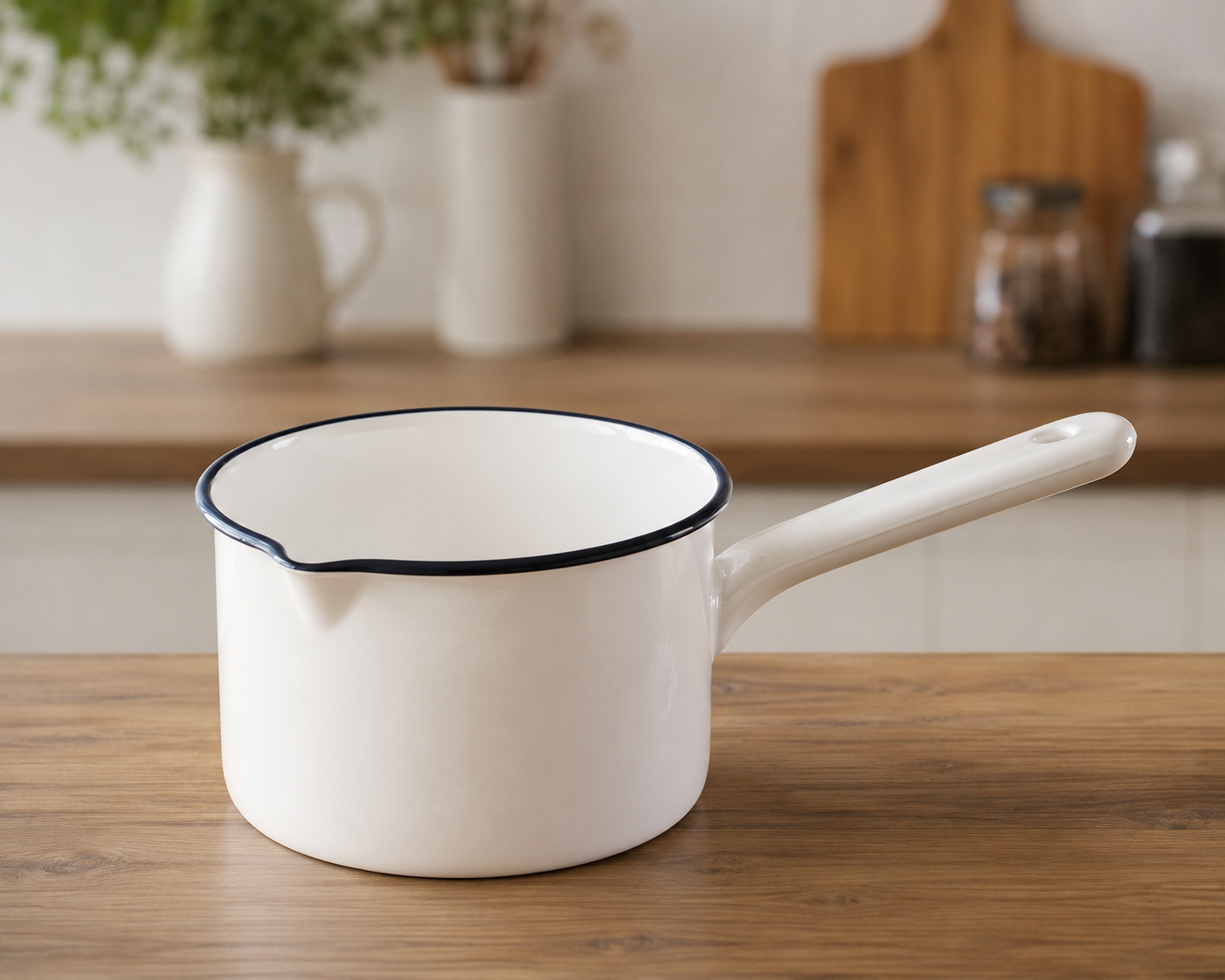
Quick answer: For most everyday cooking, the Noda Horo Casserole (Pochika) is the easiest recommendation — a genuine Japanese-made enamel pot from the brand that essentially defines this category, typically selling between $50–$70. This recommendation is based on its specifications, Noda Horo’s long-established manufacturing reputation, and a consistent track record of user reviews. Read on for the full comparison, how enamelware (horo) actually differs from other cookware, and how to use and care for it.
- What Is Horo (Japanese Enamelware), and Why Does It Matter?
- Comparison at a Glance
- What to Look for When Buying Japanese Enamelware
- Product Reviews in Detail
- Which One Should You Buy?
- How to Use and Care for Enamelware
- FAQ
- Enamelware vs. Other Cookware Materials
- Why Japanese Enamelware Costs More Than Generic Enamelware
- Final Thoughts
What Is Horo (Japanese Enamelware), and Why Does It Matter?
Horo is enamelware — a steel core coated in a fused glass layer, fired at high heat until it becomes a smooth, glossy surface. Japan has its own strong tradition of this craft, and it shows up constantly in Japanese kitchens: milk pans, kettles, and storage containers in particular.
The appeal is fairly practical. The enamel coating is generally non-reactive with acidic ingredients the way bare metal can be, doesn’t retain odors or stains, and provides even heating thanks to its steel core. It’s also just genuinely pleasant to look at and use — a lot of Japanese enamelware, including the brands in this guide, leans into a simple, understated design that looks equally at home on a stovetop or a table.
Comparison at a Glance
| Product | Price | Capacity | Induction | Oven Safe | Handle |
|---|---|---|---|---|---|
| Noda Horo Milk Pan | $25–$35 | 0.7L | No (gas/electric only) | Check listing | Natural wood |
| Noda Horo Casserole | $50–$70 | 2.6L | Yes (200V) | Check listing | Natural wood |
| Kaico Sauce Pan | $150–$190 | 2.2L | Yes | Not recommended (wood handle) | Beechwood + maple knob |
What to Look for When Buying Japanese Enamelware
- Made in Japan — stated explicitly, not just “Japanese design” with manufacturing elsewhere
- Wood or resin handle — affects both grip comfort and oven-safety limits
- Induction compatibility — not all enamelware works on induction cooktops, so check before buying if that’s your setup
- Capacity relative to your household — enamelware pots tend to run smaller than typical Western cookware
Product Reviews in Detail
Disclosure: As an Amazon Associate I earn from qualifying purchases.
Noda Horo Milk Pan (Pochika) — Best Entry Point
A low-cost, low-risk way to see if enamelware fits your routine. Check today’s price on Amazon →
Noda Horo is, functionally, the brand most associated with Japanese enamelware internationally — it shows up constantly once you start looking. This milk pan is part of the Pochika line, small and designed to be genuinely useful rather than decorative, with a spout on both sides so it works for right- or left-handed pouring.
Pros:
- Inexpensive way to try genuine Japanese enamelware
- Ambidextrous double-spout design, unusual for a pan this size
- Light at roughly 260g, easy to handle one-handed
Cons:
- At 0.7L, it’s really a single-task pan (warming milk, melting butter) rather than a general cooking pot
Bottom line: A sensible, low-stakes way to start if you’re not ready to commit to a full-size pot yet.
Noda Horo Casserole (Pochika) — Best Overall
This is the one I’d point most people toward for everyday cooking. Check today’s price on Amazon →
Same Pochika line, scaled up to a genuinely useful everyday size at 2.6L. It’s a double-handled pot, works on both gas and induction (200V), and has picked up a solid track record of reviews over time.
Pros:
- Works on both gas and induction stoves
- A genuinely practical everyday size, not just a display piece
- Double handles make it easier to move safely when full and hot
Cons:
- Like most enamelware, chips can occur with rough handling, and once the coating is compromised the exposed steel can rust
Bottom line: If you only buy one piece of Japanese enamelware, this is the one that’ll actually get used.
Kaico Sauce Pan — Best Design-Forward Pick
Worth the premium if design matters as much as function to you. Check today’s price on Amazon →
Kaico is a different kind of brand than Noda Horo — it’s a cookware line designed by Makoto Koizumi, produced with local factories in Mie Prefecture, and it shows in the details: a beechwood handle that stays noticeably cooler to the touch than an all-metal handle during stovetop cooking, a maple knob, and a Good Design Award to its name (won by another piece in the same collection). The minimalist look has a following among Japanese interior design enthusiasts specifically, not just cookware shoppers. It’s noticeably more expensive than the Noda Horo pieces here, and that premium is mostly about design pedigree rather than a functional upgrade.
Pros:
- Distinctive, award-recognized design from a named Japanese designer
- Wood details (beech handle, maple knob) that most mass-market enamelware doesn’t have
- Works on gas, induction, and electric stoves
Cons:
- Significantly more expensive than functionally similar Noda Horo pieces
- As a smaller-run designer brand, stock on individual pieces can be inconsistent
Bottom line: Buy this one for the design, not because it cooks meaningfully better than the cheaper option.
Which One Should You Buy?
- Just testing the waters? → Noda Horo Milk Pan
- Want a pot you’ll actually cook with regularly? → Noda Horo Casserole
- Care about design as much as function? → Kaico Sauce Pan
How to Use and Care for Enamelware
Enamelware is fairly low-maintenance compared to bare cast iron, but a few habits make it last. Avoid dry heating an empty pot, which can crack the glass coating. Let the pot cool before rinsing it under cold water — a sudden temperature change can cause thermal shock and chip the enamel. Use wooden or silicone utensils rather than metal ones, which can scratch the surface over time, and avoid abrasive scouring pads for the same reason. If you’re stacking enamelware for storage, put a cloth or paper towel between pieces to prevent them from scratching each other. Many manufacturers recommend hand washing even for pieces marketed as dishwasher-safe, since repeated dishwasher cycles tend to dull the glossy finish faster.
A small chip isn’t generally considered a food safety issue, but exposed steel can rust over time, so it’s worth monitoring the spot closely and replacing the piece if rust actually develops.
FAQ
Is Japanese enamelware safe if it chips?
A small chip in the glass coating isn’t an immediate safety issue, but it does expose the steel underneath, which can rust over time. It’s worth handling chipped pieces a bit more carefully and replacing them if rust actually develops.
Does enamelware work on induction stoves?
Depending on the model — the steel core needs to be magnetic for induction to work, and not every enamelware product is built that way. Check the specific listing rather than assuming, since it varies even within the same brand.
Why is some enamelware so much more expensive than other pieces that look similar?
Design pedigree is a big factor — pieces from named designers (like Kaico’s Makoto Koizumi collaboration) or smaller workshops cost more than mass-produced lines, even when the core function is comparable.
Can I put enamelware in the oven?
Usually yes for the pot itself, but check the handle material first — wooden handles and knobs typically have a lower heat tolerance than the enamel body and may not be oven-safe at high temperatures.
How is Japanese enamelware different from enamel cast iron (like Dutch ovens)?
They’re related but distinct: Japanese horo is typically enamel over a thin steel core, making it lighter but more prone to chipping on impact, while enamel-coated cast iron is heavier and more impact-resistant but far less portable.
Can enamelware go in the dishwasher?
Some pieces are labeled dishwasher-safe, but many manufacturers, including Noda Horo, recommend hand washing to keep the glossy finish looking new for longer.
Does enamelware rust?
The enamel coating itself doesn’t rust, but the steel core underneath does if it’s exposed through a chip or crack. Intact enamelware is protected from rust as long as the coating stays whole.
Can I cook tomato sauce or other acidic foods in it?
Yes — this is actually one of enamelware’s strengths, since the glass coating doesn’t react with acidic ingredients the way some bare metals can.
Why does enamel chip in the first place?
Usually from impact — dropping the pot, banging it against a hard edge, or stacking heavier cookware on top of it without padding in between. It’s a coating over metal, so sharp impacts are what it’s least tolerant of.
Enamelware vs. Other Cookware Materials
It’s worth knowing where enamelware actually fits before assuming it’s the right choice for every pot in your kitchen.
Vs. bare cast iron: Bare cast iron needs to be seasoned and re-seasoned over time, and if that seasoning wears thin, cooking something acidic can react with the iron and leave a metallic taste. Enamelware skips that maintenance entirely — no seasoning ritual, no risk of that reaction — but you lose cast iron’s naturally non-stick surface once well-seasoned, and enamelware doesn’t tolerate high, dry, direct heat as well.
Vs. enameled cast iron (like a Dutch oven): This is where a lot of people get confused, since both are “enamel.” Japanese horo is enamel over a thin steel core, while something like a Le Creuset is enamel over thick cast iron. The Japanese version is dramatically lighter and heats up faster, which suits quick, everyday cooking like simmering a small pot of soup. The tradeoff is that enameled cast iron holds heat longer and handles slow braises better, and its thicker construction is more resistant to chipping from impact.
Vs. stainless steel: Stainless steel is also non-reactive with acidic food and is generally more impact-resistant than enamelware — you can drop a stainless pot without much worry, which isn’t true here. Quality stainless steel with an aluminum or copper core also heats very evenly. What it doesn’t offer is enamelware’s smooth, glass-like finish or its ability to double as an attractive serving piece straight from the stove.
Vs. non-stick (PTFE or ceramic-coated): Non-stick coatings are hard to beat for effortless egg cooking and easy cleanup, but the coating itself degrades over years of use and needs replacing eventually, and manufacturers typically advise against very high heat and metal utensils. Enamelware isn’t naturally non-stick, but its coating doesn’t degrade the same way over time when cared for properly.
Why Japanese Enamelware Costs More Than Generic Enamelware
It’s a fair question, especially once you notice similar-looking enamel pots selling for a fraction of the price elsewhere. A few things tend to explain the gap. Japanese manufacturers typically apply a thicker enamel coating, which resists chipping better over the life of the product than a thin, single-layer coating does. Manufacturing is also actually done in Japan, under the country’s stricter general manufacturing quality standards, rather than outsourced production where oversight varies more. Brands like Noda Horo and Kaico have decades of manufacturing history behind them, with an established reputation they have every incentive to protect — that’s different from a newer brand with no track record to lose. Long-established Japanese makers also tend to be easier to reach for parts, replacement handles, or repair advice if something does go wrong, since they’re still operating the same factories years later. And with a brand like Kaico specifically, a portion of the price reflects paying for named-designer craftsmanship and small-batch production rather than the raw materials themselves.
Final Thoughts
Japanese enamelware is an easy, relatively affordable way to bring some genuine craft into everyday cooking, without the upkeep that bare cast iron demands. For most people, the Noda Horo Casserole is the piece that’ll earn its keep — but if you’re drawn to the design story as much as the function, the Kaico Sauce Pan is worth the premium.
コメント