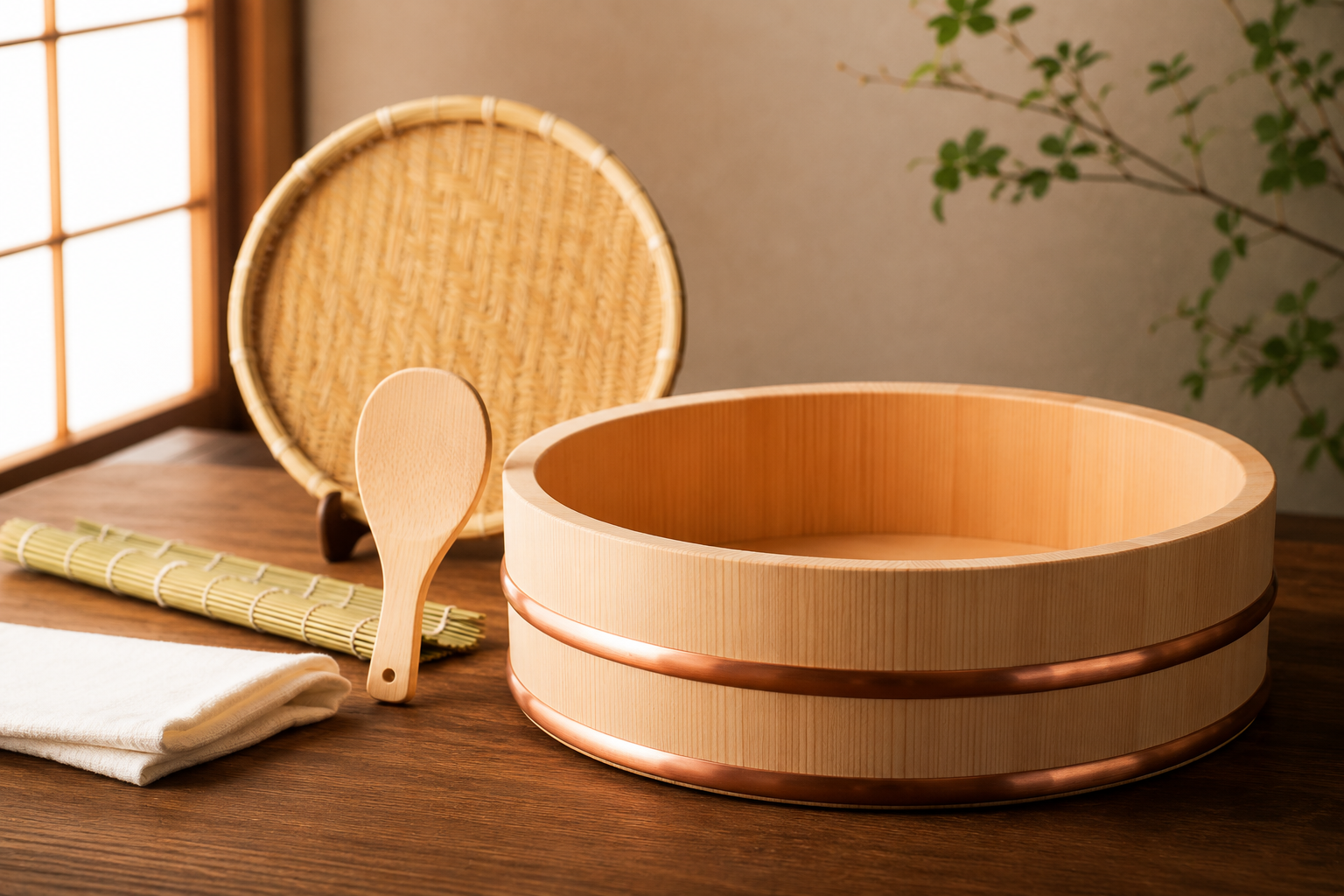
If your homemade sushi rice always ends up either mushy or dried out, the problem usually isn’t your rice cooker — it’s the bowl. (If it actually is your rice cooker, our guide to Japanese donabe rice cookers is a good place to start.) Our top pick overall is the TIKUSAN Momi Fir Hangiri with Lid, 11.8″ ($60.99) — an affordable, genuinely made-in-Japan wooden sushi rice tub that’s forgiving enough for a first-timer. We also researched a premium sawara cypress and copper-band version for serious home sushi nights, a handmade artisan piece from Nagano for gifting, and a smaller value-priced cypress tub for solo or two-person households.
- Comparison Table
- What Is a Hangiri, and Why Not Just Use a Mixing Bowl?
- Why Japanese Households Still Use a Hangiri
- How We Chose
- What to Look for When Buying a Hangiri
- Product Reviews
- Which One Should You Buy?
- Sizing Guide
- Sawara Cypress vs. Momi Fir
- Care and Maintenance
- How to Use a Hangiri
- A Simple Chirashi Sushi Recipe for Your Hangiri
- Common Mistakes
- FAQ
- Is a hangiri really necessary, or can I use a regular mixing bowl?
- Is a hangiri dishwasher safe?
- Do I need the lid, or is it optional?
- What size hangiri do I need?
- Can I use a hangiri for anything besides sushi rice?
- Why does my new hangiri smell strongly of wood, or have a sticky residue?
- What else do I need to make sushi at home?
- Is sawara cypress the same as cedar?
- What You’ll Also Need
- Final Thoughts
Comparison Table
Prices, ratings, and stock status were checked at the time of publication and can change — always confirm current details on the Amazon listing before buying.
| Product | Price | Wood | Band | Lid | Best For |
|---|---|---|---|---|---|
| TIKUSAN Momi Fir Hangiri with Lid | $60.99 | Momi fir, 11.8″ | PP (resin) | Yes | Best overall, best for beginners |
| TIKUSAN Sawara Cypress Hangiri, Copper Band, with Lid | $90.99 | Sawara cypress, 10.6″ | Copper | Yes | Best premium, most traditional materials |
| Kotobuki Hangiri, Medium | $104.99 | Nagano cypress, handmade | Copper | No | Best gift, artisan piece |
| JapanBargain Sawara Cypress Hangiri, 30cm | $65.00 | Sawara cypress, 11.8″ | Copper | No | Best value for genuine cypress |
What Is a Hangiri, and Why Not Just Use a Mixing Bowl?
A hangiri (半切) — also sold as sushi oke — is a wide, shallow wooden tub used for one specific job: mixing seasoned vinegar into freshly cooked rice to make sushi rice (shari). The wood, typically sawara cypress or momi fir, helps regulate excess surface moisture as you fan and fold the rice, which is part of how sushi chefs get that glossy, separated-grain texture instead of a sticky clump. A metal or glass bowl can’t do this the same way — it holds heat and moisture in rather than moderating it, which is part of why hangiri are traditionally made without metal touching the rice at all (the bands on the outside are decorative and structural, not in contact with the food; modern stainless steel is far less reactive than older metals, so this is more about moisture and tradition than a real safety concern). The wide, flat bottom also matters: it gives you enough surface area to spread the hot rice out and cool it quickly with a fan, which is much harder to do in a deep bowl.
Why Japanese Households Still Use a Hangiri
Hangiri aren’t just a sushi-restaurant tool. In Japan they also come out of the cupboard for home occasions built around chirashi sushi — Hinamatsuri (Girls’ Day) in March, Kodomo no Hi (Children’s Day) in May, New Year’s gatherings, and family celebrations more generally, where a big shared tub of colorful chirashi sushi is a common centerpiece. Home cooks who use one regularly also tend to like the wood’s natural scent, especially with cypress, as part of the experience rather than treating the hangiri as purely functional. It’s also worth knowing a hangiri isn’t meant to double as everyday food storage — it’s for the mixing and short serving window, not for keeping rice in the refrigerator.
How We Chose
We required each product to be explicitly labeled “Made in Japan” on its own Amazon listing — either in the title or the product specifications, not just a Japanese-sounding brand name. Beyond that, rather than ranking by star rating alone, we weighed:
- Verified country-of-manufacture claim on the listing itself
- Wood species (sawara cypress vs. momi fir)
- Band material and construction (copper vs. resin/PP)
- Whether a lid is included
- Price relative to comparable Japanese-made hangiri
- Consistency of patterns across a large number of verified-owner reviews, not just the star average
We haven’t tested these four side by side ourselves in a full sushi-making session; this guide is based on listing research and review patterns rather than a hands-on bake-off, and we’re saying so directly rather than implying hands-on testing we didn’t do.
What to Look for When Buying a Hangiri
- The country-of-manufacture claim on the listing itself. Check the title, bullets, or product details — a Japanese-sounding brand name alone doesn’t confirm the tub was actually made in Japan. All four picks above explicitly state “Made in Japan” in their own listing.
- Wood type. Sawara cypress is the more traditional, more fragrant choice and is generally described as more resistant to warping and mold; momi fir is a lighter-scented, lower-maintenance alternative that several sellers market as easier for beginners. Avoid unlabeled “natural wood” listings that won’t specify which one you’re getting.
- Band material. Copper bands are the traditional choice and are what you’ll see on most mid-range and premium hangiri; some budget-oriented tubs use a resin or polypropylene band instead, which is lighter and won’t discolor but is less traditional-looking.
- Size versus your household. Hangiri are sized by outer diameter, and sellers’ own size guides suggest roughly 2–3 people per 27cm (10.6″), 3–4 people per 30cm (11.8″), and 4–5 people per 33cm (13″) — go a size up if you regularly cook for guests, since the actual usable surface is smaller than the outer measurement.
- Whether a lid is included. A lid isn’t essential, but it lets you keep seasoned rice from drying out if you’re not serving it immediately, and it’s a genuine convenience if you’re prepping ahead of a dinner party.
Product Reviews
Disclosure: As an Amazon Associate I earn from qualifying purchases.
TIKUSAN Momi Fir Hangiri with Lid — Best Overall
This is the tub we’d point most first-time buyers toward. It’s made of Japanese momi fir, which the maker and several reviewers describe as easier to maintain than cypress with no special care beyond the usual rinse-and-air-dry routine, and it comes with a matching lid included at this price point — several competing cypress tubs charge extra for one. At 11.8″ (30cm), it’s sized for 3–4 people according to TIKUSAN’s own size chart.
Pros:
- Comes with a lid at a mid-range price
- Momi fir is lower-maintenance than cypress, good for a first hangiri
- 4.8-star rating from verified buyers, with reviewers specifically praising the fluffy rice texture and ease of cleaning
Cons:
- Resin/PP bands rather than the more traditional copper
- Momi fir has a lighter aroma than cypress, if that traditional cypress scent is part of what you want
Bottom line: if you’re making sushi rice at home for the first time and don’t want to commit to a premium price before you know how often you’ll actually use it, this is the low-risk starting point.
TIKUSAN Sawara Cypress Hangiri, Copper Band, with Lid — Best Premium
This is the more traditional build: sawara cypress wood, which is generally described as more aromatic and more resistant to warping than fir, bound with copper bands rather than resin. It also includes a lid. Reviewers consistently describe it as noticeably nicer in hand than cheaper alternatives, with several specifically comparing it favorably to lower-cost tubs they’d owned before. One thing worth knowing before you buy: the listing itself notes that a sap-like substance from the cypress can appear in warm weather (harmless, and removable by washing), and that the copper bands may darken slightly during shipping — both are normal for this material and not defects.
Pros:
- Genuine sawara cypress and copper bands — the combination most often described as the traditional standard
- Comes with a lid
- 4.6-star rating across 63 ratings, with several reviewers explicitly saying they upgraded from a cheaper tub and noticed the difference
Cons:
- Noticeably more expensive than the momi fir version
- Smaller diameter (10.6″) than some other options at a similar price
Bottom line: the pick for someone who already knows they’ll use a hangiri regularly and wants the traditional cypress-and-copper build from the start.
Deciding between the two TIKUSAN models? Choose the momi fir if this is your first hangiri, you want a lid included at the lower price, or you’re not yet sure how often you’ll use it. Choose the sawara cypress if you already know you’ll be making sushi rice regularly and want the more traditional wood and copper band from the start.
Kotobuki Hangiri, Medium — Best Gift / Artisan Piece
Kotobuki’s hangiri is handmade from Nagano-prefecture cypress and bound with copper bands, and it reads as the most obviously “crafted” of the four — reviewers repeatedly describe the joinery and finish as noticeably nicer than mass-market alternatives, which makes it a reasonable gift pick for someone serious about cooking. It’s worth knowing that a small number of reviews mention shipping damage (a cracked band or split wood on arrival) — this appears to be an occasional shipping issue rather than a consistent build-quality problem, since the majority of reviews describe the construction as excellent, but it’s worth ordering with enough lead time to exchange it if that happens to you.
Pros:
- Handmade construction reviewers describe as a clear step up in craftsmanship
- Distinct from the TIKUSAN line if you want a different maker’s take
- Good “gift” positioning — reads as a considered present rather than a generic kitchen tool
Cons:
- The most expensive of the four picks
- No lid included
- A handful of reviews mention shipping damage — worth ordering early enough to exchange if needed
Bottom line: if you’re buying this as a gift for someone who already loves cooking, the handmade story and finish make it feel like a considered choice rather than a commodity purchase.
JapanBargain Sawara Cypress Hangiri, 30cm — Best Value
This is the same core material as our premium pick — genuine sawara cypress with copper bands — at a noticeably lower price, from a small-business seller with a strong review history (4.9 stars across 62 ratings on this listing). It doesn’t include a lid, and like any cypress hangiri it needs the same water-and-vinegar seasoning before first use (check the seller’s specific instructions for soak time), but multiple reviewers specifically call it out as the best value they found for a genuine cypress-and-copper tub.
Pros:
- Real sawara cypress and copper bands at the lowest price among our cypress picks
- 4.9-star rating, the highest of the four
- Available in a wide range of sizes from this one seller if you want to size up later
Cons:
- No lid included
- Smaller seller than TIKUSAN or Kotobuki, though reviews suggest reliable quality
Bottom line: the pick if you want the traditional cypress-and-copper combination but don’t want to pay premium-brand pricing to get it.
Which One Should You Buy?
- First hangiri, don’t want to overspend: TIKUSAN Momi Fir with Lid
- Want the traditional cypress-and-copper build and use it regularly: TIKUSAN Sawara Cypress Copper Band
- Buying as a gift for a serious home cook: Kotobuki Hangiri
- Want real cypress without premium pricing: JapanBargain Sawara Cypress 30cm
Sizing Guide
| Diameter | Recommended for |
|---|---|
| 27cm (10.6″) | 2–3 people |
| 30cm (11.8″) | 3–4 people |
| 33cm (13″) | 4–5 people |
| 45cm+ (17.7″+) | Large gatherings or entertaining — these sizes are closer to what restaurants use |
Sawara Cypress vs. Momi Fir
Both woods are traditionally used for hangiri, and the difference is mostly about maintenance and scent rather than performance. Sawara cypress is the more classic choice — it’s described across multiple listings and guides as more aromatic, more resistant to warping, and naturally resistant to mold and insects, which is part of why it’s also used for high-end cutting boards and bath fixtures in Japan. Momi fir is a lighter-scented alternative that several sellers specifically market as requiring less careful handling, making it a reasonable choice if you’re worried about babying a more delicate cypress tub. Neither wood should go in the dishwasher, and neither should sit in water for extended periods.
Care and Maintenance
- Before first use: fill the tub with water and a splash of rice vinegar and let it sit for a few hours to overnight, then pour out the solution and wipe dry. This helps season the wood and reduces the chance of the rice sticking on first use — soaking times vary by manufacturer, so check the instructions included with your specific hangiri.
- Before each use: moisten the tub with water (some owners soak it for about 30 minutes while the rice cooks) so the wood doesn’t pull too much moisture from the rice too quickly.
- After use: rinse with water only — no soap or detergent, and avoid steel wool or abrasive scrubbers, which can damage the wood surface.
- Drying and storage: dry thoroughly with a towel, then air dry fully in a shaded, well-ventilated spot before storing — direct sunlight and stored moisture are the two most common causes of warping and cracking. Once fully dry, wrapping the tub in absorbent paper before storing helps it keep its shape.
- Not dishwasher or microwave safe. Every hangiri in this guide is explicitly labeled as hand-wash only.
Quick tip: if you’re not sure your tub is fully dry before storing it, err on the side of a few more hours of air time — trapped moisture inside a wrapped, stored hangiri is the most common way owners end up with mold or warping down the line.
How to Use a Hangiri
- Cook your rice slightly firmer than usual, since it will continue to absorb the vinegar seasoning.
- Moisten the hangiri with water before adding the hot rice.
- Spread the hot rice across the wide, flat bottom of the tub rather than piling it in the center.
- Pour the seasoned rice vinegar over the rice in a thin stream, then use a rice paddle (shamoji) to fold — not stir — the vinegar through the rice in a cutting motion, which coats the grains without crushing them.
- While folding, fan the rice with your other hand or a handheld fan to help it cool and take on the glossy sheen sushi rice is known for.
- Cover with a damp cloth (or the lid, if your hangiri has one) to keep the rice from drying out until you’re ready to use it.
A Simple Chirashi Sushi Recipe for Your Hangiri
Since chirashi sushi is the dish most closely tied to the hangiri in Japanese households (see above), here’s a simple version built entirely from ingredients you can find at a typical U.S. grocery store or the Asian foods aisle — no specialty Japanese produce required. This isn’t meant as a definitive or restaurant-style recipe, just an easy way to put your new hangiri to use.
Ingredients (serves 4):
- 2 cups Japanese short-grain sushi rice (uncooked), cooked and seasoned with sushi vinegar using the steps above
- Sushi vinegar: 5 tablespoons rice vinegar, 2 tablespoons sugar, 1 teaspoon salt (a common starting ratio for 2 cups of uncooked rice — adjust to taste)
- 2 large eggs, beaten with a pinch of sugar and salt
- 1 cucumber, thinly sliced or julienned
- 1 ripe avocado, sliced
- 8 oz cooked shrimp or imitation crab (surimi) — both are widely available at regular grocery stores
- 2 sheets nori (dried seaweed), cut into thin strips with scissors
- 2 tablespoons toasted sesame seeds
- Pickled ginger (gari) and soy sauce, for serving
Steps:
- Combine the rice vinegar, sugar, and salt, stirring until dissolved. Cook the rice, then season and cool it in the hangiri as described above, then let it cool to room temperature.
- Make a thin omelet with the beaten eggs in a lightly oiled pan over medium-low heat, flipping once. Let it cool, then slice into thin strips (this is sometimes called kinshi tamago, or “shredded egg”).
- Prepare the rest of your toppings: slice the cucumber and avocado, and have the shrimp or crab ready to go.
- Either serve straight from the hangiri or transfer the seasoned rice to a large serving plate.
- Arrange the toppings over the rice in sections — egg strips, cucumber, avocado, shrimp or crab, nori strips — and finish with a scatter of sesame seeds.
- Serve with pickled ginger and soy sauce on the side, and let everyone help themselves.
Feel free to swap in whatever fresh vegetables or cooked seafood you have on hand — chirashi sushi is meant to be a flexible, use-what-you-have kind of dish.
Common Mistakes
- Skipping the seasoning step on a brand-new hangiri. Using a dry, unseasoned wooden tub for the first time makes rice more likely to stick and can stress the wood.
- Letting the tub soak or sit wet. Unlike some kitchenware, a hangiri shouldn’t be left submerged — rinse, wipe, and dry it promptly instead.
- Storing it while still slightly damp. This is the most common cause of mold or warping reported by owners; make sure it’s fully air-dried first.
- Using metal utensils to mix. Stick to a wooden or plastic rice paddle — metal can scratch the wood surface over repeated use.
FAQ
Is a hangiri really necessary, or can I use a regular mixing bowl?
You can technically make sushi rice in any wide, shallow bowl, but a metal or glass bowl won’t absorb excess moisture the way wood does, and its shape usually isn’t as wide and flat, which makes cooling the rice quickly more difficult. A hangiri isn’t strictly required, but it’s the tool that’s specifically designed for this one job.
Is a hangiri dishwasher safe?
No. Every hangiri in this guide is explicitly labeled hand-wash only by the manufacturer, and putting solid wood cookware through a dishwasher’s heat and prolonged water exposure is a common way to cause warping or cracking.
Do I need the lid, or is it optional?
A lid is a convenience, not a requirement. It’s most useful if you’re prepping rice ahead of when you’ll actually assemble sushi and want to keep it from drying out in the meantime.
What size hangiri do I need?
For a household of 2–4 people making sushi occasionally, 27–30cm (10.6″–11.8″) is the typical range, per sellers’ own size guides. If you regularly cook for guests or entertain, sizing up to 33cm or larger gives you more room to work.
Can I use a hangiri for anything besides sushi rice?
Yes — it’s also commonly used as a serving container for chirashi sushi, and several listings mention using it as a general serving bowl for rice balls, snacks, or produce when it’s not in active use for sushi rice. It shouldn’t be used for anything acidic or oily that would sit for a long time, since that’s harder on the wood than a quick rice-vinegar mix.
Why does my new hangiri smell strongly of wood, or have a sticky residue?
A noticeable wood scent, especially with cypress, is normal and part of what people like about the material. A sticky, sap-like residue on cypress hangiri is also normal — it’s natural tree sap that can be released in warm weather and washes off; it’s not a defect.
What else do I need to make sushi at home?
Beyond the hangiri and rice paddle, a sharp knife makes a real difference for clean rolls and sashimi slices — see our guide to Japanese santoku knives if you don’t already have one you trust for this kind of prep work.
Is sawara cypress the same as cedar?
No. Sawara (Chamaecyparis pisifera) is a type of cypress, botanically distinct from cedar, though both are aromatic softwoods sometimes lumped together informally in English as “cedar-like.” If a listing specifically says sawara or hinoki, that’s cypress, not true cedar.
What You’ll Also Need
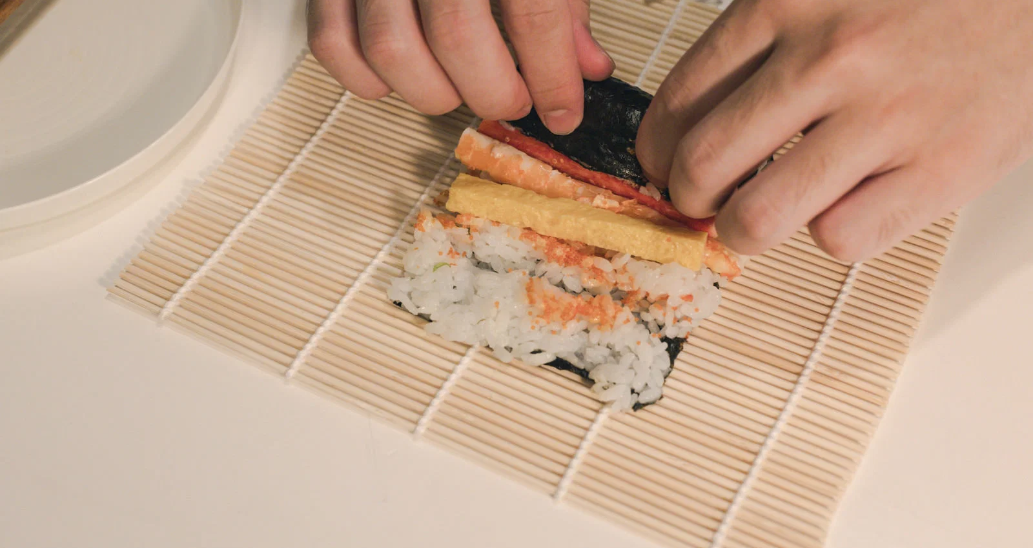
A wooden or bamboo rice paddle (shamoji) is worth having alongside your hangiri — metal utensils can scratch the wood, and a paddle’s flat edge is better suited to the folding motion sushi rice needs. Rolling mats (makisu) are the other common companion purchase if you’re making rolled sushi rather than just chirashi or nigiri.
Final Thoughts
If you’re buying your first hangiri, don’t overthink it: the TIKUSAN momi fir tub gets you into authentic sushi-rice making for under $70, lid included, with a wood that several sellers specifically market as more forgiving for beginners. If you already know you’ll use one regularly, the TIKUSAN sawara cypress and the JapanBargain cypress tub both get you the more traditional copper-and-cypress build — JapanBargain if you want to spend less for the same core materials, TIKUSAN if you’d rather buy from the bigger brand with a lid included. Kotobuki is the one to reach for if you want a handmade piece worth giving as a gift. All four are explicitly made in Japan, none are dishwasher safe, and all of them reward the same basic care: rinse, dry thoroughly, and keep them away from direct sun and prolonged moisture.
コメント