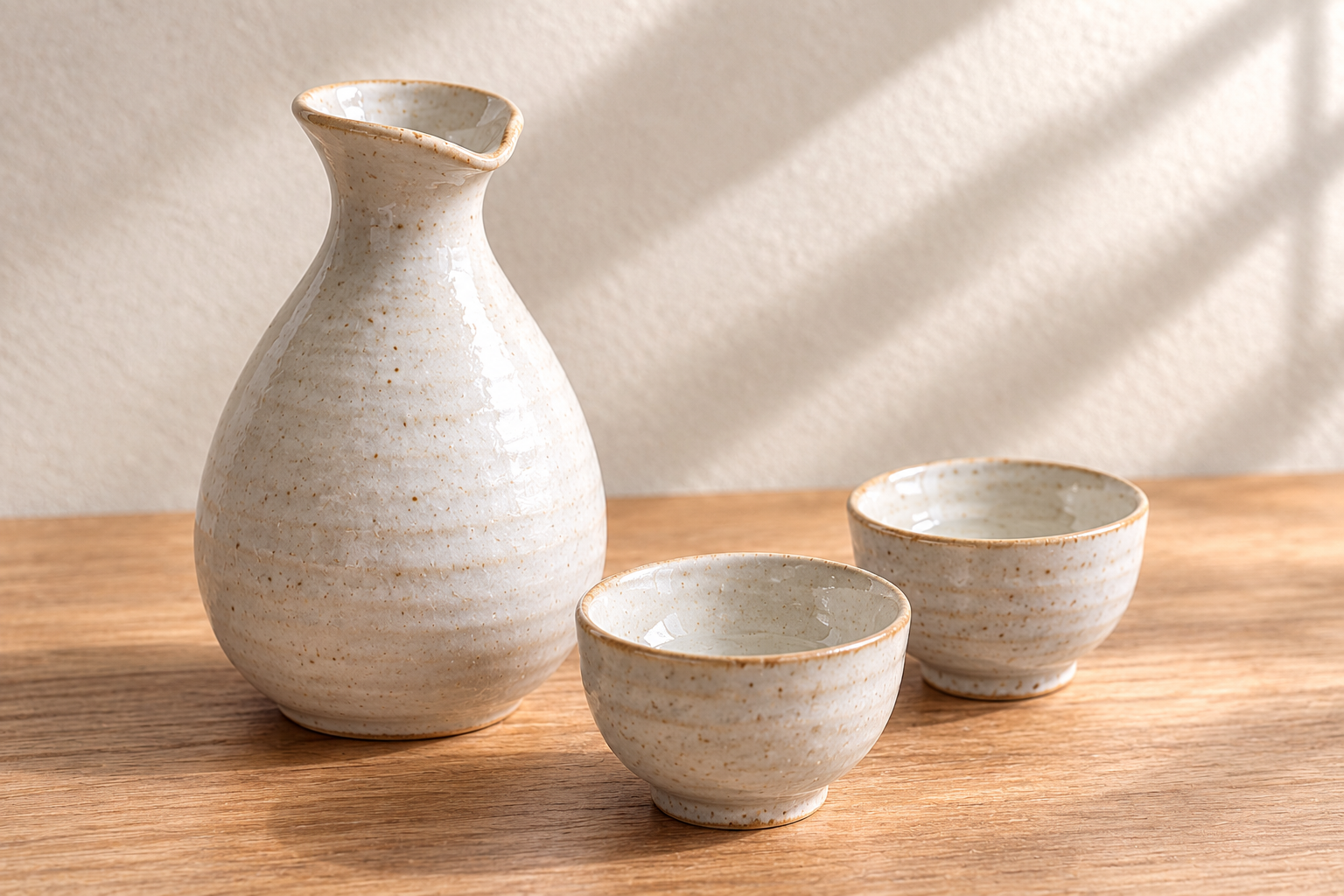
Quick answer: For most people, the Janome Mino-Yaki Sake Set is the best all-around choice — a genuinely Made in Japan porcelain tokkuri and ochoko pair with the deepest, most consistent review history of anything in this guide, priced around $30.
This comparison is based on manufacturer specifications, product listings, and patterns in verified owner reviews rather than hands-on testing.
- What Are Tokkuri and Ochoko, and Why Do They Matter?
- Comparison at a Glance
- How I Chose These Sake Sets
- What to Look for When Buying a Sake Set
- Product Reviews in Detail
- Which One Should You Buy?
- Porcelain vs. Ceramic vs. Wood
- How to Serve Sake Properly
- Care and Maintenance
- Common Mistakes (and What’s Actually Going Wrong)
- What You’ll Also Need
- FAQ
- Final Thoughts
What Are Tokkuri and Ochoko, and Why Do They Matter?
A tokkuri is the small flask-shaped bottle used to serve sake, and an ochoko is the small cup you drink it from — together they’re the classic way sake has been served in Japanese homes and izakaya for centuries. The narrow neck of a tokkuri isn’t just decorative: it slows the pour and helps retain heat when serving warm sake, and the small size of an ochoko (usually just an ounce or two) is meant to encourage sipping and refilling rather than gulping.
Beyond function, tokkuri and ochoko sets are also genuinely popular gifts — a real Made in Japan set signals more care than a generic “Japanese-style” import, and most of the sets in this guide come packaged in a proper gift box for exactly that reason.
Comparison at a Glance
| Product | Price* | Material | Set Size | Origin | Best For |
|---|---|---|---|---|---|
| Janome Mino-Yaki Sake Set | Around $30 | Porcelain | 1 tokkuri + 2 ochoko | Japan (confirmed, Mino-Yaki) | Overall pick, most trusted |
| JapanBargain Snake Eye Sake Set | Around $30 | Porcelain | 1 tokkuri + 4 ochoko | Japan (confirmed, Mino-Yaki) | Entertaining a group |
| TAKEMI Mino Ware Eclipse Gold | Around $89 | Ceramic | 1 tokkuri + 2 guinomi | Japan (confirmed, Jinpo kiln) | Premium gift |
| TOKYO ART Cypress Wood Guinomi Set | Around $38 | Hinoki (cypress) wood | 1 tokkuri + 2 guinomi | Japan (stated on listing) | Traditional wood, unique material |
*Prices checked in August 2026 and may change.
How I Chose These Sake Sets
I compared sake sets based on four factors: confirmed country of manufacture, material and construction, set completeness (does it actually include a tokkuri, not just cups), and patterns in owner reviews. Amazon’s sake set listings are dominated by generic “Japanese-style” import sets from brands with no verifiable Japanese origin, so I filtered those out first and only kept candidates with an explicit “Made in Japan” claim or a named, traceable maker or kiln. I haven’t tested these sets myself, so where a listing’s claim was thinner than the others (see the wood set below), I’ve said so directly rather than rounding it up.
What to Look for When Buying a Sake Set
- Genuine Made in Japan confirmation. Search results for “sake set” are dominated by generic ceramic sets from import brands that never state where they’re actually manufactured. Check the listing’s own bullets or description for an explicit “Made in Japan” statement or a named, verifiable maker/kiln rather than trusting “Japanese-style” in the title.
- Material. Porcelain (like Mino-Yaki) is the traditional, durable default and is usually microwave- and dishwasher-safe. Ceramic stoneware with a hand-applied glaze looks and feels more artisanal but often needs hand washing. Wood (typically hinoki/cypress) gives sake a distinct, mild woody aroma that some drinkers love and others find distracting — worth knowing before you buy.
- Set size. Most sets include one tokkuri and either two or four ochoko cups. Two cups is fine for a couple; four is more practical if you regularly host.
- Capacity. Tokkuri capacity in this guide ranges from about 4 to 10 ounces — a larger bottle means fewer refills when entertaining, but also more sake exposed to air and losing temperature if you’re drinking slowly.
- Microwave and dishwasher safety. Porcelain sets are usually safe for both; hand-applied glaze and wood sets typically are not — check the specific listing rather than assuming.
Product Reviews in Detail
Disclosure: As an Amazon Associate I earn from qualifying purchases.
Janome Mino-Yaki Sake Set — Best Overall
Check the latest price on Amazon →
This porcelain tokkuri and ochoko pair is made in the Mino-Yaki tradition (Gifu Prefecture, central Japan) and takes its name from the “janome” (snake’s eyes) navy-blue-and-white ring pattern on the cups — a design the listing notes was originally meant to help drinkers judge sake’s color and clarity against the white porcelain. The listing explicitly confirms it’s made in Japan, and at 88 ratings and 4.5 stars, it has by far the deepest and most consistent review history of anything in this guide.
Pros:
- Confirmed Made in Japan, traditional Mino-Yaki porcelain
- Deepest and most consistent review history in this guide
- Microwave- and dishwasher-safe
- The navy-blue janome ring is designed to help you judge sake’s clarity, not just decorative
Cons:
- Only 2 ochoko cups included — fine for a couple, less practical for groups
- Porcelain can chip if dropped, like any ceramic
Bottom line: the combination of a confirmed Japan-made pedigree and the largest review base here makes this the safest first sake set if you’re not sure what to buy.
JapanBargain Snake Eye Sake Set — Best for Entertaining
Check the latest price on Amazon →
JapanBargain’s version of the same navy-and-white Mino-Yaki style comes with one tokkuri and four ochoko cups rather than two, at a nearly identical price to the Janome set. The listing explicitly confirms Made in Japan and describes the Mino-Yaki firing technique used. At 72 ratings and 4.8 stars, it’s the highest-rated set in this guide, and it currently carries an Amazon’s Choice badge.
Pros:
- Confirmed Made in Japan, Mino-Yaki porcelain
- Comes with 4 ochoko cups instead of 2, for the same price range as sets with fewer cups
- Highest average rating in this guide (4.8 stars)
- Microwave- and dishwasher-safe
Cons:
- One reviewer noted the set runs smaller than expected — check the stated dimensions before buying
- Fewer total ratings than the Janome set, though the average is higher
Bottom line: if you regularly host or want extra cups on hand without paying more, this is the better pick over the Janome set for essentially the same price.
TAKEMI Mino Ware Eclipse Gold — Best Premium Gift
Check the latest price on Amazon →
This is a step up in both price and presentation: a hand-glazed, gold-toned ceramic tokkuri and two guinomi cups from the Jinpo kiln, part of the Mino ware tradition the listing describes as having over 1,000 years of history. The listing states the set is “made and boxed by Jinpo, Japan,” which is a more specific origin claim than most competitors in this category. Each piece is handcrafted, so natural variation in the glaze is expected rather than a defect.
Pros:
- Confirmed Made in Japan with a named kiln (Jinpo), a more specific origin claim than most competitors
- Hand-applied gold glaze and handcrafted construction, packaged in a wooden gift box
- Microwave-safe despite the decorative glaze
- 5.0-star average, though on a small number of ratings
Cons:
- By far the most expensive set here, roughly three times the price of the Janome or JapanBargain sets
- Only 6 ratings at the time of writing — a genuinely small sample, even though every review so far is positive
- Hand wash recommended, not listed as dishwasher-safe
Bottom line: worth it specifically as a gift or for someone who wants a handcrafted, one-of-a-kind piece — not the practical everyday choice in this guide.
TOKYO ART Cypress Wood Guinomi Set — Best for Traditional Wood
Check the latest price on Amazon →
This is the only wood set in this guide: a natural hinoki (Japanese cypress) tokkuri and two guinomi cups, manufactured by Yamaco. “Made In Japan” appears in the product title, though unlike the three ceramic/porcelain sets above, the listing’s own bullet points don’t restate the claim in the body text — so this one carries a slightly thinner origin confirmation than the others, even though the title claim itself is specific and the manufacturer is named. Hinoki is prized in Japanese woodworking for its natural aroma, and that carries over into how it affects sake: reviewers note it imparts a distinct woody flavor and scent, which is either the appeal or the drawback depending on what you’re looking for.
Pros:
- Only wood option in this guide, with the natural hinoki aroma that ceramic and porcelain can’t replicate
- Named manufacturer (Yamaco) on the listing
- Distinctive, gift-worthy presentation as real, unfinished wood rather than a lacquered look
Cons:
- Not microwave-, dishwasher-, or dryer-safe — hand wash and dry only
- The wood’s flavor and aroma transfer to the sake, which at least one reviewer specifically noted — not neutral like porcelain or ceramic
- Small review base (6 ratings) with mixed feedback on that flavor transfer
Bottom line: a genuinely different sensory experience worth trying if you’re curious about traditional wooden sake vessels, but go in expecting the wood to actively flavor your sake rather than just serve it.
Which One Should You Buy?
- If you want a trusted, well-reviewed set and aren’t sure what else to consider, get the Janome Mino-Yaki Sake Set.
- If you host regularly and want more cups without paying more, get the JapanBargain Snake Eye Sake Set.
- If you’re buying a gift or want a handcrafted, one-of-a-kind piece and price isn’t the deciding factor, get the TAKEMI Mino Ware Eclipse Gold.
- If you’re curious about how wood changes the taste and aroma of sake, get the TOKYO ART Cypress Wood Guinomi Set.
Porcelain vs. Ceramic vs. Wood
Material affects both how a sake set feels to use and how it affects the sake itself. Porcelain, like the Mino-Yaki sets above, is fired at high temperatures into a dense, non-porous material that doesn’t affect flavor or aroma — it’s essentially a neutral vessel, which is part of why it’s the traditional default for tokkuri and ochoko. It’s also generally the most durable and easiest to care for of the options here, typically safe for both microwave and dishwasher.
Hand-glazed ceramic stoneware, like the TAKEMI set, is also fired but at different temperatures and with different clay bodies than porcelain, which is part of why it can have more visible texture and glaze variation. It’s still effectively non-porous once glazed and won’t transfer flavor, but the handcrafted nature of these pieces usually means hand washing is recommended rather than dishwasher use.
Wood is a genuinely different category — it’s porous, absorbent, and unlike porcelain or ceramic, it actively contributes its own aroma and flavor to the sake. Hinoki (cypress) is the traditional choice in Japanese woodworking specifically because of its aromatic qualities, but that same property means a wood tokkuri isn’t a neutral vessel the way porcelain is — you’re deliberately choosing to let the wood interact with the drink.
How to Serve Sake Properly
- Warm or cold depends on the sake, not a fixed rule. Delicate, aromatic sakes (often labeled ginjo or daiginjo) are typically served chilled to preserve their aroma, while fuller-bodied or older-style sakes are often served warm. When in doubt, the bottle’s own label or the brewer’s recommendation is a better guide than a blanket rule.
- To warm sake in a tokkuri, use a hot water bath rather than direct heat. Place the filled tokkuri in a pot of hot (not boiling) water for a few minutes rather than microwaving or heating it directly, which can heat the sake unevenly.
- Fill the ochoko only about three-quarters full. The small size of an ochoko is intentional — it’s meant to encourage frequent, deliberate refilling rather than one large pour.
- Pour for others before yourself. Traditionally, it’s polite to pour sake for the people around you and let them do the same for you, rather than serving yourself first.
Care and Maintenance
Porcelain (Janome, JapanBargain): Both are listed as microwave- and dishwasher-safe, but hand washing will keep any hand-painted detailing looking sharp for longer. Rinse promptly after use, especially if sake was served warm.
Ceramic (TAKEMI): Hand wash only, as recommended on the listing — the hand-applied gold glaze is more delicate than a standard glazed finish. Avoid abrasive sponges that could dull the glaze over time.
Wood (TOKYO ART): Hand wash only and dry promptly and completely — wood left wet can warp, crack, or develop mildew. Don’t soak it, and don’t put it in a microwave, dishwasher, or dryer, per the listing’s own instructions.
Common Mistakes (and What’s Actually Going Wrong)
Sake tastes flat or dull after opening: Unlike wine, most sake isn’t meant to age once opened. Refrigerate opened sake and try to finish it within a few days to a week for the best flavor.
Warmed sake tastes harsh or alcohol-forward: This usually means it was heated too far or too fast. A gentle warm (not hot) water bath for a few minutes is gentler than direct heat and gives you more control over the final temperature.
The wood tokkuri makes every sake taste the same: That’s the wood’s aroma coming through, not a flaw with the sake itself — it’s an inherent property of drinking from cypress rather than porcelain, and it’s worth knowing about before choosing a wood set specifically for a delicate, aromatic sake you want to taste on its own terms.
What You’ll Also Need
If you want to try a different style of ochoko beyond what comes with these sets, the RIVERET Ochoko SUZU Set (Made in Japan, around $48) is worth a look — it’s made from natural moso bamboo rather than porcelain or wood, using a proprietary coating that RIVERET states makes it dishwasher-safe and resistant to staining from dark drinks, which is unusual for a natural-material cup. It’s cups only, no tokkuri included, so it’s better thought of as a companion or upgrade to a bottle you already own rather than a full set.
FAQ
What’s the difference between an ochoko and a guinomi?
Both are small sake cups, but an ochoko is traditionally the smaller of the two (often under 2 ounces), while a guinomi is somewhat larger and often has a more substantial, artisanal feel — the TAKEMI and TOKYO ART sets in this guide use guinomi-style cups, while the Janome and JapanBargain sets use ochoko.
Do I need to warm sake, or can I always drink it cold?
You can drink most sake cold, and delicate, aromatic styles are often better that way. Warming is a traditional option for fuller-bodied styles, not a requirement — check the bottle’s own label if you’re unsure.
Are any of these sets dishwasher-safe?
The Janome and JapanBargain porcelain sets are both listed as microwave- and dishwasher-safe. The TAKEMI ceramic set recommends hand washing, and the TOKYO ART wood set explicitly should not go in a dishwasher, microwave, or dryer.
Why does the wood set affect the taste of sake?
Wood, unlike fired porcelain or glazed ceramic, is porous and naturally aromatic. Hinoki (cypress) in particular is prized in Japanese woodworking for its scent, and that same aroma transfers to whatever liquid sits in it — some drinkers enjoy this, others prefer a neutral vessel.
Can I use these sets for drinks other than sake?
The porcelain and ceramic sets work fine for other spirits or even tea in a pinch, since they’re non-porous and don’t affect flavor. The wood set is better reserved for sake or similar drinks where its aroma is a feature rather than an unwanted flavor addition.
How many ochoko cups do I actually need?
For everyday use by one or two people, two cups is plenty. If you host regularly or want backups in case one breaks, a four-cup set like the JapanBargain one is more practical.
Is a more expensive sake set actually better, or just prettier?
Not necessarily better at the core function of serving sake — the Janome and JapanBargain porcelain sets are fully functional at a third of the TAKEMI set’s price. The higher price on the TAKEMI set reflects the hand-applied glaze, small-batch craftsmanship, and gift presentation, not a meaningful functional upgrade.
Final Thoughts
A good tokkuri and ochoko set is an inexpensive way to make sake at home feel like an occasion rather than just pouring a glass, and the difference between a confirmed Made in Japan set and a generic import is usually worth the small price difference. For most people, the Janome Mino-Yaki Sake Set is the strongest all-around pick here: it’s genuinely made in Japan, and it has by far the deepest, most consistent review history of anything in this guide.
If you host more than the occasional guest, the JapanBargain Snake Eye set gives you two extra cups for essentially the same price and currently has the highest average rating here. The TAKEMI Eclipse Gold set is worth the higher price specifically as a gift or a piece you’ll display as much as use, while the TOKYO ART cypress wood set is for anyone genuinely curious about how a traditional wooden vessel changes the way sake tastes — just go in knowing that’s exactly what it will do.
コメント