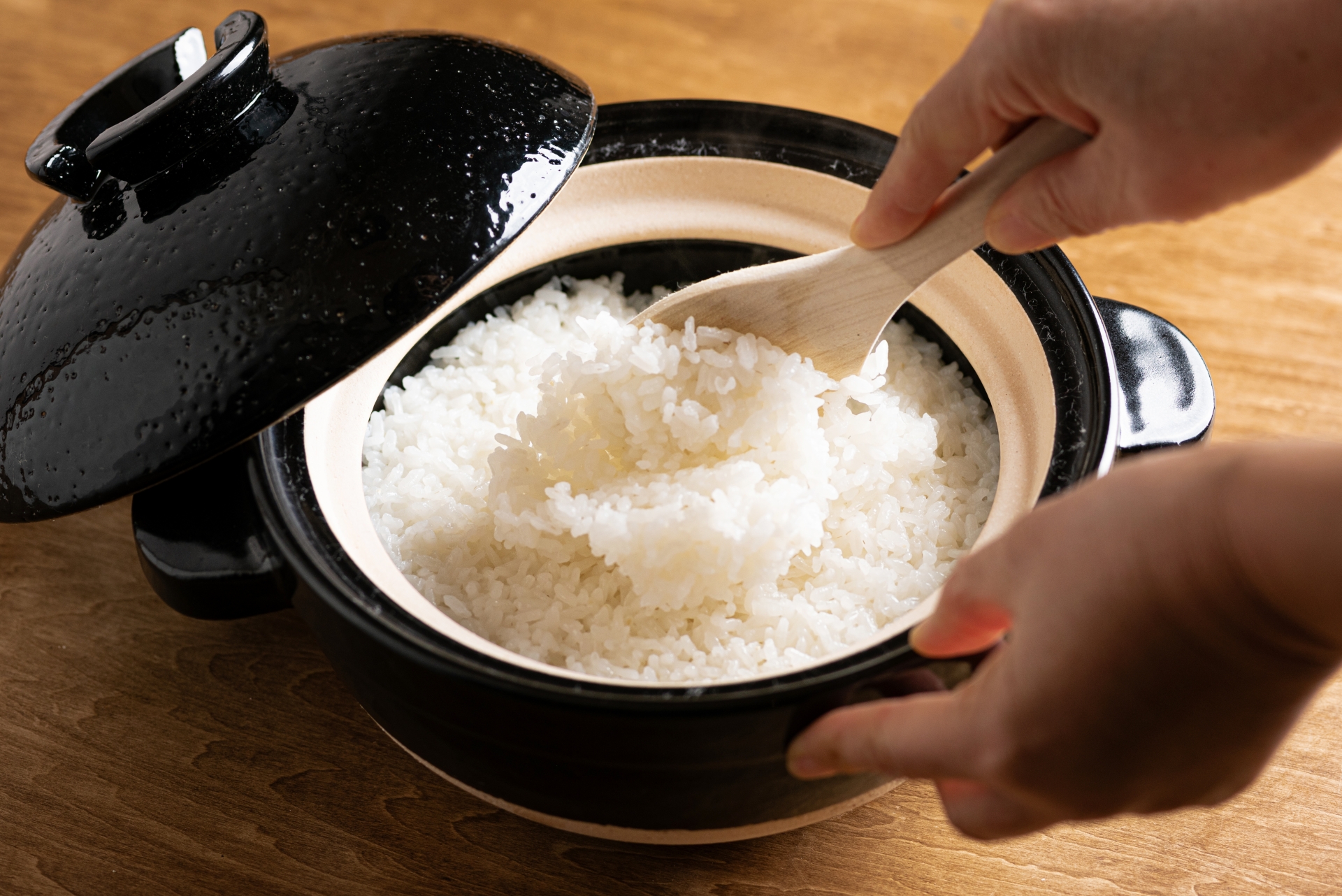
Quick answer: For most people, the Nagatani-en Kamado-san (ACT-03) is the best Japanese donabe rice cooker to start with. Its double-lid design is specifically made for cooking rice, it is manufactured in Japan, and its 2-cup capacity makes it a practical choice for one or two people. But it isn’t the right choice for everyone. Kamado-san is designed for gas stovetops rather than induction, and its small capacity may be limiting if you regularly cook for a family. In this guide, we compare Kamado-san with other Japanese donabe rice cookers and explain what to look for before buying one.
My Experience: I cook rice with Kamado-san regularly in my own kitchen. This guide combines my firsthand experience with manufacturer specifications and customer feedback to help you choose the right Japanese donabe rice cooker for your kitchen.
A donabe rice cooker is essentially a Japanese clay rice cooker designed specifically for cooking rice over a stovetop flame.
- Comparison at a Glance
- Why Trust This Guide
- What Is a Donabe Rice Cooker, and Why Kamado-san Specifically?
- What to Look for When Buying a Donabe Rice Cooker
- Product Reviews in Detail
- Which One Should You Buy?
- Donabe vs. Electric Rice Cooker: What’s Actually Different?
- How Donabe and Electric Rice Cookers Fit Into Everyday Japanese Cooking
- How to Cook Rice in a Donabe
- Why Does Donabe Rice Taste Different?
- Gas vs. IH: Why Most of These Only Work on Gas
- How to Season and Care for a Donabe
- Who Should NOT Buy a Donabe Rice Cooker?
- FAQ
- Final Thoughts
Comparison at a Glance
| Product | Price | Capacity | Weight | Heat Source | Double Lid |
|---|---|---|---|---|---|
| Kamado-san (ACT-03) | Around $220 | 2 rice cups | 6.6 lbs (3 kg) | Gas only | Yes |
| Kamado-san (CT-50) | Around $440 | 5 rice cups | 10 lbs (4.5 kg) | Gas only | Yes |
| Banko Ware Donabe | Around $140 | 3–4 rice cups | 7.24 lbs (3.28 kg) | Gas only | Yes |
Why Trust This Guide
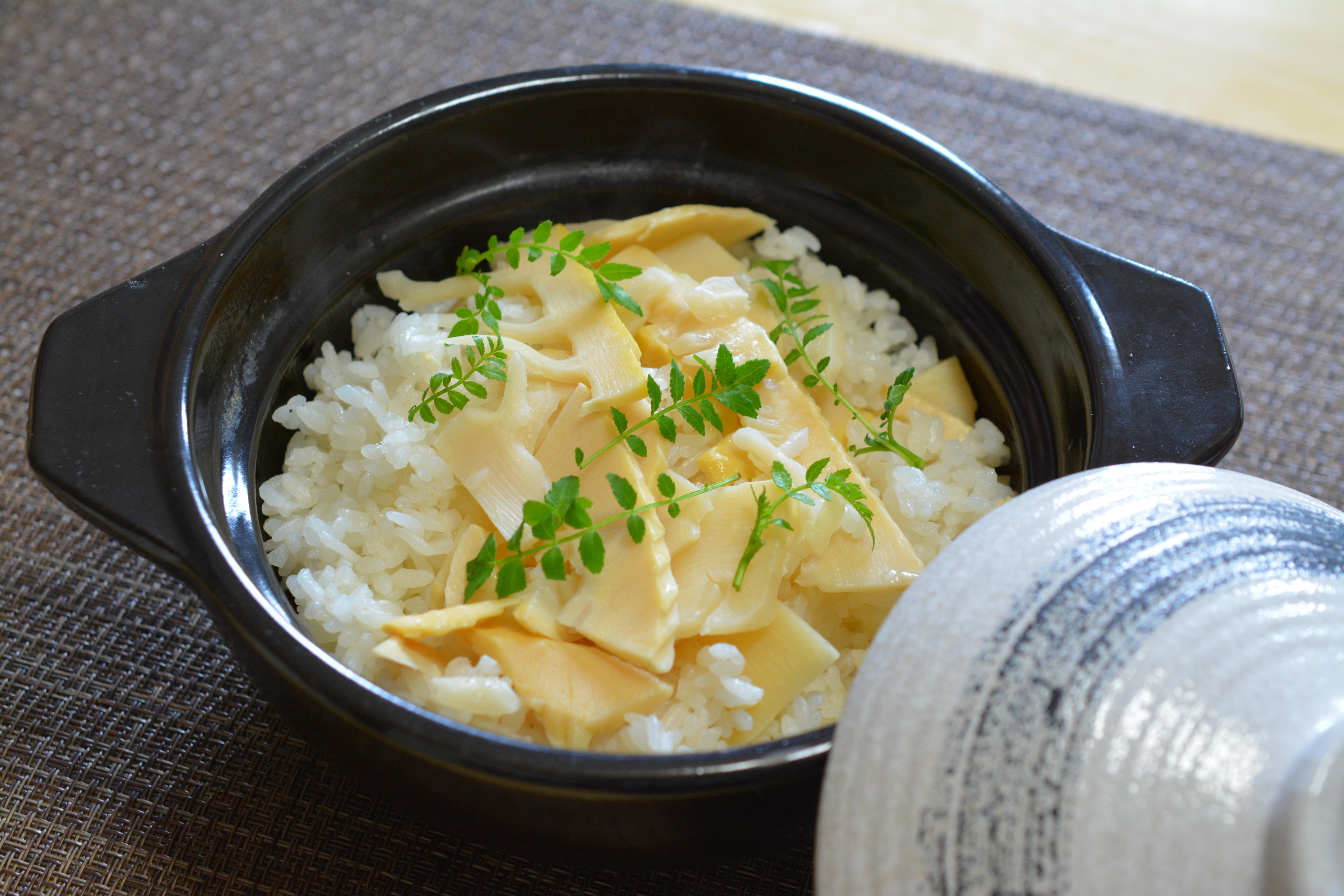
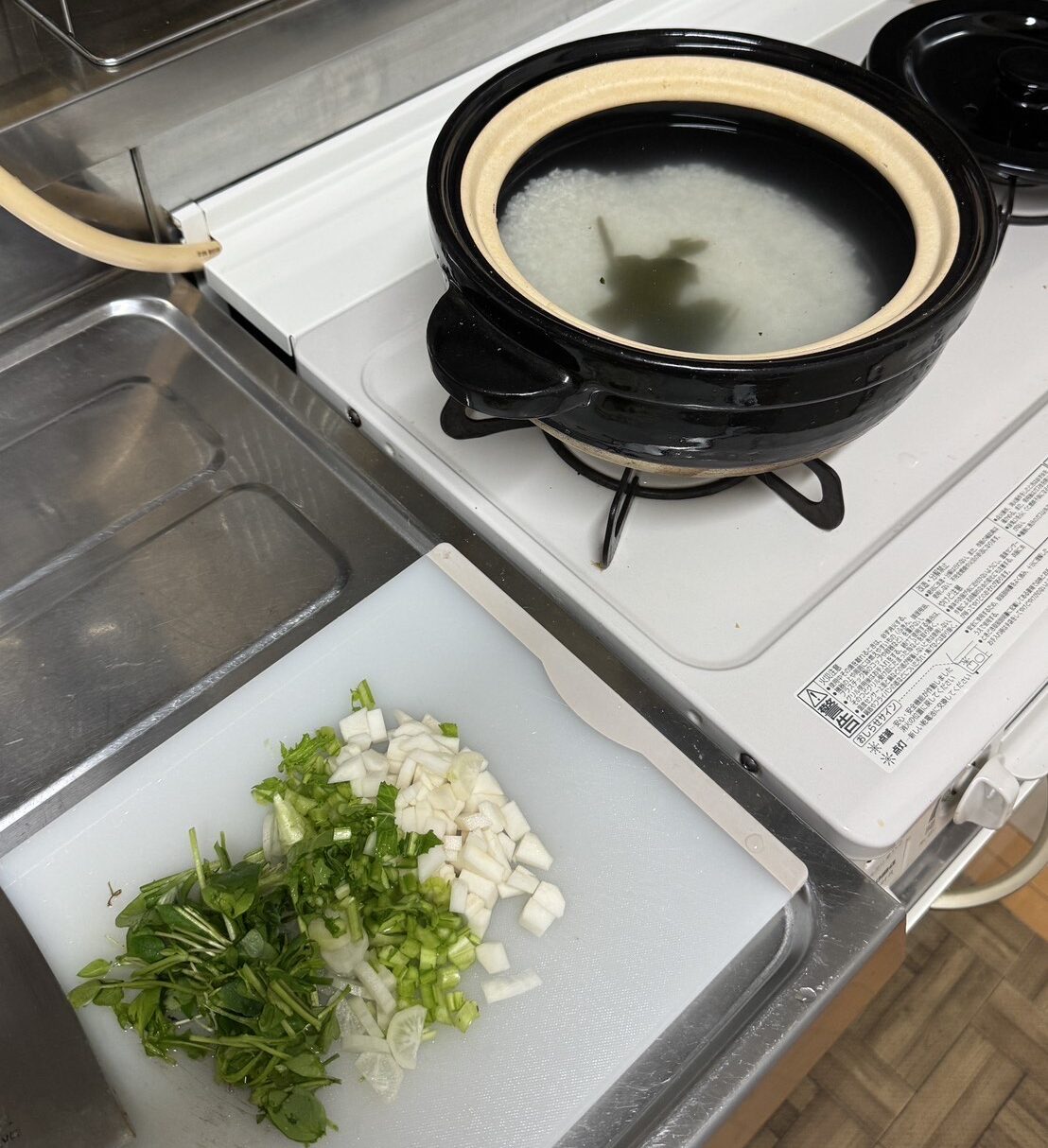
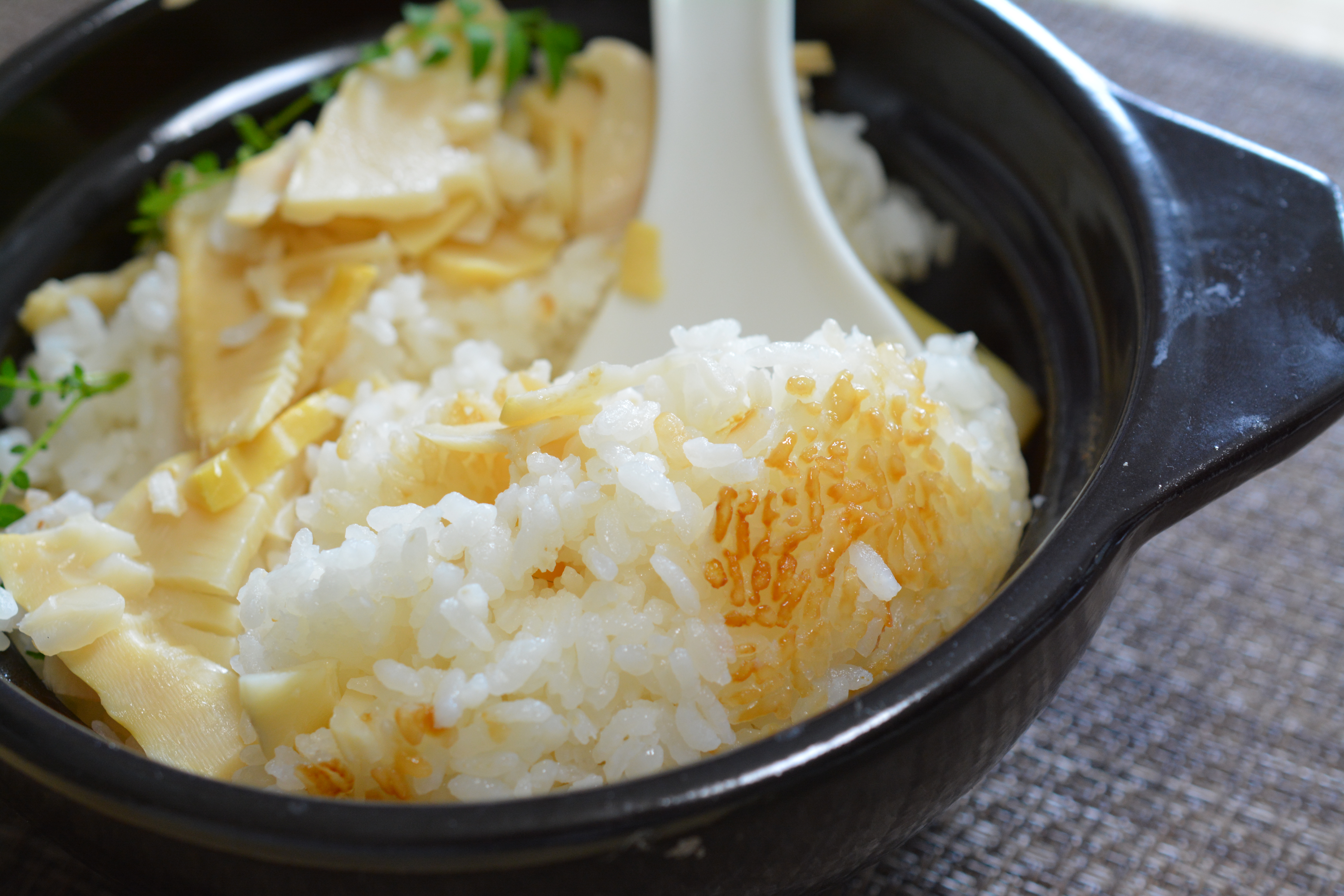
I own a Kamado-san myself. Day to day, I still reach for an electric rice cooker like most people — but on weekends or for something a little more special, I’ll cook white rice, brown rice, or takikomi gohan (mixed rice) in it instead. One of my favorite things about cooking rice this way is the okoge, the crispy, slightly toasted layer that forms at the bottom — something an electric cooker really can’t replicate, and something a lot of Japanese people genuinely love. It’s also simply a good-looking pot; mine goes straight from the stove to the table without a second thought. For this guide, I combined that hands-on experience with manufacturer specifications and long-term user feedback, rather than just listing what’s popular on Amazon. I’ve used my Kamado-san to cook white rice, brown rice, rice porridge and bamboo shoot rice at home. I’m drawing on those firsthand experiences alongside manufacturer specifications and customer reviews.
What Is a Donabe Rice Cooker, and Why Kamado-san Specifically?
A donabe is a Japanese clay pot. Most households in Japan actually use an electric rice cooker day to day — a donabe rice cooker is more of a deliberate choice for people who specifically care about the texture and ritual of it, not the everyday default. The clay’s porous structure and gradual, even heat retention are credited with producing rice that many users describe as fluffier and glossier than what comes out of most electric cookers, which is exactly what draws that smaller group of enthusiasts to it.
Kamado-san is a specific product line, not a generic term — it’s made by Nagatani-en, an Iga-yaki pottery founded in 1832 in Iga, Mie Prefecture, a region with centuries of pottery tradition behind it. It’s been Nagatani-en’s best-selling donabe since it launched in 2000 and has a Good Design Award to its name. The Iga clay it’s made from is unusually porous (it comes from an ancient lakebed layer rich in fossilized organic matter), which is credited with strong heat retention and even far-infrared heating. The pot also uses a double-lid design — an inner lid with two steam holes plus a normal outer lid — that creates a mild pressure effect, helping the rice cook through evenly without needing constant attention.
What to Look for When Buying a Donabe Rice Cooker
- Double-lid design — the inner lid is what separates a rice-specific donabe from a general all-purpose one
- Made in Japan, with the region stated — Iga (Mie) and Banko (also Mie) are the two traditions most associated with rice-cooking donabe specifically
- Heat source compatibility — most of these are gas-only; check carefully if you cook on induction or electric
- Capacity matched to your household — sized in “rice cups” (go, or 合), which are smaller than a US cup: 1 go is 180ml and yields about 150g of uncooked rice, roughly enough for 2 rice bowls
Product Reviews in Detail
Disclosure: As an Amazon Associate I earn from qualifying purchases.
Nagatani-en Kamado-san (ACT-03) — Best Overall
Check today’s price on Amazon →
The 2-cup size is a practical everyday choice for one or two people, made by the same Iga-yaki workshop that’s been producing Kamado-san since 2000. I chose the ACT-03 as my top pick because it offers a practical balance of capacity, size, and ease of handling for one or two people. I also use this model regularly in my own kitchen, and its compact size makes it easy to move from the stovetop to the table. If you’re looking for a donabe rice cooker for everyday meals without buying a larger model than you need, this is the one I would choose.
Pros:
- From the original, best-established maker of this specific product category
- A practical everyday size that isn’t overkill for one or two people
- Comes with a rice paddle and recipe guide
Cons:
- Gas stovetop only — not compatible with induction or electric cooktops
- A real financial commitment compared to an electric rice cooker
Bottom line: Bottom line: If you’re cooking for one or two people and want a compact donabe that you can use regularly, the ACT-03 is my top choice.
Nagatani-en Kamado-san (CT-50) — Best for Larger Households
Worth the jump in price if you regularly cook for a crowd. Check today’s price on Amazon →
Same Kamado-san design, scaled up to a 5-cup capacity at 10 lbs. This is a genuinely substantial piece of pottery — not something you’ll want to move around casually, but it earns its place if you’re regularly cooking rice for a family or feeding guests.
Pros:
- Enough capacity for a full family meal in one batch
- Same proven double-lid design as the smaller size
- Oven-safe up to 500°F for dishes beyond plain rice
Cons:
- Significant price jump over the 2-cup size
- At nearly 10 lbs, it’s genuinely heavy to lift and move when full
Bottom line: Buy this size because you actually need the capacity, not just because bigger feels like better value.
Banko Ware Donabe Rice Cooker —Best Budget-Friendly Option
If you want to try donabe rice cooking without spending as much as you would on a Kamado-san, this Banko-yaki model is an appealing place to start. Check today’s price on Amazon →
Banko-yaki is a traditional Japanese pottery style from Mie Prefecture, known in particular for its heat-resistant cookware. This rice cooker has a 3–4 rice-cup capacity and uses a double-lid design to help regulate steam during cooking. It is made in Japan and comes with an English instruction manual, which can be especially helpful if this is your first donabe.
The larger capacity also makes it worth considering if you regularly cook more than two cups of rice but don’t need a five-cup model like the Kamado-san CT-50.
Pros:
- Lower price than the Kamado-san models in this guide
- 3–4 rice-cup capacity is practical for small families or larger batches
- Double-lid design for controlled steam during rice cooking
- Made in Japan
- English instruction manual included
Cons:
- Less established brand recognition than Nagatani-en’s Kamado-san
- Still requires a gas stovetop and hands-on cooking
- Larger and heavier than a small 2-cup donabe
Bottom line: If you want to experience traditional Japanese donabe rice cooking at a lower price point, this Banko-yaki model offers a practical combination of capacity, features, and accessibility.
Which One Should You Buy?
- Cooking for one or two people? → Kamado-san ACT-03
- Cooking for a family or entertaining? → Kamado-san CT-50
- Want to try donabe rice cooking without the premium price? → Banko Ware
Donabe vs. Electric Rice Cooker: What’s Actually Different?
The short version: a donabe trades hands-off convenience for a different cooking experience and texture, plus a crispy okoge layer an electric cooker can’t replicate. An electric rice cooker trades some of that nuance for consistent, unattended results every time. We break down the taste, time, cost, and learning-curve differences in detail — with specific product picks for each — in our full donabe vs. rice cooker comparison.
How Donabe and Electric Rice Cookers Fit Into Everyday Japanese Cooking
For everyday rice cooking, an electric rice cooker is often the more convenient option because it can handle the cooking with minimal attention and may also keep the rice warm until mealtime. This makes it particularly practical when rice needs to be prepared ahead of time or when several people are eating at different times.
A donabe rice cooker offers a different experience. You need to measure the rice and water, heat the pot on the stovetop, and allow the rice to rest after cooking. In return, you get the hands-on process of cooking rice in a traditional clay pot, along with the possibility of developing okoge at the bottom.
For that reason, the two don’t necessarily have to compete. An electric rice cooker can be the practical choice for routine meals, while a donabe can be used when you want more involvement in the cooking process or simply enjoy the texture and character of rice cooked over a gas flame.
How to Cook Rice in a Donabe
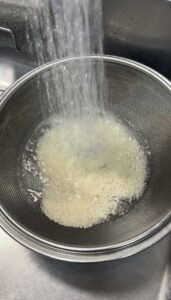
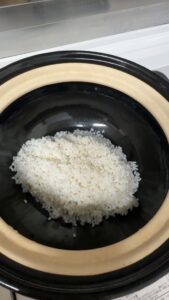
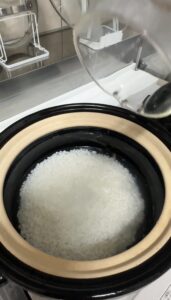
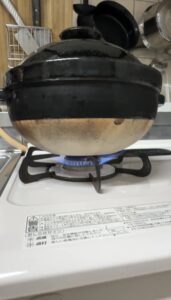
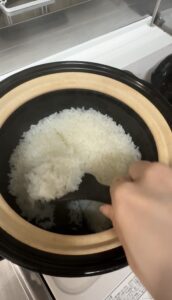
- Rinse the rice in cold water until the water runs mostly clear, then drain well.
- Add the rinsed rice and measured water to the donabe, leveling the rice so it’s evenly submerged. The water should be cool or room temperature, not warm.
- Cover with both lids (inner and outer, for a double-lid design like Kamado-san) and let the rice soak for 20–30 minutes before turning on the heat.
- Set the donabe over medium-high heat. For roughly 2 rice cups, cook for about 12–14 minutes; for around 3 cups, about 13–15 minutes — or simply turn off the heat about 2 minutes after steam starts puffing steadily from the lid’s hole.
- Turn off the heat and leave the pot covered and undisturbed for 20 minutes (closer to 40 minutes for brown rice) to finish steaming. Resist the urge to lift the lid early — this resting step is what finishes the cooking.
- Fluff the rice gently with a rice paddle before serving.
Why Does Donabe Rice Taste Different?
The difference comes largely from how a donabe handles heat and moisture during cooking. Unlike the thin metal inner pot of many electric rice cookers, the thick clay walls of a donabe absorb and retain heat, creating a steady cooking environment as the rice cooks.
The double-lid design used by Kamado-san also plays an important role. The inner lid helps contain steam while the outer lid adds another layer of insulation, allowing the rice to cook with relatively little moisture escaping. Once the heat is turned off, the pot continues to retain heat during the resting period, giving the rice time to finish steaming.
The result is rice with a distinct texture and aroma, often with a slightly firmer or more defined surface and a fluffy interior. If you cook with enough heat to lightly toast the bottom, you can also get okoge — the crispy, browned rice layer that many people enjoy.
That doesn’t necessarily make donabe rice objectively better than rice from an electric cooker. The appeal is different: donabe cooking gives you more control over the process and can produce a texture and okoge that are difficult to reproduce with a standard electric rice cooker.
Gas vs. IH: Why Most of These Only Work on Gas
The models featured in this guide are designed for gas stovetops rather than induction.
This isn’t a minor omission — it comes down to how the clay and glaze respond to heat. Gas flame wraps around and heats the pot’s sides as well as its base, which is part of how the clay achieves such even heat distribution; induction only heats a magnetic base directly, which doesn’t suit the way these pots are designed to absorb and hold heat. If induction is your only cooktop, this style of rice cooker isn’t a good fit, and it’s worth looking at donabe specifically marketed as induction-compatible rather than assuming a traditional one will work.
How to Season and Care for a Donabe
New donabe generally need to be seasoned before first use — typically by cooking a batch of plain rice or a rice-water porridge in it, which helps fill the microscopic pores in the clay and reduce the risk of cracking. Never heat an empty donabe, and let it cool gradually rather than exposing it to sudden temperature changes, since thermal shock is the main cause of cracks. Hand wash only, and let it dry completely before storing — clay retains moisture longer than metal or enamel cookware. Hairline cracks can appear over time with normal use; re-seasoning with cooked rice (its starch helps fill the cracks) is the standard fix, and most donabe owners consider this part of the pot’s normal aging rather than a defect.
Who Should NOT Buy a Donabe Rice Cooker?
A donabe rice cooker can produce excellent rice, but it is not the best choice for every kitchen. Consider another option if:
-
You only have an induction cooktop and want the Nagatani-en Kamado-san. Kamado-san is designed for gas stovetops and is not compatible with induction or electric cooktops. However, some other donabe models are specifically made for induction cooking.
-
You want completely automatic rice cooking. A donabe requires you to measure the rice and water, place the pot on the stove, and monitor the cooking process. Kamado-san is relatively hands-off once cooking starts, but it does not offer the push-button automation of an electric rice cooker.
-
You want a dedicated keep-warm function. A donabe retains heat well, but it does not have an electric keep-warm mode. If you regularly cook rice several hours before eating, an electric rice cooker may be more convenient.
-
You prefer a zero-maintenance appliance. Donabe requires a little more care than an electric rice cooker. Traditional donabe should generally be hand-washed and dried thoroughly, and Kamado-san requires seasoning before its first use.
In short: If you value convenience, automatic cooking, or long-term keep-warm functionality above the traditional cooking experience, a Japanese electric rice cooker may be a better fit.
FAQ
Tip: It’s worth cooking more than you need in one batch. Wrap individual portions of the leftover rice in plastic wrap while it’s still warm, then freeze them — this is a common way to always have donabe-quality rice on hand without cooking a fresh batch every time.
Can I use a donabe rice cooker on an induction stove?
Generally no — both Nagatani-en’s Kamado-san and most Banko ware donabe are designed for gas stovetop use only. If induction is your only cooktop, this style of rice cooker likely isn’t a fit.
Is donabe rice actually better than rice cooker rice?
Many long-time users describe it as fluffier and glossier, largely due to how evenly and gradually the clay distributes heat. It requires more hands-on attention than an electric rice cooker, so it’s a tradeoff between convenience and texture, not a strict upgrade in every sense.
What if my donabe cracks?
Hairline cracks are common with normal use and aren’t usually a sign of a defective pot. Re-seasoning with cooked rice, which fills the pores with starch, is the standard way to address it. If water actively leaks through after re-seasoning, that’s usually the point to consider replacing it.
Can a donabe rice cooker be used for anything besides rice?
Yes — removing the inner lid lets it function as a regular donabe for stews, soups, and hot pot, in addition to its rice-cooking role.
Is it safe to put a donabe in the oven?
Some, including the Kamado-san, are oven-safe up to a stated temperature, but always check the specific product listing rather than assuming, since not every donabe is rated for oven use.
Can I cook brown rice in a donabe?
Yes, though it needs a longer soak (often 6–12 hours) and a longer rest time after cooking (around 40 minutes) compared to white rice.
Can I cook quinoa or other grains in it?
Many people do, though cooking times and water ratios will differ from rice — it’s worth following a quinoa-specific timing rather than assuming the rice settings apply directly.
How long does a donabe actually last?
With normal care, many donabe are used for years to decades. Hairline cracks are common with age and are usually fixable through re-seasoning rather than a sign the pot is done for.
Why does the rice stick to the bottom?
A thin layer of stuck or lightly browned rice at the bottom (okoge) is actually a traditional, desirable result, not a mistake. If it’s burning rather than lightly toasting, the heat is likely too high.
Can I cook rice over high heat the whole time?
It’s better not to. Most methods call for bringing it to a boil and then holding a steady medium-high heat rather than staying on high the entire time, since too much heat risks scorching before the rice finishes absorbing water.
Final Thoughts
A donabe rice cooker is not the easiest way to make rice, and that is part of the appeal. You give up the push-button convenience of an electric rice cooker in exchange for a more hands-on cooking experience, distinctive texture, and the possibility of making okoge at home.
For most people considering their first Japanese donabe rice cooker, I would choose the Nagatani-en Kamado-san (ACT-03). Its 2-cup capacity is well suited to one or two people, it is compact enough to handle comfortably, and I’ve found it practical enough to use regularly in my own kitchen.
If you cook for a larger household, the Kamado-san CT-50 makes more sense because of its 5-cup capacity. And if you want to try donabe cooking without spending as much, the Banko-yaki model is a more accessible starting point.
If you enjoy Japanese cooking and like the idea of making rice slowly over a gas flame rather than pressing a button and walking away, a donabe can be more than just another piece of cookware — it can become part of the cooking ritual itself.
コメント