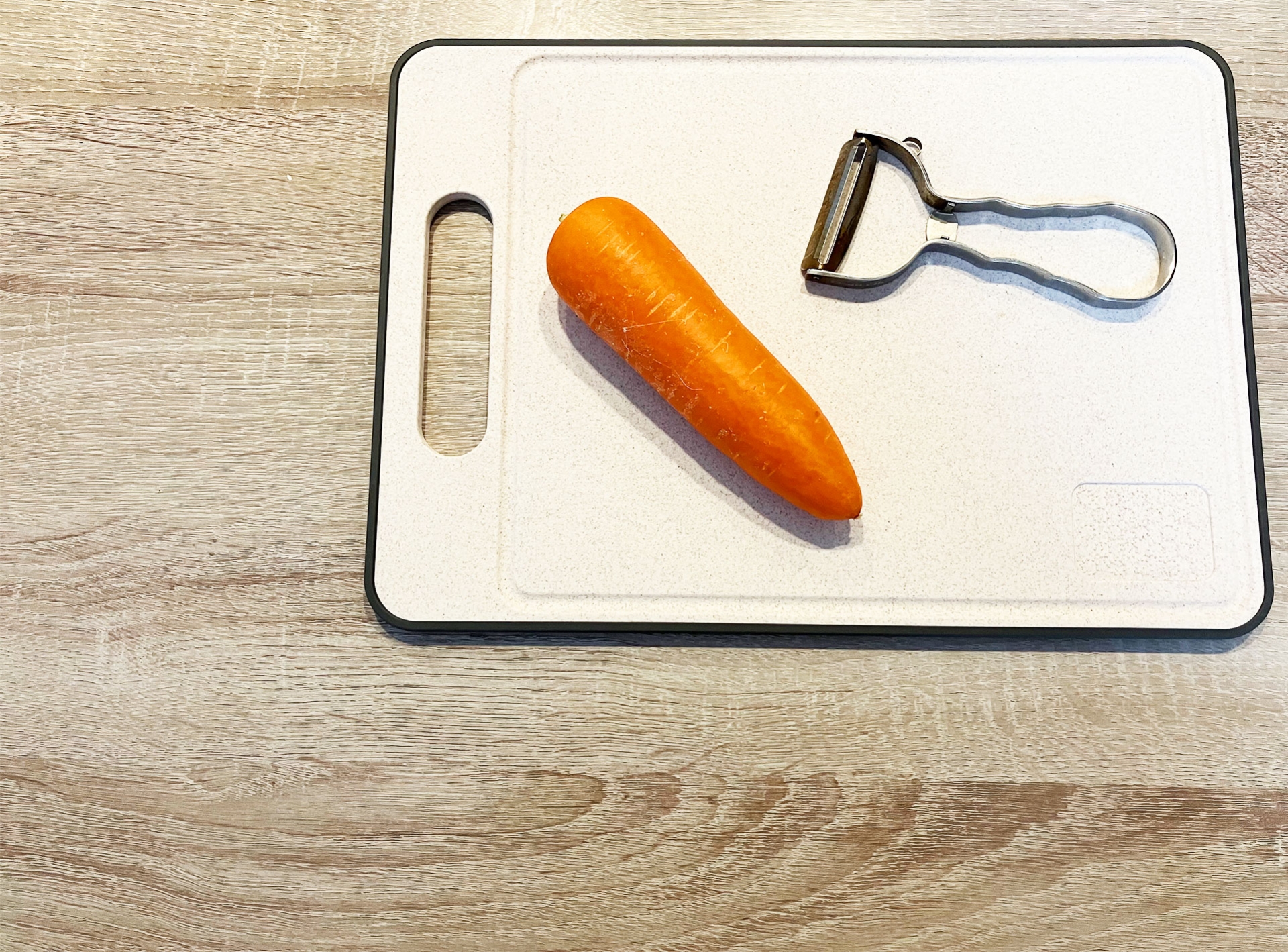
If you’ve only ever used a cheap swivel peeler from the grocery store, a good Japanese peeler will genuinely surprise you. Our top pick overall is the Seki Japan Long Vegetable Peeler ($23.99) — an 8.5-inch stainless steel peeler made in Seki City, Gifu Prefecture, with a long blade built for wide or long produce. We also researched options for round vegetables and everyday budget use, and included one specialist cabbage peeler — the Shimomura Full Vegi — that we’ve used in our own kitchen for years.
- How We Chose
- Comparison Table
- What Makes a Japanese Peeler Different?
- What to Look For When Buying a Japanese Peeler
- Product Reviews
- Which One Should You Buy?
- Carbon Steel vs. Stainless Steel: Which Blade Is Right for You?
- Care & Safety
- Using a Peeler for Daikon Ribbons
- Frequently Asked Questions
- Are Japanese peelers dishwasher safe?
- Is a Japanese peeler actually sharper than a regular one?
- What’s the difference between a Y-peeler and a straight peeler?
- Can I use a cabbage peeler like the Shimomura for other vegetables?
- Is carbon steel dangerous or just harder to maintain?
- How do I know if a peeler is actually made in Japan?
- What size peeler should I buy?
- Final Thoughts
How We Chose
We started by requiring that a peeler be explicitly listed as made in Japan on its own Amazon product page — not just marketed with a Japanese-sounding name. From there we compared blade material, shape, weight, intended use, and cleaning requirements against manufacturer specifications and recurring patterns in verified-owner reviews. The Shimomura FCP-01 cabbage peeler is one we’ve used directly in our own kitchen for years and can speak to from firsthand experience. The other three picks were evaluated from listing specifications, manufacturer information, and patterns across verified customer reviews rather than side-by-side testing against each other — we’ve noted that distinction in each review below.
Comparison Table
Prices, ratings, and stock status were checked at the time of publication and can change — always confirm current details on the Amazon listing before buying.
| Product | Price | Material / Size | Best For |
|---|---|---|---|
| Seki Japan Long Vegetable Peeler | $23.99 | Stainless steel, 8.5″ overall / 3.1″ blade | Large vegetables & long produce |
| Shimomura Full Vegi Cabbage Peeler | $12.00 | ABS resin body / stainless blade, ~46g | Cabbage & julienne shredding |
| JapanBargain 3-Pack Y-Peelers | $9.99 (3-pack) | Carbon steel, 5.5″ x 2.25″ each | Best value / budget |
| Nagao Tsubame-Sanjo Curved Peeler | $18.55 | 18-8 stainless steel, ~50g | Round vegetables (potatoes, apples) |
What Makes a Japanese Peeler Different?
A peeler seems like the last kitchen tool worth thinking hard about, until you use one from a company that’s been making blades for decades. Many well-made Japanese peelers, particularly from Seki City (Gifu Prefecture) and the Tsubame-Sanjo region (Niigata Prefecture), emphasize thin, precisely ground blades designed to remove skin in a narrow layer with relatively light pressure. Performance still varies by specific model, blade material, and how well it’s maintained — the region printed on the box isn’t a guarantee by itself.
Seki and Tsubame-Sanjo are two of Japan’s best-known production regions for blades and metal kitchen tools, alongside other notable areas like Sakai, Miki, and Echizen. Seki City has been a blade-making town for roughly 800 years, evolving from swordsmithing into modern cutlery. Tsubame-Sanjo, in Niigata, has been a major metalworking center since the Edo period and remains an important production hub for kitchen tools and flatware today. A regional name on a peeler is useful context, but it isn’t proof of manufacturing origin on its own — it’s still worth checking the actual country of manufacture listed on the product page, which we cover below.
What to Look For When Buying a Japanese Peeler
- Country of manufacture, verified on the listing itself. “Japanese-style” and “Made in Japan” are not the same thing, and even some peelers from well-known Japanese brands are manufactured overseas. Check the actual product details, not just the title or brand name.
- Blade material: carbon steel vs. stainless steel. Carbon steel can take a very sharp edge but needs to be dried immediately after use to avoid rust. Stainless steel is generally lower-maintenance and still plenty sharp from a quality maker.
- Shape: Y-peeler vs. straight (I-type) peeler. Y-peelers hold the blade between two prongs and are often used with a pulling motion; they’re the most common shape and good for long vegetables. Straight peelers position the blade in line with the handle and can feel closer to using a small knife.
- General-purpose vs. specialized. A standard peeler handles everything reasonably well. A specialized tool, like a cabbage shredder or a curved peeler for round vegetables, does one job dramatically better but isn’t a replacement for an all-purpose peeler.
- Handle grip when wet. All-metal handles look great but can get slippery with wet hands; textured or resin handles offer more grip during long prep sessions.
Product Reviews
Disclosure: As an Amazon Associate I earn from qualifying purchases.
Seki Japan Long Vegetable Peeler — Best for Large Vegetables & Long Produce
This is the peeler we’d point most people toward first if they only want one wide, do-almost-everything blade. It’s sold under the “Product of Gifu Japan” label on Amazon and listed as made in Seki City — an 8.5-inch all-stainless peeler with a 3.1-inch blade, longer than most peelers on the market. That extra length gives it real leverage on wide vegetables like cabbage and daikon, and lets it glide across long produce like cucumbers in fewer strokes. The listing describes the blade as designed to follow the angle of the food, and reviewers consistently describe it as very sharp straight out of the box. It comes with a plastic safety cover for drawer storage, and the body is listed as dishwasher safe (the seller recommends hand-washing the cover only). At the time of publication it held the highest rating of the four peelers in this guide, with well over 700 ratings — like any Amazon rating, that number will keep moving.
We haven’t run this side-by-side against the other three picks in our own kitchen, so this recommendation is based on its specs, its consistently strong reviews, and the fact that its extra blade length gives it a real functional advantage on wide or long vegetables that a standard peeler struggles with.
Pros:
- Long blade covers more surface area per stroke on wide or long vegetables
- All-stainless construction, listed as dishwasher safe
- Comes with a protective safety cover
- Versatile enough to peel, create vegetable ribbons, and make thin slices
Cons:
- Larger and heavier than a compact peeler — some reviewers note it feels big for small produce like baby carrots
- Priced higher than a basic peeler
Bottom line: If you mostly peel and prep larger vegetables, this is the one we’d start with.
Shimomura Full Vegi Cabbage Peeler (FCP-01) — Best for Cabbage & Julienne
This one isn’t a general peeler at all — it’s a purpose-built cabbage shredder from Shimomura Kougyou, made in Niigata’s Tsubame-Sanjo region, and it’s the one product in this guide we can speak to from direct, long-term use in our own kitchen. Swipe it across a cabbage head and it produces the fine, airy shreds you’d expect from a tonkatsu restaurant in seconds, no cutting board or knife skills required — genuinely faster than reaching for a knife. The body is ABS resin that the manufacturer lists as heat-resistant to 176°F/80°C, with a stainless steel blade; Amazon’s own spec sheet lists it at 46g (we’ve also seen it listed elsewhere as 45g — either way, it’s essentially weightless in hand). From several years of regularly running ours through the dishwasher, we haven’t seen any damage, though hand-washing is always gentler on any plastic-bodied tool over the long run, and the blade has stayed sharp the whole time. One tip from experience: this peeler makes it easy to get very thin shreds, and for a raw salad we’d lean into that — thinner shreds come out noticeably more tender and taste better than a thicker cut. It’s a consistently well-reviewed pick on Amazon, and the most common complaint among reviewers is that the plastic body feels a bit inexpensive for the price, even though it performs well.
Pros:
- Shreds a whole cabbage into fine strips in seconds, genuinely faster than a knife or mandoline
- Lightweight and easy to store
- Held up well to years of regular use and repeated dishwasher cycles in our own kitchen
- Great for cooks who aren’t confident with a knife; makes restaurant-style shredded cabbage effortless
Cons:
- Single-purpose — it’s not a good everyday peeler for potatoes or apples
- Some reviewers feel the plastic body and blade could feel more substantial
Bottom line: If you make coleslaw, okonomiyaki, or any dish with shredded cabbage more than occasionally, this is the pick in this guide we can recommend most confidently — we’ve kept ours in daily rotation for years.
JapanBargain 3-Pack Y-Shaped Peelers — Best Value
At $3.33 per peeler, this is an inexpensive way to try a Made-in-Japan peeler without much commitment. You get three Y-shaped peelers in assorted colors, each with a carbon steel blade and a compact 5.5-inch handle that the listing describes as comfortable for both left- and right-handed use. Carbon steel can take a very sharp edge, but how long it holds that edge depends on the specific steel, heat treatment, and how it’s cared for, not just the fact that it’s carbon steel; its clearest practical downside is that it’s more prone to rust than stainless if left wet, so it needs to be dried right after washing. It’s a well-reviewed, Made-in-Japan option, and one reviewer specifically confirmed the origin was accurate as listed.
Pros:
- Three peelers for under $10 — an inexpensive way to try a Japanese peeler
- Carbon steel blade takes a very sharp edge
- Compact and lightweight, comfortable for both left- and right-handed use per the listing
Cons:
- Carbon steel requires drying immediately after use to prevent rust
- A couple of reviewers found the blade needs some technique to avoid catching — not the most forgiving for beginners
Bottom line: A low-risk way to keep a spare (or three) on hand, and a smart gift add-on.
Nagao Tsubame-Sanjo Curved Peeler — Best for Round Vegetables
This one solves a specific, real annoyance: a straight peeler blade doesn’t sit flush against a round potato or apple, so you end up making more passes than you should need to. Nagao’s curved peeler — listed on Amazon as manufactured by Shimomura Kougyou in Tsubame-Sanjo, Niigata, and distributed under the Nagao brand — is shaped to follow the curve of round produce instead of fighting it. It’s built from 18-8 stainless steel with potato-eye removers on both sides of the handle, so it works for right- and left-handed cooks alike. As with the other picks here (aside from the Shimomura), we’re going by the listing and verified-owner reviews rather than hands-on testing. A few reviewers found it noticeably less sharp straight out of the box than a typical Y-peeler and needed a short adjustment period to get comfortable with the curved motion.
Pros:
- Curved blade is designed to reduce passes needed on round vegetables and fruit
- Ambidextrous design with potato-eye removers on both sides
- All-stainless, listed as dishwasher safe
Cons:
- Some reviewers found it less immediately sharp than expected out of the box
- A single-purpose shape — less ideal for long vegetables like carrots or daikon
Bottom line: A smart second peeler for anyone who peels a lot of potatoes, apples, or citrus and is tired of chasing the curve.
Which One Should You Buy?
- Want one peeler for large vegetables and long produce: Seki Japan Long Vegetable Peeler
- Make coleslaw or okonomiyaki regularly: Shimomura Full Vegi Cabbage Peeler
- Want to try a Japanese peeler cheaply, or need a few as gifts: JapanBargain 3-Pack
- Peel a lot of potatoes, apples, or citrus: Nagao Tsubame-Sanjo Curved Peeler
Carbon Steel vs. Stainless Steel: Which Blade Is Right for You?
Carbon steel, like the blade on the JapanBargain peelers, can take a very keen edge and is often less expensive to manufacture, but its actual edge retention depends on the specific steel, heat treatment, and blade geometry — not just the broad category of “carbon steel.” Its clearest practical downside is that it reacts with moisture and can develop rust if left wet, so it needs to be dried promptly after washing. Stainless steel, used in the other three peelers here, is more corrosion-resistant and generally easier to maintain, though it isn’t completely rust-proof either. For a small tool like a peeler, manufacturing quality and blade geometry often matter as much as which broad steel category it falls into. For most home kitchens, stainless is the lower-hassle choice; carbon steel is worth it if you don’t mind a few extra seconds of toweling off after each use.
Care & Safety
- Rinse immediately after use, especially with starchy vegetables like potatoes, so residue doesn’t dry onto the blade.
- For carbon steel peelers, dry thoroughly by hand right after washing — don’t leave them wet in the sink or dish rack, even for a few hours.
- Even on peelers listed as dishwasher safe, hand-washing is gentler on the edge over time, since blades can knock against other utensils in a dishwasher basket.
- Store blade-side protected, either with an included safety cover or standing upright in a utensil holder, away from where fingers reach in blind.
- Press lightly. A sharp Japanese peeler needs far less pressure than a dull supermarket one — if you’re pressing hard, you’re likely tearing rather than slicing, and wasting more of the vegetable than necessary.
- Don’t judge by “Japanese-style” branding alone. Plenty of peelers are marketed with Japanese-sounding names or aesthetics without being made in Japan; check the country of manufacture listed on the actual product page.
- Know the difference between patina and rust. Carbon steel can develop a dark gray patina over time with normal use, which is cosmetic. Flaky orange-red rust is different — wipe or scrub it off before using the tool again.
- Most household peelers aren’t designed to be resharpened; when a blade dulls noticeably after a year or more of regular use, replacing the tool is the normal move.
Using a Peeler for Daikon Ribbons
Traditional katsuramuki is a skilled knife technique, usually done by trained cooks, that turns a daikon radish into one continuous, paper-thin sheet as it’s rotated against the blade. A peeler doesn’t reproduce that exact technique, but a long, sharp peeler like the Seki Japan pick above can still get you thin daikon or cucumber ribbons for garnishes, quick pickles, or delicate salads — a reasonable shortcut without years of knife practice.
Frequently Asked Questions
Are Japanese peelers dishwasher safe?
Most of the stainless steel models here, including the Seki Japan peeler, the Shimomura cabbage peeler, and the Nagao curved peeler, are listed as dishwasher safe. That said, hand-washing is gentler on the edge, since blades can knock against other utensils in a dishwasher basket over time.
Is a Japanese peeler actually sharper than a regular one?
Several of the models in this guide get frequent praise in reviews for how sharp they feel straight out of the box, but “Japanese” isn’t itself a measurable sharpness standard — performance depends on the individual blade, steel, and manufacturer, and will vary model to model.
What’s the difference between a Y-peeler and a straight peeler?
A Y-peeler holds the blade perpendicular to the handle, between two prongs, and tends to be comfortable for broad, repeated strokes on long vegetables. A straight (I-type) peeler positions the blade in line with the handle and can feel closer to using a small paring knife. Either style can be pulled or pushed depending on what feels natural to you.
Can I use a cabbage peeler like the Shimomura for other vegetables?
It’s built and marketed specifically for cabbage, and that’s where it excels. It can technically shred other firm vegetables, but it isn’t a substitute for a standard all-purpose peeler for tasks like peeling potatoes or apples.
Is carbon steel dangerous or just harder to maintain?
Carbon steel isn’t dangerous, just more reactive. It needs to be dried promptly after washing to prevent rust, and it can develop a dark gray patina over time with normal use — that’s cosmetic. Flaky orange-red rust is different and should be wiped or scrubbed off before the tool is used again.
How do I know if a peeler is actually made in Japan?
Check the “Country of Manufacture” or “Country of Origin” field in the Amazon product details directly, not just the title or brand name. At the time of this review, each peeler recommended here was listed as made in Japan on its own product page. That listing information can be edited by sellers and can change over time, so it’s worth rechecking yourself before buying — we came across a couple of well-known Japanese peeler brands where verified buyers reported their unit was actually made in China despite Japan-branded packaging.
What size peeler should I buy?
For most people, a standard-length peeler like the Seki Japan pick (8.5 inches overall) covers the widest range of tasks. A compact peeler like the JapanBargain set is easier to control for smaller hands or precise work, while a longer blade gives more leverage on wide vegetables like cabbage.
Final Thoughts
Each peeler in this guide was listed as made in Japan at the time of review, though marketplace details like price and stock can change — always double-check the current listing before buying. The Shimomura FCP-01 cabbage peeler is the one we can recommend most confidently, from several years of direct use in our own kitchen. The other three picks were chosen from manufacturer specifications, product design, and patterns in verified-owner reviews rather than side-by-side testing, and each is aimed at a different kind of prep work: a wide blade for large vegetables, a compact carbon-steel set for budget buyers, and a curved blade for round produce.
コメント